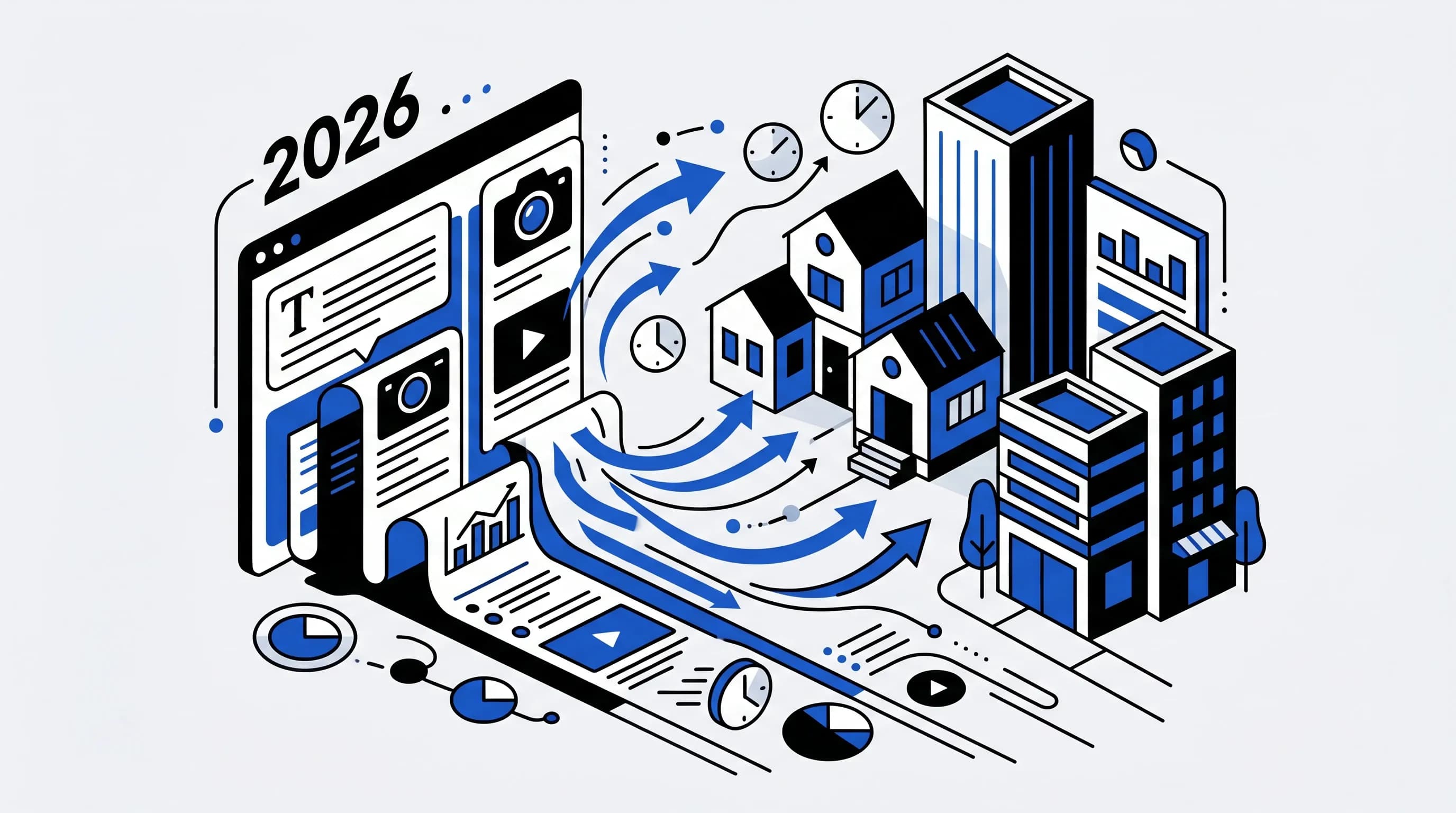
If we want to enhance your real estate content quickly, we do not need to rebuild an entire marketing department from scratch. We need a smarter system: better visuals, clearer messaging, faster repurposing, stronger distribution, and content that builds trust before a buyer or seller ever calls us.
Real estate marketing has changed. Buyers are scrolling listing portals, Instagram Reels, TikTok walkthroughs, Facebook posts, YouTube videos, Google search results, email campaigns, and paid ads long before they schedule a showing. Sellers are also paying attention. They want to know whether we can market a property professionally, generate listing visibility, attract qualified buyers, and create confidence in a competitive market.
The good news is that we do not need cinematic production or three-hour edits to create effective real estate content. Some of the best-performing content today is simple, useful, local, and human. A clear video from our phone, a strong listing carousel, a practical seller tip, a 3D tour preview, a neighborhood guide, or a short “what this means for buyers” explanation can outperform polished but generic content.
In this guide, we will break down how to improve real estate content fast across listing pages, social media, Facebook ads, Instagram, YouTube, email marketing, SEO, 3D virtual tours, paid advertising, retargeting, and lead generation.
To enhance real estate content quickly means improving the quality, usefulness, reach, and conversion power of our marketing assets without slowing down our workflow. It is not just about posting more. It is about making every piece of content work harder.
That means our content should help us:
The fastest path is to stop creating content just to “post something” and start creating content that makes people trust us before they need us. That shift changes everything.
Real estate content has to work harder than ever. Visibility alone is not enough. A buyer may see 30 listings in one sitting, and a seller may compare five agents before requesting a listing appointment. Our content has to create confidence quickly.
Strong real estate content helps us communicate three things at once:
We also need to remember that social platforms have shifted from follower-based distribution to interest-based distribution. A new agent with 400 followers can still get thousands of views if the content is useful, specific, and relevant. Meanwhile, an agent with a large following can be ignored if the content feels generic. The better question is no longer, “How many followers do we have?” It is, “Is this content interesting to the exact buyer, seller, investor, or relocation client we want to attract?”
If we need a fast real estate content upgrade, we should start with photos. Property photos remain one of the biggest drivers of first impressions. Blurry, dark, cluttered, or low-resolution images can cause buyers to skip a listing before they read a single word.
Professional real estate photography helps buyers understand layout, flow, condition, scale, and key selling features. It also signals to sellers that we treat property advertising seriously.
We should also avoid overediting. Buyers want the home to look attractive, not unrealistic. High-quality photography should make the property shine while still representing it accurately.
A 3D virtual tour is one of the fastest ways to elevate a listing. It gives buyers a more immersive experience than photos alone and helps them understand how rooms connect. For relocation clients, out-of-state investors, international buyers, and busy local buyers, a 3D tour can act like a 24/7 open house.
The real advantage is not just the tour itself. It is the content we can create from it. One 3D scan can support an entire listing campaign.
| Core Asset | Fast Repurposing Ideas |
|---|---|
| 3D virtual tour | Embed on listing page, share in email, add to MLS, use in retargeting ads, link from QR codes. |
| Floor plan | Create carousel posts, buyer emails, open house flyers, listing presentation examples. |
| Tour clips | Use for Instagram Reels, Facebook Stories, TikTok walkthroughs, YouTube Shorts, video ads. |
| Still images | Use for listing portals, website galleries, postcards, brochures, Facebook ads, email hero images. |
We should not simply upload a virtual tour once and forget about it. We can use short clips from the tour to create “first look” videos, feature highlights, open house reminders, GIF email previews, and paid ad creatives.
For example, a single tour can become:
One of the quickest ways to improve real estate marketing is to stop treating every platform like a separate project. Instead, we should use a “capture once, market everywhere” approach.
A single listing shoot can turn into:
This is how we become more visible without burning out. We are not creating 20 separate pieces of content from scratch. We are turning one strong content session into 20 useful marketing assets.
A lot of real estate content is accidentally created for other Realtors. Production awards, closing table photos, generic market graphics, and polished listing videos can have a place, but they often do not answer the questions actual buyers and sellers are asking.
Our ideal clients are usually wondering:
Before posting, we can ask one simple question: Would this be interesting to someone who lives here, wants to live here, wants to buy here, or wants to sell here? If the answer is no, the content probably needs a sharper angle.
To enhance real estate content quickly, we need structure. Content pillars help us avoid the daily question of “What should we post?” while keeping our brand balanced and memorable.
| Content Pillar | Examples | Why It Works |
|---|---|---|
| Real estate education | Buyer tips, seller checklists, pricing strategy, inspection advice, mortgage explanations, market updates. | Builds authority and answers high-intent questions. |
| Hyperlocal lifestyle | Neighborhood tours, restaurants, parks, schools, events, coffee shops, commute guides. | Attracts local residents and relocation clients. |
| Behind the scenes | Open house prep, listing appointments, staging, inspections, final walkthroughs, day-in-the-life clips. | Shows the work behind the result and builds trust. |
| Property marketing | Just Listed posts, video walkthroughs, 3D tour previews, floor plans, open house reminders, price improvements. | Promotes listings and shows sellers how we market homes. |
| Personal brand | Values, personality, routines, hobbies, community involvement, opinions, client stories. | Makes us memorable because people hire people, not logos. |
A strong real estate content strategy does not make us a generic content machine. It makes us the real estate person in our market who people recognize, like, trust, and remember.
Short-form video is one of the fastest ways to improve real estate content because it works across Instagram Reels, TikTok, YouTube Shorts, Facebook Reels, and even paid social ads. The key is clarity. We do not need viral dances or complicated edits. We need useful, specific content that holds attention.
We should also use captions because many people watch without sound. The first three seconds matter, so our hook should be direct.
Then we need one clear call to action, not five. For example: “Comment ‘GUIDE’ and we will send you the relocation checklist,” or “DM us ‘VALUE’ if you want a home value estimate.”
Buyers do not only buy square footage. They buy the feeling of a home. They imagine weekday breakfasts in the kitchen, quiet mornings on the patio, movie nights in the finished basement, or walking to a favorite coffee shop on Saturday.
That means our listing copy should translate features into lifestyle benefits.
| Basic Feature | Better Real Estate Content |
|---|---|
| Large backyard | A spacious backyard ready for weekend barbecues, kids’ games, pets, gardening, and evenings around the fire pit. |
| Updated kitchen | A bright, updated kitchen with space for Sunday pancakes, casual dinners, and entertaining friends without missing the conversation. |
| Finished basement | A finished lower level that can become a movie room, game-day zone, guest suite, gym, or quiet work-from-home space. |
| Near downtown | Close enough to enjoy restaurants, coffee shops, events, and nightlife without giving up the comfort of a residential setting. |
Client wins should also become stories, not just announcements. Instead of “Congrats to our buyers,” we can explain where the clients started, what challenge they faced, what strategy we used, and what result they achieved. Stories allow future clients to see themselves in the outcome.
Posting once on Instagram is not a complete real estate advertising plan. Buyers move across platforms before making decisions. Sellers evaluate how visible and professional our listing promotion looks. A strong campaign distributes content across multiple real estate marketing channels while adapting the message to each format.
Key channels include:
| Day | Content Actions |
|---|---|
| Day 1 | Publish MLS listing, property landing page, professional photos, 3D tour, email announcement, Facebook and Instagram carousel. |
| Day 2 | Post vertical video walkthrough on Reels, TikTok, Shorts, and Facebook Stories. |
| Day 3 | Share a kitchen, backyard, or primary suite feature spotlight with a lifestyle caption. |
| Day 4 | Post floor plan breakdown and Google Business Profile update. |
| Day 5 | Send open house email and publish Facebook event or reminder post. |
| Day 6 | Run small Facebook and Instagram ad campaign with carousel or short video creative. |
| Day 7 | Retarget listing page visitors, tour viewers, email clickers, and video watchers with showing or open house CTA. |
Facebook and Instagram still matter for real estate agents because they help us build brand recognition, promote listings, generate conversations, run Meta ads, and stay visible in our local community.
Our Facebook Business Page should include:
Our Instagram profile should answer four questions quickly:
For example, instead of a generic bio like “Helping buyers and sellers with all their real estate needs,” we can be more specific:
Helping families buy and sell in Austin, TX
Neighborhood guides | Seller strategy | Relocation tips
Download our Austin relocation guide below
Specificity makes our real estate brand more memorable. People should know our market, niche, and value within seconds.
Organic content builds trust, but paid social media advertising can extend reach quickly. Facebook ads for real estate agents, Instagram ads, and Meta ads can help us promote listings, generate buyer leads, attract seller leads, retarget warm audiences, and build local brand awareness.
Useful real estate Facebook ad campaigns include:
| Ad Type | Best Use | Creative Idea |
|---|---|---|
| Image ad | Simple listing promotion or seller lead campaign. | Strong exterior, kitchen, view, or lifestyle image with clear CTA. |
| Carousel ad | Show multiple rooms, features, neighborhoods, or listings. | Each card highlights one feature: kitchen, backyard, primary suite, floor plan. |
| Video ad | Increase engagement and show property flow. | 15-30 second walkthrough with captions and a direct showing CTA. |
| Lead ad | Capture buyer, seller, relocation, or open house leads inside Facebook. | Offer a guide, home list, valuation, or showing request form. |
| Retargeting ad | Re-engage warm prospects. | “Still thinking about this home? Explore the 3D tour.” |
For housing-related ads, we also need to use Meta’s Special Ad Category requirements. Real estate advertising has targeting limitations under housing rules, so we should be careful with audience selection, ad copy, imagery, and compliance. We should avoid discriminatory language and follow Fair Housing guidelines. When in doubt, we should consult our brokerage, legal counsel, MLS rules, and platform policies.
Good real estate ad copy is specific, benefit-driven, and action-oriented. It should not feel like a generic property blast.
Just listed in [Neighborhood]: A bright [bed/bath] home with an updated kitchen, flexible living space, and a backyard designed for easy weekends. Explore the photos, floor plan, and full 3D tour today.
Thinking about living in [Neighborhood]? Stop by this weekend and walk through a home with [key feature], [key feature], and [key feature]. View the 3D tour first, then come see it in person.
Planning to sell in [City] this year? Before you list, get our seller prep checklist so you know what to fix, what to skip, and how to make your home stand out online.
Moving to [City]? Get our local relocation guide with neighborhood insights, commute tips, lifestyle notes, and what buyers should know before choosing an area.
Each ad should point to one next step: schedule a tour, request more info, view the 3D tour, download a guide, register for an open house, or ask for a home value estimate.
Short-form content is excellent for attention, but YouTube is one of the strongest long-term opportunities for real estate agents. Buyers, sellers, and relocation clients often search YouTube before contacting an agent because they want deeper answers.
Strong YouTube topics include:
A simple weekly strategy works well: create one 6-15 minute video answering one specific question, mention the city or neighborhood clearly, include a direct call to action, add contact information in the description, and repurpose clips into Reels, TikToks, Shorts, Facebook Reels, email newsletters, and blog posts.
We can use a simple 3P method: prepare one question and three to five points, press record with a phone in a simple setting, and post without letting perfectionism delay us. Raw, clear, and relatable often builds trust faster than overproduced content that feels like an ad.
Real estate SEO helps buyers find our content when they search for an address, neighborhood, school district, “homes for sale near me,” or local market questions. Even when listing portals get heavy traffic, our own website still matters because it builds brand authority and captures high-intent leads.
Quick listing page SEO improvements include:
We should also use Google Business Profile updates for new listings, open houses, neighborhood posts, and market insights. This supports local visibility and shows that our real estate business is active.
Email remains one of the most cost-effective real estate marketing channels because we are communicating with a warm audience: past clients, current leads, referral partners, local contacts, and buyers or sellers who already know us.
A strong real estate email should include:
Useful CTAs include:
We should also build email lists with lead magnets. A relocation guide, seller checklist, first-time buyer guide, neighborhood guide, downsizing checklist, or investment property calculator can turn content engagement into owned audience growth. Social platforms are rented land; our email list is one of the few audiences we actually control.
Print is not dead, especially for luxury listings, direct mail farming, open houses, neighborhood campaigns, and local brand building. But print works better when it connects to digital content.
We can use QR codes on:
The QR code should lead to something valuable, such as a property landing page, 3D tour, video walkthrough, open house registration form, downloadable brochure, or neighborhood guide. This turns offline attention into measurable online engagement.
Most prospects do not convert the first time they see our content. They may view a listing page, watch half of a video, click an email, explore a 3D tour, and leave. Retargeting allows us to re-engage those warm leads with relevant reminders.
Useful real estate retargeting audiences include:
Retargeting messages can be simple:
The goal is to be helpful, not pushy. We are reminding people of what interested them and giving them a simple next step.
AI should not replace our personality, local expertise, or client relationships. But it can help us create content faster, organize ideas, draft outlines, repurpose videos, and build marketing assets more efficiently.
Useful AI and automation applications include:
The key is to use AI to save time so we can spend more energy being specific, local, and human. Generic AI content will not make us stand out. Local expertise will.
Collaboration is one of the fastest ways to grow a local real estate audience. When we create content with local businesses, vendors, lenders, designers, contractors, restaurants, gyms, boutiques, and community organizations, we get in front of relevant audiences and borrow trust through association.
Collaboration content ideas include:
This type of content supports real estate branding because people do not only want property facts. They want to understand the lifestyle, community, and local expertise behind the move.
Likes are nice, but they are not the full picture. If we want to enhance real estate content quickly, we need to track the metrics that connect to attention, trust, lead generation, and appointments.
Important metrics include:
If neighborhood videos create DMs, we should make more neighborhood videos. If seller mistake videos generate valuation requests, we should turn that into a series. If listing emails get clicks but no inquiries, we should improve the CTA or landing page. Content improves faster when we treat it like data, not drama.
The best way to improve content quickly is to build a repeatable system. Every listing should become a content engine.
If we want a practical plan, we can use this 30-day rhythm. It is simple enough to follow and strong enough to improve visibility, trust, and lead generation.
| Frequency | Action |
|---|---|
| Daily | Post Instagram or Facebook Stories with behind-the-scenes moments, local clips, polls, open house prep, or quick real estate thoughts. |
| 3 times per week | Post short-form video: one buyer/seller tip, one local lifestyle video, and one behind-the-scenes or personal brand video. |
| Once per week | Publish one YouTube video or blog post answering a specific local question. |
| Once per week | Send one email with a helpful tip, local guide, new video, listing update, market insight, or client story. |
| Once per month | Create or promote one lead magnet, such as a relocation guide, seller checklist, buyer guide, or neighborhood guide. |
We can also use the four W’s to stay focused:
The fastest way is to improve visuals first, then repurpose them. Start with professional photos, video walkthroughs, 3D tours, and floor plans. Then turn those assets into MLS content, listing pages, social posts, email campaigns, Facebook ads, Instagram Reels, TikToks, YouTube Shorts, flyers, and retargeting ads.
We should use repeatable formats: buyer tips, seller tips, neighborhood videos, listing highlights, client stories, behind-the-scenes clips, and market explanations. One YouTube video or listing shoot can become multiple Reels, Shorts, emails, carousels, blog posts, and ads.
Yes, Facebook ads and Instagram ads can still work well for listing promotion, open houses, seller lead generation, relocation guides, and retargeting. However, housing ads must follow Meta’s Special Ad Category rules and Fair Housing guidelines.
Content that is specific, local, useful, and human usually performs best. Neighborhood tours, buyer mistakes, seller prep tips, market explanations, local lifestyle videos, behind-the-scenes clips, and strong property walkthroughs can generate saves, shares, comments, DMs, and leads.
We should choose platforms based on our audience and workflow. Instagram and TikTok are strong for short-form attention. Facebook is useful for local community engagement, business pages, ads, and retargeting. YouTube is powerful for long-term trust, search visibility, relocation leads, and evergreen content.
A practical rhythm is daily Stories, three short-form videos per week, one longer YouTube video or blog post per week, one email per week, and one lead magnet promotion per month. Consistency matters more than perfection.
We need clear calls to action. Ask people to schedule a showing, request a home value estimate, download a buyer guide, comment for a relocation checklist, register for an open house, view a 3D tour, or DM us with a keyword. Content should start conversations, and conversations should move into a CRM and follow-up system.
To enhance your real estate content quickly, we do not need to do more random marketing. We need a smarter content system.
We start with strong visuals. We add immersive experiences like 3D tours and video walkthroughs. We write listing copy that turns features into lifestyle benefits. We build content pillars around real estate education, hyperlocal lifestyle, behind-the-scenes trust, property marketing, and personal brand. We distribute content across MLS, listing portals, websites, Facebook, Instagram, TikTok, YouTube, email, print, QR codes, paid ads, and retargeting campaigns.
Most importantly, we stay specific, local, useful, and human. The agents who win with content are not always the ones with the biggest teams or most expensive cameras. They are the ones who answer real questions, show the process, tell better stories, use clear calls to action, and build trust before people are ready to hire.
When we capture once and market everywhere, every listing becomes a content engine. We save time, improve listing quality, strengthen our real estate brand, generate more qualified leads, and give buyers and sellers a better experience from the first click to the final showing.
Hey, in Propphy we're determined to make a business grow. My only question is, will it be yours?
It's totally free, with no commitments
Hey, in Propphy we're determined to make a business grow. My only question is, will it be yours?
It's totally free, with no commitments