By Juan Adrogué, Founder & Lead Strategist at Propphy.
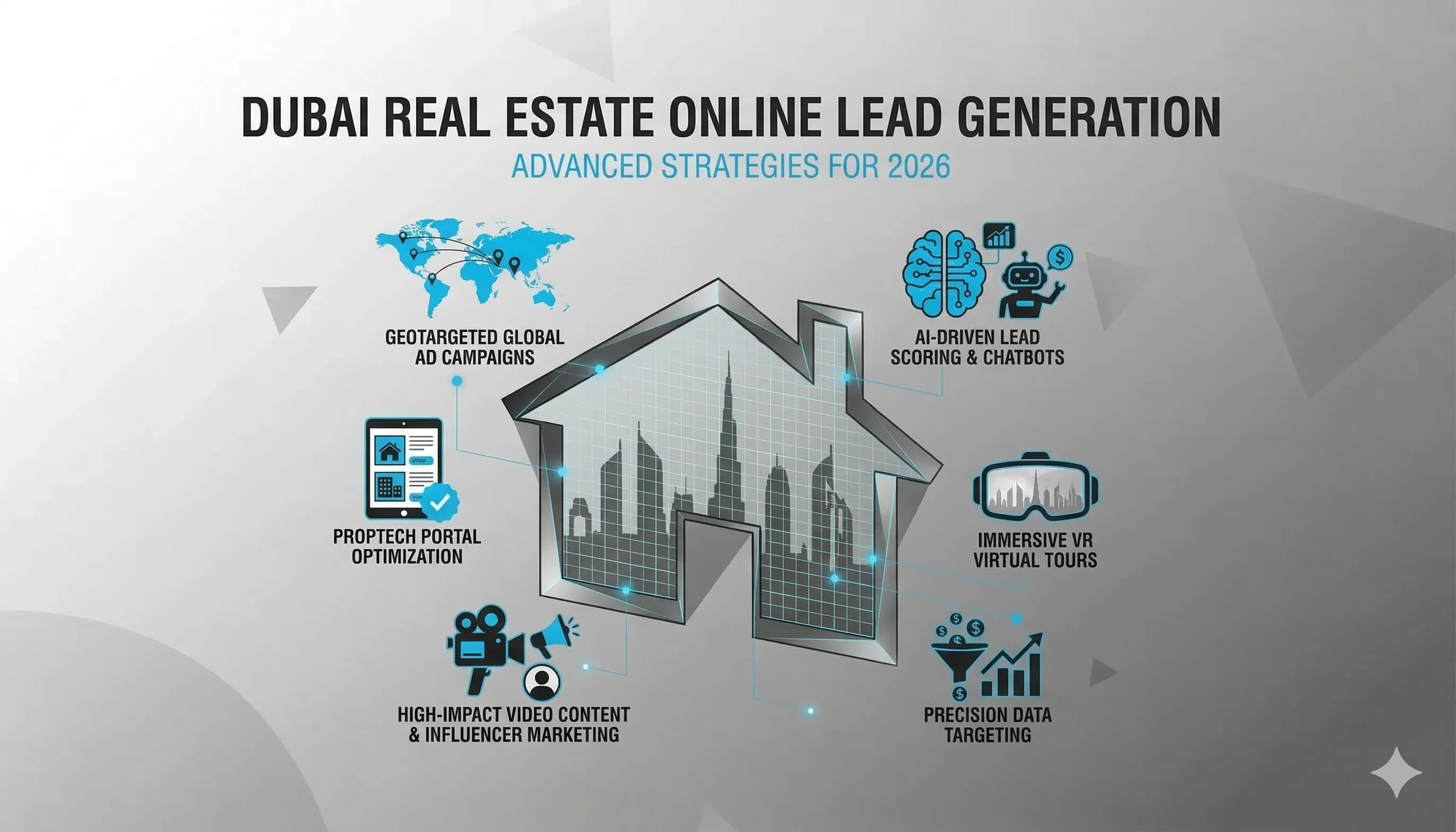
Dubai real estate lead generation in 2026 is not about being everywhere. It is about showing up when intent is highest, reducing friction, and following up faster than the rest of the market. Dubai is one of the most active and competitive property markets in the region, which means digital visibility alone is not enough. Agents need a system that turns traffic into qualified conversations and qualified conversations into viewings. We have seen the same pattern again and again: the agents winning online are not relying on one portal, one social page, or one campaign. They combine high-intent search, strong landing pages, smart SEO, and WhatsApp conversion flows with disciplined follow-up. That matters even more in a market where transaction volumes remain strong and broker activity keeps growing. In other words, lead generation in Dubai is now an operational advantage, not just a marketing one.
Dubai Land Department reported that Dubai recorded 226,000 real estate transactions worth AED 761 billion in 2024, highlighting the scale and commercial velocity of the market. Property Finder’s 2025 annual market review also reported that Dubai’s total market value grew 31% year over year, while residential transaction value increased 26% and prices rose 8%. On the brokerage side, Dubai Land Department said broker-executed transactions reached 96,440 in 2025 and brokerage commissions rose to AED 13.59 billion. These numbers matter because they confirm two realities at the same time: demand is strong, and competition among agents is intense. For lead generation, that means mediocre digital execution gets punished quickly. The agents generating better online leads are usually the ones controlling their own acquisition funnel instead of depending only on portals or casual social traffic. Source links: DLD 2024 Market Data, Property Finder 2025 Review, DLD Brokerage Data.
The strongest lead generation channels in Dubai are the ones closest to buyer or seller intent. In practice, that usually means Google Search, SEO landing pages, property portals, remarketing, and WhatsApp as the conversion layer. Social media still matters, but mostly for visibility, trust, and retargeting rather than cold high-intent acquisition. A serious buyer searching “Dubai Marina apartments for sale” or “off-plan property in Dubai Hills” is already closer to action than someone casually watching a Reel. That is why search-led channels usually outperform broad awareness channels in lead quality. The most effective tactic is to split your acquisition by intent level. Put budget into Google Ads for high-intent searches, build SEO pages for communities and developers, use portals for exposure, and retarget visitors who did not convert the first time. Then move every serious prospect into WhatsApp or a direct consultation flow. That mix gives agents both speed and compounding returns instead of random lead volume.
| Channel | Lead Quality | Cost | Timeline to Results |
|---|---|---|---|
| Google Search Ads | High | Medium to High | Fast |
| SEO + Landing Pages | High | Medium upfront | Medium to Slow |
| Property Portals | Medium to High | Medium to High | Fast |
| Meta / Instagram Ads | Low to Medium | Low to Medium | Fast for reach, slower for quality |
| WhatsApp Retargeting | Very High | Low | Fast |
A website generates leads differently because it turns attention into owned traffic, first-party data, and measurable conversion paths. A social media page can build familiarity, but the platform controls distribution, layout, and audience reach. Your website is where intent gets captured properly. It lets you build landing pages around communities, developers, valuations, off-plan campaigns, and seller services. It also lets you control the call to action, connect forms to a CRM, add WhatsApp entry points, and track where every inquiry came from. That level of control does not exist on social alone. The tactical move here is simple: stop sending traffic to a generic homepage. Build one dedicated landing page for each key service or location, such as “Sell Your Property in JVC” or “Buy in Dubai Marina,” with one clear CTA, trust proof, and a short inquiry path. Social can support discovery, but the website is where serious conversion happens and where your marketing becomes an asset you actually own.
Google Ads work because they capture people at the exact moment they are searching for a solution. In Dubai real estate, that can mean users looking for an agent, a valuation, an off-plan opportunity, or a specific community. That intent is what makes Google Ads powerful. The problem is that many agents waste budget by targeting broad keywords and sending traffic to weak pages. The right structure is tighter. Campaigns should be split by search intent: generic buyer terms, seller terms, community searches, developer searches, and valuation-related terms. Each ad group should send traffic to a landing page that matches the wording and promise of the ad. A practical tactic is to add negative keywords aggressively, including irrelevant terms like jobs, careers, free, cheap, and rentals if the campaign is focused on sales. This keeps spend cleaner and improves the quality of incoming inquiries. In a crowded market, relevance beats volume almost every time.
SEO is the channel that compounds over time. Ads can generate leads quickly, but once spend stops, traffic stops. SEO works differently. It builds a durable acquisition layer around the terms buyers and sellers already search on Google. In Dubai real estate, that usually means communities, developers, off-plan projects, selling intent, investment terms, and service pages tied to location. A broad “Dubai real estate” page is rarely enough. The websites that actually generate organic leads are the ones built around search specificity. The most actionable tactic is to create content clusters. Start with a pillar page for a core community like Dubai Hills or Downtown Dubai, then support it with focused pages on apartments, villas, off-plan options, lifestyle, investment potential, and nearby amenities. Link those pages together intentionally. That structure tells Google your site has real topical depth and gives users multiple relevant entry points. Good SEO does not just drive traffic; it drives qualified discovery.
Top agents use WhatsApp as a conversion tool, not just as a messaging app. In Dubai, where mobile communication is deeply embedded in how prospects interact with businesses, WhatsApp often becomes the fastest route from inquiry to conversation. But speed alone is not enough. The first message has to move the lead forward. Weak replies like “Hi, how can I help?” create friction because they force the prospect to do the work. A better approach is structured qualification. For example: “Are you buying for investment or end use? I can send you the top three matching options in Dubai Hills today.” That message reduces effort, signals expertise, and opens the next step immediately. The tactic every serious agent should implement is a set of prebuilt WhatsApp flows for buyers, sellers, and valuation requests. Automate routing and notifications, but keep the first meaningful message human and relevant. That is how WhatsApp becomes a closing channel instead of just another inbox.
There is no single universal cost per lead because lead quality varies massively depending on source, intent, property segment, and follow-up quality. A cheap form fill is not automatically a good lead, and an expensive inquiry is not automatically inefficient. In our experience, branded and remarketing leads are usually the least expensive qualified leads, while high-intent Google Search leads often cost more but convert better because the buyer or seller is already actively looking. Social lead forms can produce lower headline CPLs, but they often come with weaker intent and lower response quality. That is why serious agents should not optimize for raw CPL alone. The tactical move is to track three separate metrics: raw lead cost, qualified lead cost, and viewing-booked cost. Once you separate those numbers, channel performance becomes much clearer. In Dubai, the right question is not “How cheap are my leads?” but “Which leads actually move toward revenue?”
These are the questions we hear most often from agents who want more qualified leads, not just more names in a spreadsheet. The pattern is always the same: they do not usually have a traffic problem first. They have an intent, conversion, or follow-up problem. Once those gaps are fixed, channel performance becomes easier to improve. The answers below focus on practical decisions agents can make right now, whether they are using Google Ads, SEO, portals, or social. Each one is written to stand on its own because in this market, clarity matters more than theory. A broker does not need another vague growth idea. They need to know where to invest, how to structure the funnel, and what to stop doing. That is why the FAQ is not fluff. It is the operational layer behind everything above, and for many teams, it is where the fastest gains actually come from.
Usually yes, but not as your only lead source. Portals still matter in Dubai because they aggregate active demand and can generate immediate exposure. The issue is control. On a portal, every agent is competing inside the same interface with limited room to differentiate. Your website gives you service pages, valuation funnels, community pages, tracking, CRM integration, and SEO value that compounds over time. The smartest setup is not portals or website. It is portals plus website, with each playing a different role. Use portals for visibility and website assets for conversion, trust-building, and data ownership. If you need to choose where to build long-term leverage, choose the digital asset you actually own.
Most of the time, no. Bought leads can look attractive because they promise speed, but the quality is inconsistent and the context is often weak. Many are shared, recycled, or poorly qualified. In Dubai, where timing and trust matter, the agent who controls the original user journey usually has a stronger advantage than the agent receiving a generic contact from a third party. If you do test bought leads, isolate them in your reporting. Track not just response rate, but qualification rate, viewing rate, and close progression. That is the only honest way to decide whether they are actually useful or just cheap-looking noise.
A usable system can usually be launched within a few weeks if the basics are clear. Paid search can generate inquiries quickly, but only if landing pages, tracking, and follow-up are already in place. SEO takes longer because rankings and authority need time, but it becomes one of the strongest channels once the right structure is built. The mistake is waiting for a perfect website before launching anything. It is better to start with two or three strong landing pages, working analytics, CRM routing, and a clean WhatsApp conversion path. Then expand from real conversion data instead of guessing what the market wants.
Yes, absolutely, but only when it is tied to the way people actually search. SEO works best for community pages, developer pages, valuation pages, and specific investment or buying queries where the prospect already has some intent. These leads are often better than they first appear because they come with context. The buyer did not stumble onto your brand by accident. They were looking for exactly the thing your page addresses. The key is attribution. If your CRM is not tracking first-touch source properly, SEO will often get undervalued because the final conversation may happen later through WhatsApp or direct calls. Good tracking solves that.
Start with alignment. Check whether the keyword, ad, landing page, and first WhatsApp reply are all describing the same thing. If any one of those steps is vague or broad, lead quality drops fast. Then audit your forms, your negative keywords, and your response speed. Many agents think they have a traffic problem when they actually have a message match problem. Another useful move is to look backward from your last ten or twenty serious leads. Where did they come from? What page did they land on? What message moved them to the next step? Those patterns usually show you exactly what to scale and what to kill.
Hey, in Propphy we're determined to make a business grow. My only question is, will it be yours?
It's totally free, with no commitments
Hey, in Propphy we're determined to make a business grow. My only question is, will it be yours?
It's totally free, with no commitments