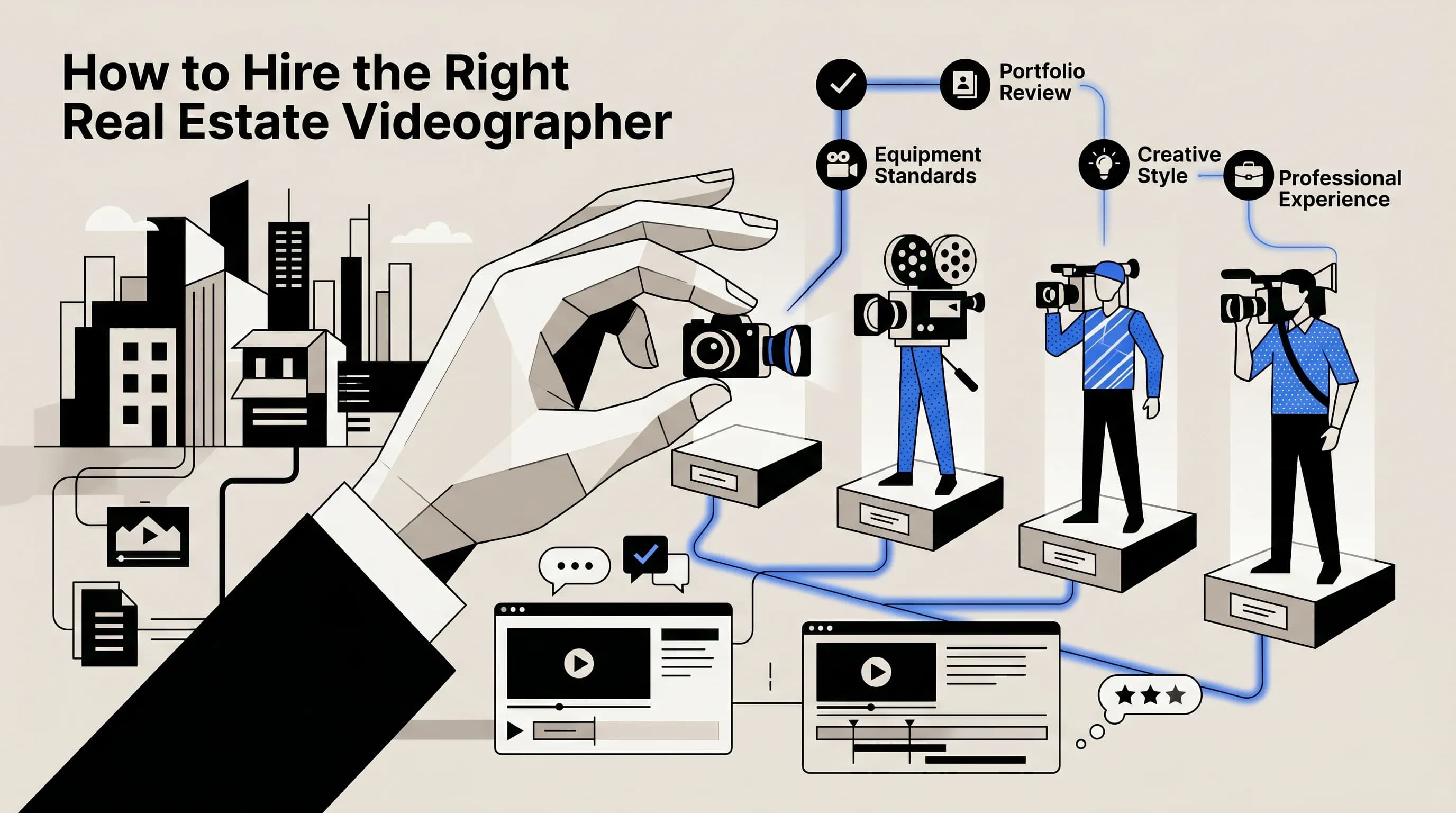
Hiring the right real estate videographer can elevate a listing, strengthen our brand, and help attract buyers faster. Hiring the wrong one can do the opposite: waste time, create stress on listing day, and leave us with polished-looking footage that does very little to market the property. If we want a home listing video or real estate marketing video that actually performs, we need to think beyond camera gear and cinematic shots.
The best professional real estate videographer is not just someone with a camera. They are part marketer, part visual storyteller, part operator, and part service professional. That is why learning how to choose a real estate videographer comes down to more than liking a reel on Instagram. We need to evaluate how they shoot, how they edit, how they communicate, how they handle logistics, and whether they truly understand real estate.
In this guide, we will break down exactly how to hire a videographer for a house listing, what questions to ask, how to compare real estate videography packages, and which red flags to avoid.
A strong real estate video does more than show a property. It helps prospective buyers understand layout, flow, mood, features, and lifestyle. It also gives agents better marketing material for websites, YouTube, Instagram, listing presentations, and paid campaigns.
When the video is done well, it can:
When it is done poorly, even a beautiful home can look dark, cramped, awkward, or forgettable. Bad camera angles, weak color and brightness balancing, lens distortion, random detail shots, sloppy editing, and boring pacing can all hurt the final product.
That is why hiring a real estate videographer should be treated like hiring a marketing partner, not just booking a vendor.
Before we compare providers, we need to be clear on what we are hiring for. This is one of the biggest mistakes people make. They see a flashy reel with smooth gimbal movement and nice music, then assume that means the videographer is the right fit. But in real estate, visuals alone are not enough.
We should first decide:
Not all listing video services are the same. Some videographers are strongest at property tour video work. Others are better at vertical social content, agent branding videos, neighborhood videos, or luxury property films. If we do not define the project first, it becomes much harder to compare quotes or judge whether someone is truly the best videographer for real estate listings.
This is one of the most important points in the entire hiring process. A talented videographer in general is not automatically a great property videographer for homes.
Real estate has its own priorities. A good listing videographer should understand:
That last point matters more than many people realize. A real estate video creator who understands the final edit while filming is usually far more efficient and consistent. They are not just chasing trendy transitions or flashy moves. They are capturing footage with purpose.
When we hire a professional property videographer, we want someone thinking, “What will help market this property?” not “How can I make this look like a music video?”
A portfolio is essential, but we need to review it properly. The question is not just whether the videos look pretty. The question is whether they work as real estate advertising videos.
A strong property video should make the home feel understandable. We should be able to grasp space, layout, and key features without feeling overwhelmed by random angles or excessive effects.
The strongest real estate shooters often keep movements simple and intentional:
Overcomplicated movement often signals style over substance. Clean motion usually cuts together better and keeps the focus on the property.
A great real estate videographer portfolio checklist should include more than luxury homes. We want to see whether they can make all kinds of listings look appealing:
If every example is the same kind of house, we may not be seeing their full capability.
One of the best questions to ask a videographer is whether we can see complete listing videos, not just short montages. Highlight reels are designed to impress. Full examples reveal pacing, consistency, room coverage, editing quality, and whether the final product really supports the listing.
Experience matters because real estate shoots are time-sensitive and often leave little room for mistakes. An experienced real estate video professional will usually work faster, communicate better, and solve problems more calmly.
We should ask:
A strong answer should sound organized. We want to hear a process that includes pre-shoot communication, a prep checklist, arrival and walkthrough, filming plan, editing, revisions, and delivery. A repeatable workflow usually means fewer missed shots, smoother appointments, and more reliable outcomes.
Speed also matters. In real estate, the right videographer should know how to move through a property efficiently without rushing or creating a bad client experience. Agents are busy, sellers may still be in the home, and listing timelines can be tight. A calm, organized shooter with a system is usually more valuable than a highly artistic one who works slowly and inconsistently.
Gear matters, but not in the way people often think. Plenty of average shooters own impressive equipment. What separates them is how they use it.
A capable real estate video photographer may use:
But instead of focusing only on equipment, we should ask:
A seasoned listing media professional should be able to explain these things clearly. We are not trying to test them on technical jargon for its own sake. We just want proof that they understand what creates a polished, natural, high-quality finished product.
One trait that consistently separates average providers from great ones is communication. A videographer can be talented and still be a poor fit if they are hard to reach, vague, disorganized, or stressful to work with.
A good professional real estate videographer should:
This is especially important because real estate is relationship-driven. If the videographer is awkward, rigid, moody, or unreliable, repeat business becomes much less likely. On the other hand, when someone is calm, pleasant, and professional, the entire shoot feels easier.
In practice, a lot of this shows up before we ever book. If communication is already slow or unclear during the inquiry stage, it usually gets worse later.
If we want to vet a real estate videographer properly, we should ask direct, specific questions. Here are some of the best ones:
These questions reveal far more than “What camera do you use?” They show whether the videographer understands business needs, not just production.
Real estate video cost varies widely depending on market, property size, editing complexity, travel, turnaround, and deliverables. That is why we should never compare pricing without matching scope.
When getting quotes, ask each provider to price the same job. Otherwise, one quote may include drone footage, social cutdowns, and post-production services, while another only covers a basic walkthrough.
If we are wondering how much does a real estate videographer cost, the better question is really: what do we need, and what is included? Transparent pricing is a major green flag. Confusing fees and vague package details are not.
Real estate video editing services are a crucial part of the finished product. A great shoot can still turn into a weak final video if post production is sloppy.
We should always clarify:
It also helps to ask about their production approach. A professional should have clear answers on color correction, brightness balancing, lens distortion correction, and how they create a polished but natural final look.
This is where many misunderstandings happen. If editing is weak, delayed, or billed unexpectedly, the whole project can become frustrating. In a fast-moving listing environment, post-production delays reduce the usefulness of the video.
A videographer’s online presence can tell us a lot. If someone wants to be hired, it should be obvious what they do, who they serve, and whether they are open for business.
When reviewing their website or Instagram, look for signs that they:
We should also verify social proof:
Reviews may not tell the full story, but they often reveal patterns around reliability, communication skills, and overall professionalism.
One of the clearest differences between average and outstanding vendors is whether they understand the purpose of the content. The best real estate video production is not made to impress other videographers. It is made to help market homes and strengthen an agent’s brand.
That means a smart videographer should understand:
If a videographer talks only about frame rates, transitions, LUTs, and camera bodies, but never mentions listing appeal, audience attention, usability, or brand positioning, that is a warning sign. A strong real estate video creator knows that the content has to serve the business goal.
If we produce content regularly, a monthly retainer can be a very smart structure. Instead of booking a real estate videographer randomly each time, we can agree on a set number of videos or content pieces per month.
This can provide:
Retainers are especially useful when we want more than just listing videos. For example, we may also need:
In that setup, the videographer becomes part of our content engine rather than a one-time contractor.
If we are trying to pick the best real estate videographer, these warning signs should make us pause:
Another subtle red flag is when they do not provide property prep guidance. A strong real estate videographer should have at least a basic checklist so the house is prepped for the shoot. If they show up without caring about staging, clutter, lights, blinds, or exterior readiness, that can affect the final product immediately.
On the other side, here is what makes a great real estate videographer:
That last point is important. The best videographer is often the one who makes our business easier, not just the one who makes the most dramatic reel.
Here is a simple framework we can use to compare real estate videographers side by side:
If we had to boil it down, how to choose the right real estate videographer comes down to four things: marketing understanding, technical competence, reliability, and professionalism.
Most people over-hire for style and under-hire for everything else. But the best real estate videographer is the one who can showcase a home, serve the agent, move quickly, communicate clearly, and deliver a strong final product on time.
So if we want to hire a real estate videographer the right way, we should:
The right hire should make our listings look better, our brand look stronger, and our workflow feel smoother. When a videographer can do all three, they are not just a vendor. They become one of the most valuable creative partners in our real estate business.

Hey, in Propphy we're determined to make a business grow. My only question is, will it be yours?
It's totally free, with no commitments
Hey, in Propphy we're determined to make a business grow. My only question is, will it be yours?
It's totally free, with no commitments