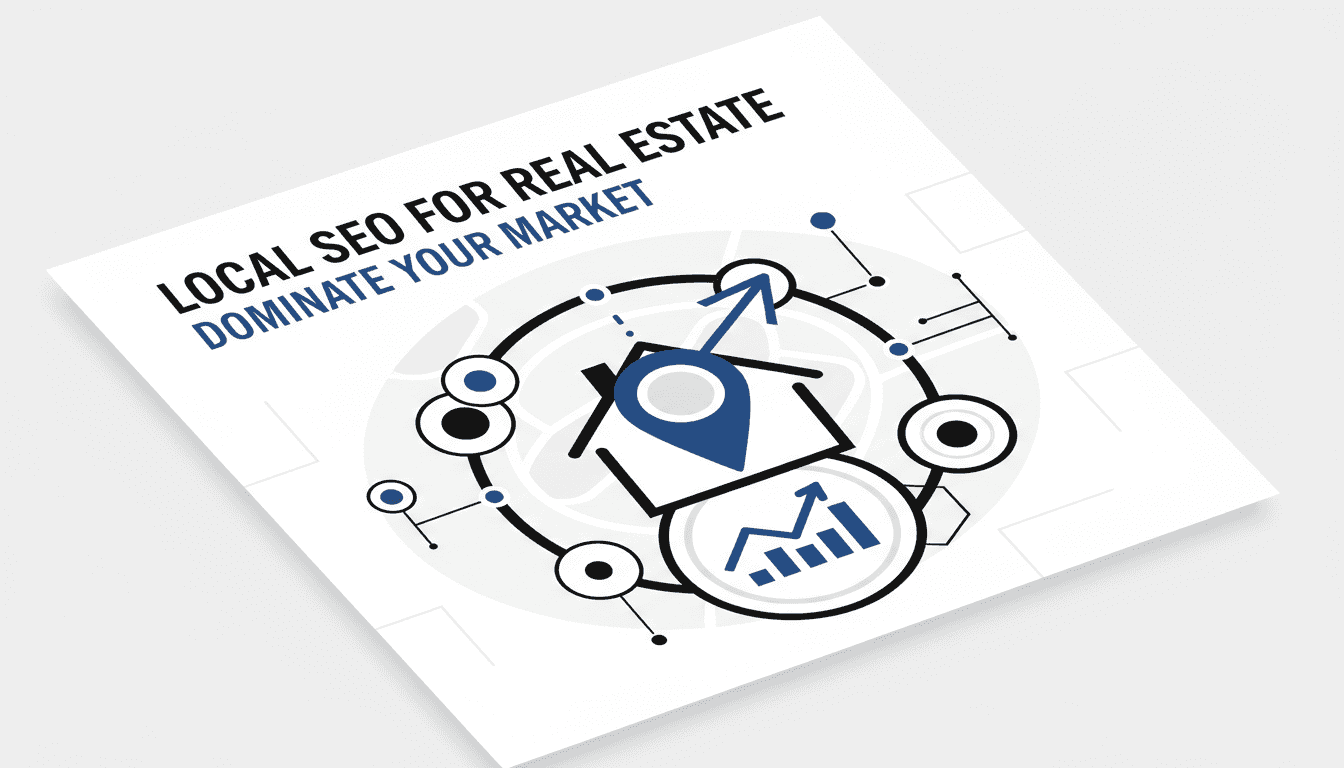
When buyers and sellers search “real estate agent near me” or “2 bedroom condo for sale in [your neighborhood]”, we want them to find us first—not just the big portals. That’s exactly what local SEO for real estate is about: owning the high‑intent, hyper‑local searches that actually turn into listings and closed deals.
In this complete, practical guide, we’ll walk through the local SEO strategy we use for real estate agents, brokerages, and developers to rank in Google Search and Google Maps, attract qualified leads, and build long‑term authority in specific neighborhoods.
What Is Local SEO in Real Estate (and Why It’s Different)?
SEO (search engine optimization) is about making your site more visible in search engines. Local SEO narrows that focus to location‑based searches and assets:
- Ranking in the Google local pack (the 3‑pack in Maps).
- Appearing for “near me” and “[service] in [location]” queries.
- Owning hyper‑local terms like “condos for sale in Dubai Marina” or “homes for sale in Oakwood Heights”.
Traditional real estate SEO tries to rank for broad, ultra‑competitive keywords like “homes for sale” or “real estate agent”. Local SEO, by contrast, is about:
- Geo‑specific, intent‑driven queries:
- “3 bedroom villa for rent in JVC”
- “new construction homes in [suburb]”
- “luxury beachfront residences in [destination]”
- Maps visibility (GBP / Google Maps listings).
- Local trust signals: Google Business Profile, reviews, citations, and consistent NAP data.
We’ve seen over and over that when we shift focus from generic keywords to this kind of hyper‑local SEO for real estate agents and developers, organic leads become more frequent and far more qualified.
Why Local SEO Is a High‑ROI Channel for Real Estate
In our experience, local SEO solves several painful problems that agents and real estate companies face every day.
1. It Generates Qualified, Local Leads
When someone types “studio for rent in [neighborhood] under [price]” or “real estate agency near me”, they’re usually ready to act. These are high‑intent prospects. Local SEO puts your brand right in front of them at the moment they’re actively looking.
2. It Lets You Compete with Big Portals (Without Their Budget)
You don’t need to outrank Zillow, Bayut, or Property Finder for “Dubai real estate” to win. Instead, we target:
- “off plan apartments in Business Bay Dubai”
- “family homes for sale in [micro‑neighborhood]”
- “eco‑resort villas in [destination]”
By focusing on dozens or hundreds of smaller, hyper‑local keywords, a single agent can own a market niche that big portals barely touch.
3. It Builds Local Authority and Trust
Visible Google Business Profiles with strong reviews, detailed neighborhood pages, and consistent citations tell both Google and clients that you’re a trusted local expert. Over time, we see these signals snowball into more direct inquiries and repeat referrals.
4. It Aligns with How People Actually Search
Most property searches now start on a smartphone, often with “near me” queries. Local SEO ensures your real estate website, listings, and profiles show up correctly on mobile and Maps—where decisions are made.
Real Estate Local SEO Starts with Smart Keyword Research
Local SEO for realtors and agencies lives or dies on keyword strategy. We always invest serious time here before writing a line of content.
Long‑Tail & Hyper‑Local Keywords: Where We Win
Broad terms like “Dubai real estate” or “homes for sale in USA” are expensive to chase and dominated by national portals. Instead, we build keyword lists around:
- Property type: apartment, condo, villa, townhouse, studio, office, warehouse, plot.
- Intent: for sale, for rent, buy, invest, off‑plan, pre‑construction, new homes.
- Features: sea view, near metro, furnished, gated community, pet‑friendly.
- Location: city, district, neighborhood, community, landmark.
Examples of the kind of long‑tail real estate keywords we prioritize:
- “2 bedroom apartment for rent in Downtown Dubai near metro”
- “single family homes in north Burbank with pool”
- “luxury villas for sale palm jumeirah sea view”
- “studio for rent in JVC under 50k”
Each of these may only get tens of searches per month, but when we scale this across 50–200 pages and queries, the cumulative traffic and lead flow is substantial—and highly targeted.
How We Build a Local Real Estate Keyword List
- Brainstorm seed terms
We combine property types, intents, features, and locations by hand first. This usually surfaces surprisingly valuable phrases straight from how clients talk (e.g., “homes near [school name]”). - Use Google’s suggestions
We type seed queries into Google and collect: - Autocomplete suggestions.
- “People Also Ask” questions.
- “Related searches” at the bottom of results.
- Run them through keyword tools
Using Google Keyword Planner, SEMrush, Ahrefs, or similar, we check: - Search volume (even 10–30 searches/month can be valuable).
- Difficulty/competition.
- Commercial vs informational intent.
- Analyze real estate SEO competitors
We look at local agencies and portals that already rank: - Which pages drive them organic traffic.
- Which local real estate keywords they rank for.
- Where the gaps and underserved neighborhoods are.
- Group keywords by page intent
For each page, we define: - Primary keyword (page’s main target, e.g., “condos for sale in Dubai Marina”).
- Secondary keywords (close variants, e.g., “Dubai Marina apartments for sale”).
- Semantic / LSI terms (context, e.g., “waterfront living”, “near Marina Walk”).
Structuring a Real Estate Website for Local SEO
Once we have a keyword plan, we turn it into a site structure that Google can easily understand. This is where we see the biggest long‑term wins for both agents and developers.
Neighborhood & Community Pages
For strong real estate local SEO, we build a logical hierarchy:
- City / Area pages (top level)
- Neighborhood / Community pages (second level)
- /dubai/dubai‑marina/
- /dubai/jumeirah‑village‑circle/
- /los‑angeles/burbank‑north/
Each neighborhood page is built as a long‑term “hub” that targets a specific primary keyword, such as:
- “apartments for sale in Dubai Marina”
- “homes for sale in north Burbank”
- “townhouses for sale in Arabian Ranches 3”
On each page we typically include:
- Area overview (who lives there, lifestyle, pros/cons).
- Property types and price ranges.
- Amenities: schools, transport, malls, hospitals, parks.
- High‑quality images and videos of the community.
- Live listings pulled in from your CRM/MLS or manually curated.
- Internal links to:
- Related blog posts (e.g., “Dubai Marina vs JBR: which is better for investors?”).
- Buyer/seller guides relevant to that area.
In practice, once we roll out 20–30 solid community pages for a city, the long‑tail traffic and enquiries from organic search usually increase steadily month after month.
Local Blog & Guide Content
Listings alone often aren’t enough. We complement them with:
- Market updates:
- “Q2 2025 Dubai Marina real estate market report”.
- “2025 housing market outlook for [city]”.
- Neighborhood guides:
- “Best neighborhoods in [city] for young families”.
- “First‑time buyer’s guide to [community]”.
- Investment content:
- “Is it worth investing in off‑plan property in [area]?”
- “Rental yield comparison: [Neighborhood A] vs [Neighborhood B]”.
- Lifestyle content:
- “Top cafes near [development]”.
- “Living in [neighborhood] as an expat”.
This kind of content lets us rank for many additional “how”, “what”, and “where” queries, and then funnel readers into our core area and listing pages via internal links and clear calls‑to‑action.
On‑Page SEO for Real Estate Websites
With structure and content in place, we then optimize each page so search engines can easily understand what it’s about and why it should rank.
Titles & Meta Descriptions for Property & Area Pages
For every important page, we craft:
- SEO title (meta title) that includes the primary keyword and a value hook:
- “Apartments for Sale in Dubai Marina | Waterfront Living & Investment”
- “Homes for Sale in Oakwood Heights | Local Real Estate Experts”
- Meta description that sells the click:
- “Explore the latest apartments for sale in Dubai Marina – waterfront condos, luxury penthouses, and family homes near Marina Walk. View prices, photos, and book a viewing today.”
While meta descriptions aren’t a direct ranking factor, better click‑through rates are a clear competitive advantage in local SERPs.
Headings (H1, H2, H3) on Real Estate Pages
On each page we use headings strategically:
- H1: one per page, matching or closely reflecting the primary keyword.
- “Apartments for Sale in Dubai Marina”.
- “Local SEO for Real Estate Agents in [City]”.
- H2/H3s: section headings that naturally include secondary and semantic keywords:
- “Why Buy an Apartment in Dubai Marina?”
- “Average Prices for Dubai Marina Apartments”.
- “Studios for Sale in Dubai Marina”.
- “2 Bedroom Apartments in Dubai Marina”.
This makes your content easier to skim for users and clarifies topical relevance for search engines.
URLs, Content, and Internal Links
- URL slugs:
- Good:
/dubai/dubai-marina-apartments-for-sale/ - Poor:
/post-123/ or /blog1/
- Body content:
- Use your primary keyword early (first 1–2 paragraphs).
- Sprinkle secondary and related terms naturally.
- Avoid keyword stuffing; we care far more about clarity and usefulness.
- Internal linking:
- Link from blog posts to neighborhood pages and specific property types using descriptive anchor text (e.g., “see our latest apartments for sale in Dubai Marina”).
- Link between related neighborhoods, comparisons, and guides.
We’ve repeatedly observed that when we clean up internal links and anchor text on a real estate site, important location pages start climbing in local rankings even without new backlinks.
Google Business Profile: The Core of Local SEO for Realtors
Your Google Business Profile (GBP) is your digital storefront in Google Search and Maps, and it’s non‑negotiable if you want to appear in the map pack.
Setting Up & Optimizing Your GBP
- Claim or create your profile
Search for your business name on GBP and claim it, or create a new listing if needed. - Choose accurate categories
Primary category examples: - Real Estate Agency
- Real Estate Consultant
- Property Management Company
Secondary categories might include: - Commercial Real Estate Agency
- Vacation Home Rental Agency
- Verify your business
Complete verification (postcard, phone, email). No verification = limited visibility. - Complete all details
Add: - Exact business name, address, and phone number (NAP).
- Business hours (and keep them updated).
- Website URL and appointment link.
- Concise, keyword‑aware business description (written naturally).
- Service areas, if you don’t have a walk‑in office.
Photos, Videos & Visuals
Listings with rich visuals get more clicks and calls. We strongly recommend uploading:
- Professional agent/team headshots.
- Office exterior and interior photos (if applicable).
- High‑quality property photos (featured listings, signature developments).
- Short video clips:
- Virtual tours.
- Neighborhood walk‑throughs.
- Quick tips for buyers and sellers.
Reviews: Local SEO Fuel for Real Estate Businesses
Google reviews are one of the strongest local ranking signals and a huge trust driver for prospects.
- Collect reviews systematically:
- After every successful transaction, send a direct review link.
- Make it easy: short instructions and a suggested outline.
- Respond to every review:
- Positive: thank by name, mention specific details.
- Negative: stay professional, acknowledge the issue, invite offline resolution.
- Leverage reviews elsewhere:
- Embed selected reviews on your site as testimonials.
- Share standout reviews on social media and in listing presentations.
Consistent review growth on GBP, combined with strong NAP and content, is often what separates top‑ranking realtors in the local pack from those stuck on page two.
Using Google Posts
We use Google Posts as micro‑content inside GBP for:
- Featured listings and open houses.
- Monthly market snapshots.
- Local news and events relevant to your farm area.
These posts keep your profile “fresh” and give searchers more reasons to engage with you instead of competitors.
Local Citations & NAP Consistency for Real Estate SEO
Local citations are mentions of your name, address, and phone number on other websites. They help Google confirm that your business is real, active, and located where you say it is.
Where We Build Real Estate Citations
- Major platforms:
- Google Business Profile.
- Bing Places, Apple Maps.
- Facebook, LinkedIn, Instagram (as NAP‑consistent profiles).
- Real estate portals:
- Zillow, Trulia, Realtor.com (US).
- Bayut, Property Finder (UAE).
- Other regional or niche portals.
- General directories:
- Yelp, Yellow Pages, local business directories.
- Chambers of commerce, professional associations.
Rules for NAP Consistency
We standardize one canonical version of:
- Business name.
- Address (same spelling and abbreviations everywhere).
- Phone number (format and digits identical).
That exact version is then used on:
- Your website (footer and contact page).
- All directory listings and social profiles.
- Any online ads or landing pages you run long‑term.
Whenever we audit a site and fix inconsistent NAP information, we often notice improved stability in map pack rankings within a few weeks.
Backlinks & Local Authority for Real Estate SEO
Backlinks (links from other websites to yours) are still a major authority signal. For local SEO for real estate, we focus heavily on local and industry‑relevant links.
Practical Ways We Earn Real Estate Backlinks
- Local publications & blogs:
- Contribute expert opinions on housing trends.
- Provide data or quotes for journalists.
- Real estate & lifestyle blogs:
- Guest posts about neighborhoods, investment strategies, renovations.
- Interviews or case studies on unique deals or projects.
- Local business partnerships:
- Mortgage brokers, interior designers, moving companies, schools.
- Create joint guides (“Moving to [Neighborhood]: Complete Checklist”) and get listed on partner resource pages.
- Community sponsorships:
- Charity events, school teams, local festivals.
- Request a link from the sponsor page to your site.
- Awards & associations:
- Ensure the awarding body links to your website when you win or are shortlisted.
A small number of high‑quality local backlinks can move the needle much more than dozens of low‑quality directory listings.
Image, Media & Technical SEO for Real Estate Sites
Real estate sites are image‑heavy by nature, which makes media optimization and technical SEO critical.
Image Optimization for Property Photos
- Compress images:
- Use tools like TinyPNG, Squoosh or built‑in CMS compression.
- Prefer modern formats like WebP where possible.
- Right‑size images:
- Don’t upload 5000px‑wide photos for a 1600px container.
- SEO‑friendly file names:
- Good:
2-bedroom-apartment-dubai-marina-sea-view.jpg - Bad:
IMG_1234.jpg
- Alt text:
- Describe the image for humans and screen readers while including local context when relevant.
- Example: “family on balcony of 2 bedroom apartment overlooking Dubai Marina skyline”.
Mobile & Technical SEO Basics
Most property searches happen on mobile, so we always ensure:
- Responsive design:
- Layouts adapt to all screen sizes.
- Navigation is easy and tap targets are large enough.
- Fast page speed:
- Pages load in under ~3 seconds on 4G.
- We use caching, minified code, lazy loading for images, and a good hosting setup.
- Clean technical baseline:
- No major crawl errors or broken links.
- Logical internal linking and sitemap structure.
- Regular checks via Google Search Console and tools like Screaming Frog or Sitebulb.
After technical cleanup, it’s common to see improved crawl frequency and better indexation of new neighborhood and listing pages.
Reviews, Social Proof & Social Media’s SEO Support Role
Beyond Google Reviews
Reviews on platforms like Facebook, Zillow, Realtor.com, Bayut, or local review sites may not all directly impact rankings, but they absolutely influence whether someone who finds you via Google actually contacts you.
- Prospects often search “[agent name] reviews”.
- We aim to have consistent, positive sentiment across all major platforms.
Review Snippets & Schema Markup
When we have a strong base of testimonials, we often implement review schema (structured data) on agent or agency pages so Google can show star ratings in organic results. This doesn’t guarantee rich snippets, but when they appear, we usually see a noticeable CTR lift.
How Social Media Supports Local SEO
Social signals aren’t direct ranking factors, but they support SEO by:
- Driving more branded searches (“[your agency] [city]”).
- Reinforcing NAP consistency on your profiles.
- Creating opportunities for shares and backlinks when posts go beyond your immediate audience.
We always optimize social bios with:
- Exact business name.
- Location or service area.
- Phone / WhatsApp.
- Website URL.
- A short, location‑aware description (e.g., “Local real estate agents helping families buy and sell in [city/neighborhood]”).
Publishing a mix of listings, market stats, client stories, and neighborhood lifestyle content keeps your audience engaged and feeds traffic back into your SEO assets (blog posts, area guides, and landing pages).
Local SEO for Real Estate Developers & Investors
Local SEO isn’t just for agents. For real estate developers and investors, it’s often the backbone of pre‑sales and international buyer acquisition.
When Local SEO Matters Most for Developments
- Pre‑launch and pre‑sales:
- We build awareness long before completion, capturing research‑stage searches like “luxury beachfront residences [location]” or “eco‑resort investments in [destination]”.
- Emerging or secondary markets:
- Local SEO can dominate search quickly where there are fewer established players.
- International buyers:
- Investors unfamiliar with the location rely heavily on Google and local content to build trust.
Project‑Specific Local SEO Tactics
- Dedicated project landing pages:
- Optimized for “[project name] [location]”, plus generic descriptors:
- “beachfront villas in [destination]”
- “branded residences in [city]”
- “eco‑resort residences [country]”
- Project‑level Google Business Profile (if justified by scale and physical location).
- Location‑driven content:
- Guides like “Living by the beach in [area]” or “Top things to do near [project name] in [location]”.
- Backlinks from architecture, design, and lifestyle media:
- Press coverage becomes a powerful SEO asset when it includes a link.
Well‑executed local SEO for a development can materially increase the volume and quality of leads, shorten sales cycles, and support premium pricing by strengthening perceived authority and desirability.
Common Local SEO Mistakes Real Estate Professionals Make
We see the same issues repeatedly when auditing real estate SEO campaigns. Avoiding them puts you well ahead of most competitors.
- Chasing generic national keywords instead of local, intent‑driven ones.
- Ignoring Google Business Profile or leaving it half‑complete and unverified.
- Inconsistent NAP across the website, Maps, and directories.
- Slow, non‑mobile‑friendly sites bloated with unoptimized photos.
- Thin, copy‑paste content on neighborhood and listing pages.
- Keyword stuffing that makes pages hard to read and turns off both users and Google.
- No technical oversight, leading to broken links, crawl errors, and indexation issues.
Measuring Local SEO Success in Real Estate
To know if your local SEO for real estate is actually working, we track a small set of clear KPIs.
Key Metrics We Monitor
- Local keyword rankings:
- “[property type] for sale in [neighborhood]”.
- “real estate agent in [city]”.
- “[project name] [location]”.
- Organic traffic by location:
- City‑ and country‑level segments in Google Analytics.
- Landing pages for neighborhood guides and listings.
- Google Business Profile insights:
- Search and Maps views.
- Website clicks, calls, and direction requests.
- Top queries used to find your profile.
- Leads and conversions from organic:
- Form submissions, calls, WhatsApp clicks tagged to organic traffic.
- “Found you on Google” responses from new clients.
- Backlinks and citations:
- Number and quality of local backlinks over time.
- Growth and cleanup of citations.
When we see upward trends across these metrics over 3–6 months—especially in map pack visibility and local organic leads—we know the local SEO strategy is working.
A Practical Local SEO Roadmap for Real Estate Agents & Teams
To tie everything together, here’s how we typically phase a local SEO rollout for real estate professionals.
Months 1–2: Foundations
- Claim, verify, and fully optimize your Google Business Profile.
- Standardize NAP and fix obvious citation errors.
- Build or improve:
- One core city page.
- 3–5 high‑priority neighborhood/community pages.
- Optimize key service pages (buyer, seller, landlord, investor) with proper titles, metas, and on‑page structure.
Months 3–4: Content & UX
- Publish 2–4 strong local blog posts:
- Neighborhood guides.
- Market updates.
- Comparison articles.
- Implement a clear internal linking strategy between blogs, neighborhood pages, and listings.
- Optimize mobile performance and page speed.
- Start actively requesting and managing Google reviews.
Months 5–6: Authority & Expansion
- Expand neighborhood coverage (more communities and micro‑locations).
- Secure 2–3 quality local backlinks (publications, partners, sponsorships).
- Refine keyword targeting using Google Search Console data.
- Continue review generation and regular Google Posts on GBP.
Ongoing
- Quarterly technical and citation audits.
- Monthly content publishing focused on neighborhoods and buyer/seller questions.
- Continuous review management and GBP updates.
- Steady outreach for local backlinks and PR mentions.
Follow this roadmap consistently, and local SEO for your real estate business becomes a compounding asset: every new page, review, and backlink strengthens your ability to rank, attract local clients, and close more deals without relying solely on paid ads.