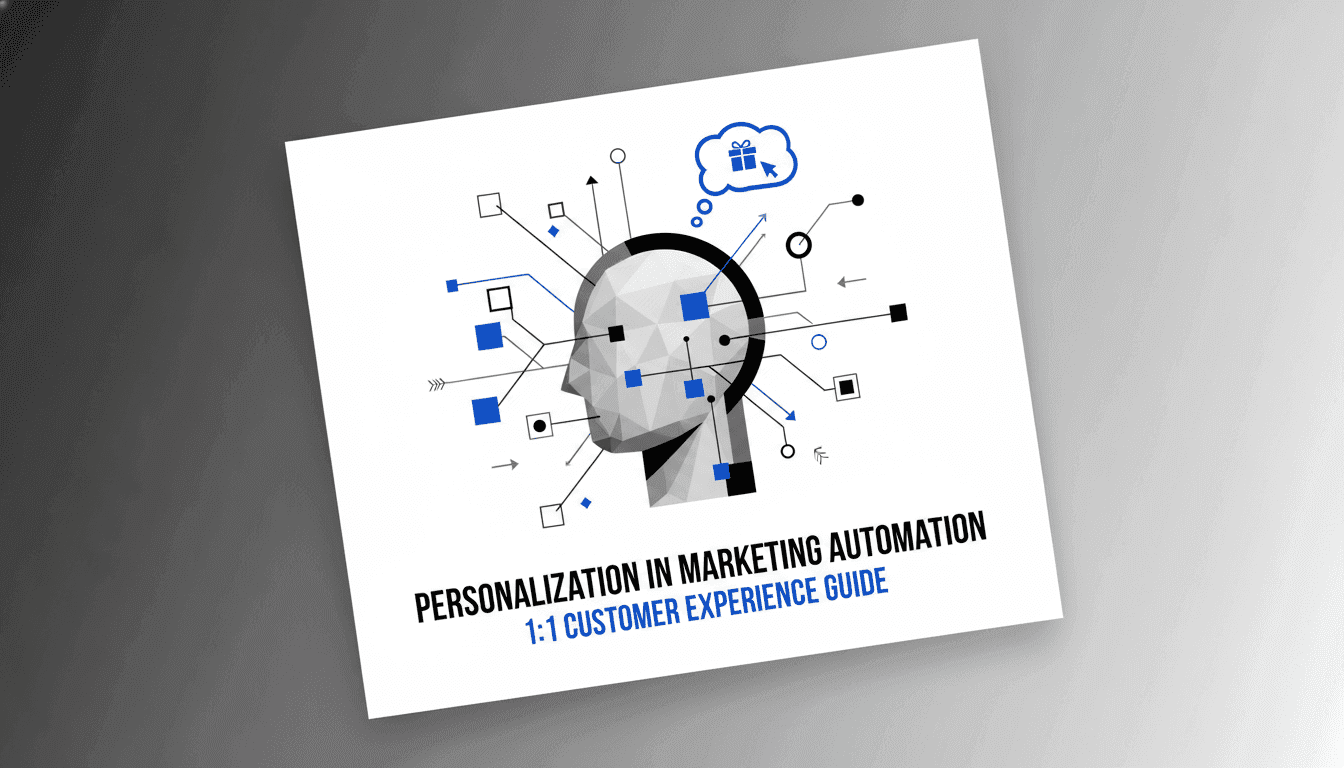
When we talk about personalization in marketing automation, we’re really talking about one thing: how to make every automated touchpoint feel like a 1:1, human conversation instead of a generic broadcast. In this guide, we’ll walk through what that actually means in practice, how to implement it, which tools matter, and how to measure whether your personalization is truly moving the needle.
What is personalization in marketing automation?
Personalization in marketing automation is the practice of tailoring each customer’s experience based on who they are, what they do, and where they are in their journey—while still using automation to operate at scale.
In concrete terms, our automation decides automatically:
- Who should receive a message or experience
- What content, offer, or recommendation they see
- When they see it (timing, frequency)
- Where & how they receive it (email, SMS, web, app, chat, etc.)
This goes far beyond “Hi, {First Name}.” True marketing personalization is:
- Context‑aware (device, location, time of day, journey stage)
- Behavior‑based (browsing behavior, opens, clicks, purchases)
- Consent‑driven (privacy and permissions at the core)
- Adaptive (changing in real time as behavior changes)
When we integrate this into our marketing automation stack, we’re no longer just sending automated emails—we’re orchestrating personalized customer journeys across every channel.
Why personalization in marketing automation drives engagement and ROI
We’ve consistently seen that when campaigns move from generic to personalized, three things happen:
- Engagement spikes: Personalized subject lines, dynamic content, and relevant offers lift open rates, click‑through rates, and response rates.
- Conversion improves: Behavior‑driven recommendations and journey‑stage messaging typically outperform one‑size‑fits‑all campaigns, driving higher conversion rates and sales uplift.
- Loyalty deepens: When people feel understood and not spammed, they come back more often, buy more frequently, and stick with the brand longer.
On the flip side, poor personalization—irrelevant emails, awkward recommendations, or tone‑deaf timing—can feel creepy or incompetent. That’s why we focus on relevance and value first, and clever tactics second.
Fundamentals: personalization vs. segmentation vs. automation
To get our terminology straight:
- Segmentation is grouping people (e.g., by behavior, demographics, preferences).
- Automation is scheduling and triggering communications and workflows.
- Personalization is using data and logic to change the experience for each individual.
In modern marketing, these three work together:
- Segmentation turns raw data into audiences.
- Automation handles timing and delivery across channels.
- Personalization shapes the message, offer, and experience for each person.
Types of personalization in digital marketing and automation
To build a structured personalization roadmap, it helps to know the main “types” we can deploy:
- Static personalization: Name, company, simple fields in email and landing pages.
- Rule‑based personalization: “If user in segment X, show version A of the banner.”
- Behavior‑based personalization: Trigger‑based emails and journeys from events like page visits, form fills, downloads, cart abandonment, or saved favorites.
- Contextual personalization: Different experiences based on device, location, language, or traffic source.
- Real‑time / dynamic personalization: Content blocks and recommendations that change in milliseconds as the person interacts with your site or app.
- AI‑powered hyper‑personalization: Machine learning models that predict what each person is most likely to want next (content, product, property, offer).
Building the data foundation: collection, context, and consent
Every powerful personalization program rests on three pillars: data collection, analysis, and activation.
Collect and unify customer data for personalization
We start by collecting first‑party data from:
- Website and app behavior (events, page views, clicks)
- CRM records (leads, deals, customer profiles)
- Transactional systems (orders, bookings, subscriptions)
- Support tools (tickets, chat transcripts, satisfaction scores)
- Email and messaging engagement (opens, clicks, replies)
The goal is a unified, 360° customer view—not five half‑accurate profiles spread across platforms. In practice, that means connecting our website, CRM, marketing automation, and (if needed) a CDP or personalization engine so data flows in near real time.
Analyze data: segmentation, scoring, and intent
Once data is unified, we turn it into insight by:
- Building audience segments (behavior, preferences, lifecycle stage)
- Creating lead scores (likelihood to convert or buy soon)
- Identifying high‑value behaviors (e.g., repeated visits to specific pages)
- Using predictive models for churn risk, purchase propensity, or content affinity where tools allow
This analysis tells us who needs what, and when—critical inputs for automated journeys and dynamic content.
Activation: right message, right moment, right channel
Activation is where personalization in marketing automation becomes visible to customers. We use our profiles and segments to control:
- Which workflow a person enters (onboarding, nurture, re‑activation, upsell)
- Which channel mix we use (email + SMS, in‑app + push, web + chat)
- What dynamic content blocks they see in emails, landing pages, and on‑site experiences
- How often and when we contact them (send‑time optimization, quiet hours, frequency caps)
And critically, if we don’t have enough data for something, we fall back to a sensible default instead of forcing a bad personalization guess.
Privacy, consent, and “not being creepy”
Personalization only works if customers trust us. So we:
- Make data collection and use transparent
- Use consent‑driven personalization (opt‑ins, preference centers)
- Collect only data we can genuinely use to improve the experience
- Avoid using obviously sensitive or surprising data in messaging
This isn’t just about GDPR/CCPA; it’s about ensuring our personalization feels helpful, not invasive.
How to implement personalization in marketing automation (step‑by‑step)
Step 1: Define clear objectives and KPIs
Before we touch any workflows, we define what success looks like. Typical goals:
- Increase email open and click‑through rates by X%
- Lift lead‑to‑customer conversion by Y%
- Boost average revenue per user (ARPU) or average order value (AOV)
- Reduce churn or increase repeat purchase rate
For each goal, we set baseline metrics and targets, so we can later prove whether our personalization strategy worked.
Step 2: Segment your audience for personalization
Segmentation is the bridge between raw data and tailored experiences. We typically combine:
- Demographics: age, location, income bracket, family status
- Firmographics (B2B): industry, company size, job role, region
- Behavior: pages viewed, time on site, email engagement, features used, purchase history
- Preferences: expressed interests, price range, communication channel preferences
- Lifecycle stage: new lead, MQL, opportunity, active customer, lapsed customer
We then map high‑level journeys for each key segment—for example, first‑time visitors vs. returning buyers—and decide what a personalized path looks like for each.
Step 3: Customize your messaging and content
With segments defined, we personalize at several levels:
- Messaging and offers: Speak to each segment’s specific pain points, goals, and objections.
- Dynamic content blocks: Swap images, headlines, CTAs, and recommendations based on behavior and preferences.
- Copy depth and tone: More detailed, technical content for expert segments; simpler, educational content for beginners.
The goal is not to show off how much data we have, but to consistently answer, “What’s the most helpful thing we can say or show this person right now?”
Step 4: Use behavior‑based triggers and journey orchestration
Instead of relying only on calendar‑based blasts, we structure automation around behavior and lifecycle events. Common behavior‑based triggers include:
- Visiting key pages or categories multiple times
- Starting but not completing a form, booking, or checkout
- Downloading a guide, attending a webinar, or watching a demo
- Adding items to a cart, wishlist, or saved list and then going inactive
- Crossing engagement thresholds (e.g., 3+ visits in a week)
- Approaching critical milestones (trial expiry, contract renewal, anniversary)
Each trigger can kick off a hyper‑relevant sequence—reminders, nurturing content, tailored offers, or prompts to speak with sales or support. This is where automation starts to feel human, because it reacts to what people actually do in real time.
Step 5: Design personalized omnichannel journeys
Modern marketing automation spans multiple channels. To make personalization work across them, we:
- Use a central platform (or well‑integrated stack) to coordinate email, SMS, push, in‑app, web, and chat.
- Build journeys where behavior in one channel affects what happens in others (e.g., no email open triggers an in‑app message; a chat conversation updates CRM fields).
- Maintain consistent messaging and offers, even when people switch devices or channels mid‑journey.
CRM vs. marketing automation vs. personalization engines
We usually think of three main categories in the martech stack:
- CRM: The system of record for leads and customers (contacts, companies, deals, tasks, notes). It powers segmentation and keeps sales and marketing aligned.
- Marketing automation platform: Orchestrates email sequences, workflows, scoring, and campaigns across channels.
- Personalization / decisioning engine or CDP: Specializes in behavioral tracking, real‑time personalization, recommendations, and journey orchestration across web, app, and communications.
Early on, many teams run personalization using only CRM + marketing automation. As complexity and data volume grow, adding a CDP or dedicated personalization engine makes advanced, cross‑channel use cases much easier.
On the web and in apps, we rely on:
- Behavior tracking scripts or SDKs
- Dynamic content blocks (banners, pop‑ups, recommendation widgets)
- Location‑ or journey‑aware messages (“Welcome back”, “Pick up where you left off”)
- On‑site A/B and multivariate testing to optimize personalized variations
This behavioral data then feeds back into our CRM and automation platform, tightening the feedback loop between channels.
Modern marketing automation tools support:
- Personalized email automation (subject lines, greetings, content sections, recommendations)
- Trigger‑based SMS and push notifications
- In‑app messaging and website overlays
- Branching workflows based on behavior (opens, clicks, replies, purchases)
The most effective programs treat email as one piece of an orchestrated, personalized journey rather than a standalone channel.
AI‑powered personalization in marketing automation
AI is rapidly expanding what’s possible, moving us from basic rule‑based personalization to predictive and real‑time decisioning at scale.
Generative AI for personalized content and copy
We can use generative AI to:
- Draft emails tailored to specific segments or even individual profiles
- Adapt tone, complexity, and examples to different audiences
- Generate variations of subject lines, headlines, and CTAs for testing
Instead of writing one generic nurture email, we can generate several nuanced versions—one for new leads, one for high‑intent prospects, and one for existing customers—then plug them directly into automated workflows.
Predictive analytics and recommendation engines
AI‑driven recommendation engines and predictive analytics help with:
- “You may also like” content and product recommendations based on behavior and similarity to other users
- Next‑best action suggestions (send an offer, invite to a webinar, prompt to talk to sales)
- Churn prediction, helping us trigger retention sequences before customers leave
These models run continuously, updating as new data streams in, enabling us to deliver hyper‑personalized experiences without hand‑coding countless rules.
AI‑based lead scoring and prioritization
Instead of static scoring rules, AI‑driven lead scoring analyzes:
- Profile data (role, company size, industry)
- Engagement depth (number and type of interactions)
- Behavior patterns that historically correlate with conversion
We then route high‑scoring leads to sales with personalized context while putting lower‑scoring leads into longer, automated nurture tracks with content tailored to their interests.
AI chatbots and virtual agents
Modern AI chatbots and agents can now:
- Handle FAQ‑style and mid‑complex questions with context‑aware answers
- Capture, qualify, and segment leads based on conversational inputs
- Book meetings automatically and sync with calendars and CRM
- Provide personalized recommendations or guidance 24/7
We plug these bots into our automation workflows so that what happens in chat instantly influences email sequences, scoring, and next steps.
AI for journey mapping and orchestration
As journeys become more complex, we increasingly rely on AI to:
- Identify the most common customer paths and bottlenecks
- Spot micro‑segments that respond best to specific sequences or offers
- Optimize timing, channel, and content combinations for multiple outcomes (conversion, revenue, satisfaction, cost‑to‑serve)
This allows us to evolve beyond simple linear workflows into adaptive, outcome‑driven journeys.
Balancing automation with the human touch
One of our ongoing priorities is making sure automated communications feel human, not robotic. We keep these principles in mind:
- Natural language: We write like real people, not like systems—plain language, clear benefits, and straightforward CTAs.
- Visible humans: Wherever appropriate, we use real names, faces, and signatures so customers know there’s a person behind the automation.
- Automation as support, not replacement: We let automation handle routine nudges, confirmations, reminders, and FAQs, while escalating nuanced or high‑stakes situations to real people.
- Feedback loops: We give customers control—update preferences, change frequency, opt out of certain topics—and we listen when engagement data tells us something isn’t resonating.
Our best‑performing automated messages tend to be the ones that sound like they were written by a thoughtful account manager, not a marketing robot.
Measuring personalization success: KPIs, tests, and optimization loops
Engagement metrics
To measure how personalization impacts engagement, we track:
- Email open rates and click‑through rates (by segment and campaign)
- Time on site, pages per session, and bounce rates
- Interactions with personalized components (clicks on recommendations, dynamic sections, and offers)
Conversion and revenue metrics
On the revenue side, personalization’s impact shows up in:
- Lead‑to‑customer or trial‑to‑paid conversion rates
- Offer redemption and upsell/cross‑sell acceptance rates
- Average revenue per user (ARPU) and average order value (AOV)
- Sales uplift for personalized experiences vs. control groups
We often run uplift tests where one group receives personalized experiences and another receives generic ones; even modest lifts add up significantly at scale.
Retention and loyalty metrics
Because personalization is a long‑term strategy, we also monitor:
- Churn/attrition rates
- Repeat purchase or renewal rates
- Net revenue retention
- Customer satisfaction or NPS where available
When existing customers feel recognized and not treated like strangers each time they interact, these metrics tend to move in the right direction.
Operational and efficiency metrics
To gauge how automation and AI affect our internal efficiency, we track:
- Response times (human vs. AI‑assisted)
- Percentage of tasks and interactions automated
- Volume of leads or customers we can serve per team member
This helps demonstrate that personalization in marketing automation isn’t just about revenue—it’s also about doing more with the same or fewer resources.
A/B testing and continuous optimization
We treat personalization as an ongoing experiment, not a one‑time setup:
- We run A/B or multivariate tests on subject lines, offers, layouts, and timing.
- We compare different personalization rules (e.g., which behavior triggers are most predictive).
- We regularly review segment performance and refine definitions.
By embedding testing into our workflows, we continuously improve relevance and ROI over time.
Common challenges with personalization in marketing automation (and how we handle them)
Challenge 1: Poor data quality and fragmented systems
Many teams struggle with incomplete, outdated, or siloed data, which undermines personalization. Our approach is to:
- Define clear data standards and required fields
- Clean and deduplicate records on a regular cadence
- Integrate key systems so updates propagate across CRM, automation, and analytics
- Use a CDP or similar hub when complexity warrants it
Challenge 2: Lack of strategy and governance
Without a plan, it’s easy to create disjointed experiences. We avoid this by:
- Prioritizing a small set of high‑impact use cases first (e.g., onboarding, cart abandonment, re‑engagement)
- Mapping journeys and aligning personalization tactics to business objectives
- Clarifying ownership (who manages data, who designs journeys, who approves rules and AI models)
Challenge 3: Privacy concerns and “creepy” personalization
To keep customers comfortable, we:
- Clearly explain what data we collect and why
- Offer granular opt‑outs and preference controls
- Avoid personalization based on highly sensitive or inferred attributes
- Monitor complaints and engagement drops that may signal over‑personalization
Best practices: a practical personalization playbook
Across industries and channels, we see a few best practices consistently pay off:
- Start simple, then layer on complexity: Begin with clear, easy‑to‑implement triggers and dynamic content before rolling out advanced AI‑driven hyper‑personalization.
- Focus on a few key journeys: Onboarding, activation, cart/lead abandonment, and renewal/retention usually offer the highest ROI.
- Combine rules with AI: Use simple rules for obvious logic (e.g., language, geography) and AI for nuanced predictions (e.g., next‑best offer).
- Respect context across devices and channels: Ensure people can pick up where they left off, regardless of which channel they move to next.
- Measure relentlessly: Tie every personalization initiative to concrete KPIs and revisit results regularly.
A simple personalization roadmap for your marketing automation
If we were to summarize a practical roadmap to level up personalization in marketing automation, it would look like this:
- Audit your data and tools: Understand what data you have, where it lives, and how systems are connected.
- Define 2–4 key objectives: For example, increase lead conversion, reduce churn, or boost ARPU.
- Identify high‑leverage journeys: Onboarding, re‑engagement, cart/lead abandonment, and post‑purchase or post‑signup nurturing.
- Build or refine segments: Start with behavior + lifecycle stage + preferences.
- Add behavior‑based triggers: Replace or augment generic blasts with event‑driven workflows.
- Introduce dynamic content: Personalize critical sections in emails and landing pages.
- Layer in AI where it counts: Use predictive scoring and recommendations in the journeys that drive the most revenue.
- Measure, test, and iterate: Run controlled experiments and improve your rules, content, and models over time.
Conclusion: From generic automation to 1:1 experiences
Personalization in marketing automation isn’t a single feature you turn on; it’s an evolving program that combines data, technology, and strategy to create genuinely useful, relevant experiences for each customer.
When we get the foundations right—clean data, thoughtful segmentation, consent‑driven personalization, and a balance between automation and human touch—our automated campaigns stop feeling like noise and start feeling like a service. That’s where we see the real payoff: higher engagement, better conversion, stronger loyalty, and a marketing engine that can scale without becoming impersonal.