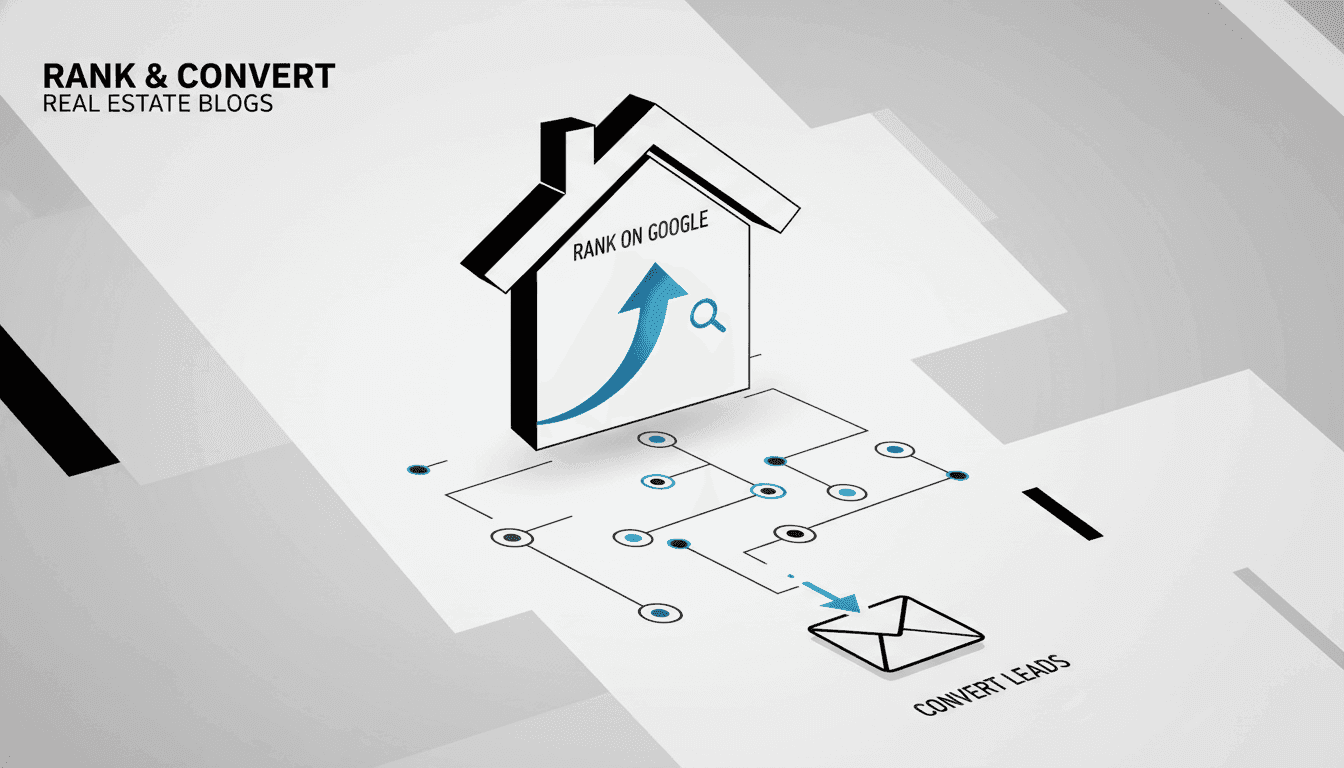
If you’ve ever stared at a blank page wondering what to write for your real estate blog, you’re not alone. We did too—early posts were generic and didn’t generate a single lead. Once we built a simple system—topics our market actually cared about, an easy writing formula, visuals that pop, and an SEO + distribution routine—our posts started ranking, getting shared, and (most importantly) turning into real conversations with buyers and sellers. This is our step-by-step playbook for creating and optimizing real estate blog posts that build trust and drive business.
Why real estate blogging still matters
- It’s an owned channel: We control the message, design, and calls-to-action on our agent blog—no algorithm surprises.
- It compounds: Evergreen posts can rank for years, attract backlinks, and feed our content hub.
- It builds trust: Helpful, locally grounded articles showcase E-E-A-T (Experience, Expertise, Authoritativeness, Trustworthiness).
- It multiplies content: One strong post fuels social captions, email newsletters, reels, and even listing presentations.
Know exactly who you’re writing for
Great real estate blog posts start with a clear audience and intent. We document:
- Demographics: Age ranges, income, household type, location (e.g., first-time buyers in their 30s in urban cores).
- Behaviors: Preferred channels (YouTube, Instagram, Google search, email), when and how they consume content.
- Needs: Timelines, budgets, property types, features/amenities they value.
- Local realities: School districts, commutes, zoning, new developments, micro‑market trends.
We capture topic ideas in a simple “vault” with columns for Idea, Working Title, Audience, Seasonality, Priority, and Due Date. The best sources are client questions from calls/DMs, local news (rent spikes, tax changes, new developments), city data, and lessons from our own transactions.
Pick a niche and build content pillars
Start focused, then expand. Choose 3–5 pillars and build topic clusters around them.
- Buying: First-time buyer timelines, down payment programs, inspections, appraisal.
- Selling: Pricing strategies, staging that moves the needle, what to fix, best time to sell in your market.
- Investing: Rental ROI, cap rates, financing, 1031 basics, local regulations.
- Neighborhoods: Guides, schools, commute tradeoffs, HOA rules, lifestyle.
- Market updates: Monthly/quarterly trends, interest-rate impacts, micro‑neighborhood shifts.
- Sustainable homes: Energy efficiency, solar, materials, incentives.
Create comprehensive pillar pages (e.g., “Living in [City]: The Complete Guide”) and interlink to supporting blogs (individual neighborhood spotlights). This architecture signals topical authority and improves both user experience and rankings.
Set up a blog that’s fast, search-optimized, and credible
- Platform and ownership: We favor WordPress on our own domain for flexibility and long-term SEO. Use the block editor; collaboration notes help when co-writing with lenders or teammates. Alternatives like Wix and Squarespace can work—just ensure SEO fields, speed, and schema are supported.
- Technical must‑haves: SSL, reliable hosting, mobile‑friendly design, logical navigation, clean URLs (/blog/post-slug), XML sitemap, robots.txt, canonical tags.
- Core Web Vitals: Optimize LCP/CLS/INP: compress images (WebP), lazy‑load media, preload key fonts, minimize JS, enable caching/CDN (e.g., Cloudflare).
- SEO basics: Meta titles/descriptions, H1/H2/H3 structure, internal linking, image alt text, breadcrumb schema, Article and FAQ schema (enabled via Yoast/Rank Math).
- Brand and UX: Memorable domain, legible fonts, strong contrast, scannable formatting, clear CTAs.
- Analytics: Install Google Analytics 4 and Search Console. Set conversion events (lead magnet downloads, consultation bookings).
Our content strategy and calendar
- Goals per post: Educate, rank for a specific keyword, capture emails, book consults, promote a listing, or introduce a neighborhood.
- Cadence: Weekly or biweekly is ideal; monthly is the minimum. We block recurring calendar time—one prep session midweek, one write/publish session on a slower day.
- Mix: A 50/50 balance of evergreen and timely content works well.
- Planning: We plan 8–12 weeks at a time and rotate audience segments and formats (how‑tos, listicles, case studies, market updates).
A simple 4‑week launch plan
- Week 1: Cornerstone “Living in [City] Guide” + one neighborhood spotlight.
- Week 2: First‑time buyer guide + Instagram carousels from its checklist.
- Week 3: Seller prep checklist + short video tour of a staged home.
- Week 4: Market update + email newsletter summarizing all four posts.
Keyword research and on‑page SEO checklist (with E‑E‑A‑T)
- Keyword intent: Target search‑driven phrases (e.g., “best neighborhoods in [City] for families,” “moving to [City] in 2025”). Use Google Keyword Planner, Search Console, and “People also ask.”
- Title/H2s: Clear, specific, and naturally include the primary keyword (don’t stuff).
- Readability: Short paragraphs, descriptive subheads every 150–200 words, bullets, and skimmable formatting.
- Meta title/description: Compelling and keyword‑aligned; include city + year when relevant.
- Internal links: Link to neighborhood pages, property search, and service/location pages; link older posts forward to newer ones.
- Images: Descriptive filenames (e.g., maplewood‑park‑playground.jpg) and concise alt text.
- One clear CTA: Book a consult, view listings, subscribe, or download a checklist—keep it consistent.
- E‑E‑A‑T: Add local proof: stats, anecdotes from real transactions, and citations to credible sources. Keep your bio and contact info visible.
- Compliance: Stay fair‑housing safe (avoid “family‑friendly,” “safe,” etc.); add disclaimers where appropriate.
We use a simple framework so posts are clear and conversion‑ready:
- Headline: Promise a tangible outcome. Write 3–5 variations (“How to…,” “X vs. Y,” “7 Costs Nobody Tells You About”). Pick the most current and compelling.
- Hook: A bold, specific opening that tees up the pain and payoff.
- Preview: Two or three bullets on what readers will learn.
- Body: Organized sections with subheads, short paragraphs, local examples, and one chart/map/checklist.
- In‑line CTAs: Tasteful prompts to view listings, download a guide, or book a call.
- FAQ: Answer 3–5 common questions; mark up with FAQ schema.
- Conclusion: Label it clearly, recap in bullets, end with one question + primary CTA.
Copy‑and‑paste real estate blog post template
Title: [Outcome] for [Audience] in [City] ([Year])Hook: 2–4 sentences stating the problem and your promise.Snapshot (What you'll learn):- [Point 1]- [Point 2]- [Point 3]H2: Context in [City/Neighborhood] (data + local color)H2: Step-by-step guidance or checklistH2: Common mistakes and how to avoid themH2: Local examples (neighborhoods, price bands, timelines)H2: Tools, resources, and next stepsMini-FAQ:Q1: [Common question]  A: [Concise helpful answer]Q2: [Common question]  A: [Concise helpful answer]Q3: [Common question]  A: [Concise helpful answer]Conclusion:- [Bullet 1 recap]- [Bullet 2 recap]- [Bullet 3 recap]

CTA: [Book a consult | Download a checklist | View listings]
Content types and angles that consistently work
- Buyer topics: “First‑Time Buyer Guide to Purchasing in [Area],” “Down Payment Assistance Programs in [State/City],” “What to Expect During the Appraisal.”
- Seller topics: “What to Fix Before Listing in [Market],” “Staging Tips That Actually Move the Needle,” “Best Time to Sell in [Market].”
- Local living: “[Neighborhood] Guide: Homes, Schools, Vibe, Commute,” “Historic vs. New Construction in [City].”
- Finance and trends: “How Interest Rates Affect Your Buying Power in [Year],” “Rental ROI in [City].”
- Seasonal: “Winterizing Your Home: [Region] Checklist,” “Spring Curb Appeal Prep.”
- High‑intent angles: “The 45‑Day Buyer Timeline in [City],” “Inspection Red Flags We See (and How We Negotiated),” “New Construction in [Area]: Builders, Lot Premiums, Incentives.”
Make posts lead‑ready: CTAs, lead magnets, and CRO patterns
- Place CTAs early: We include contact info (phone, email, calendar link) near the top and again at the end—ready readers shouldn’t hunt for it.
- Lead magnets: Buyer timelines, seller prep checklists, neighborhood comparison PDFs, investor ROI calculators. Place one above the fold on mobile and another near the conclusion.
- Layout patterns: Clear headline, scannable subheads, one helpful visual per section, in‑line CTA after a key insight, sticky “Book a 10‑minute call” on long posts.
- Friction control: Keep forms short (name + email), avoid intrusive popups, ensure fast page speed.
Visuals, media, and accessibility that boost engagement
- Brand kit: We use Canva to keep colors, fonts, and logo consistent. One image, one idea—clean wins.
- Charts and maps: Visualize a single point (days on market by ZIP, rent trends). Simple bars/lines beat complex dashboards.
- Video: Embed a 2–4 minute clip summarizing the post. We’ve seen time on page jump when we do this.
- Accessibility: Descriptive alt text, high contrast, legible font sizes, caption key visuals.
- Performance: Compress images (WebP), lazy‑load embeds (YouTube placeholders), and use descriptive filenames.
Local SEO that actually moves the needle
- Use local keywords naturally: “[City] homes for sale,” “living in [Neighborhood],” “moving to [City] in [Year]” in the title, first 100 words, one subhead, and alt text (without stuffing).
- Google Business Profile: Post your blogs as updates, keep hours/services/photos fresh, and ask for reviews weekly.
- Internal linking: Connect blogs to service and location pages; interlink neighborhood spotlights to your “Living in [City]” pillar.
- Schema: Article, FAQ, Breadcrumb, and LocalBusiness sitewide. This helps rich results and reinforces trust.
- Freshness: Update winners quarterly. Add “Updated [Month Year]” near the top and refresh the meta description.
- Backlinks: Co‑author with local lenders/designers/inspectors; quote local businesses, link to them, then send them the article—local sites often share and link back.
AI tools: co‑writer, not replacement
- Use AI for speed: Brainstorm topic clusters, draft outlines, generate headline/meta options, summarize research, and pull FAQs from client emails.
- Keep your voice: We never copy‑paste and publish. We inject local nuance, stories, numbers, and compliance checks before hitting publish.
- Auto‑blog caution: Consistency is a benefit, but generic is forgettable. Edit for accuracy and tone, add your photos, fact‑check every stat, and include fair‑housing safe wording.
Promote and distribute: turn one post into a week of content
- Search (SEO): On‑page optimization, interlinking, and periodic refreshes.
- Email: Send the post with a 2–3 paragraph note that leads with the problem you solve; add a clear CTA.
- Social: Convert key ideas into a 5–7 slide Instagram carousel and a 30–60 second Reel. On LinkedIn, share the first paragraphs natively and place the link in the first comment.
- Communities: Participate in local groups/forums; share only when relevant.
- Collaborations: Guest post on reputable local sites; co‑author with lenders or inspectors.
- YouTube: Record a 5–8 minute companion video from your outline; embed it in the blog and pin a comment with your lead magnet.
Measure what matters and iterate
- Traffic and engagement: Page views, unique visitors, average time on page, bounce rate, scroll depth.
- Conversions: Newsletter sign‑ups, guide downloads, consultations booked.
- Rankings: Target keywords and related queries in Search Console; update posts with rising terms.
- Distribution: Social engagement and referral traffic.
- List growth and lead quality: Track by topic to learn what attracts the best clients.
- AI/LLM visibility: Monitor whether your answers surface in AI overviews; strengthen E‑E‑A‑T and clarity to improve inclusion.
We keep a simple log with URL, publish date, word count, lead magnet, and performance at 30/60/90 days—plus a “next update” date.
Monetization options (beyond core lead gen)
- Affiliate recommendations: Moving services, home security, mortgage tools (always disclose).
- Display ads: Keep them unobtrusive to protect UX.
- Premium content: Paid market reports, neighborhood deep‑dives, investor briefings.
- Courses/workshops: First‑time buyer bootcamps, DIY prep‑to‑sell classes.
- Early‑access lists: Curated alerts for specific neighborhoods/property types.
Compliance, brand safety, and quality control
- Fair housing: Avoid discriminatory language; focus on facts and features, not protected classes. Use disclaimers where needed.
- Accuracy: Cite sources (industry reports, local regulations) and update posts as markets shift.
- Trust signals: Author bios, credentials, recent “Updated [Month Year]” stamp, and visible contact info.
- Edit thoroughly: Clear grammar, plain language, and consistent brand tone. Tools like Grammarly can help—but we still do a final human pass.
A 90‑minute “from nothing to published” sprint
- Minutes 0–10: Pick one topic and audience. Draft three titles; choose the best.
- Minutes 10–20: Draft a 5–7 subhead outline (AI can jumpstart it). Add your local examples.
- Minutes 20–30: Write the intro, preview bullets, and top CTA.
- Minutes 30–60: Write each section in short, skimmable paragraphs. Add 2–3 internal links and 1–2 credible external citations.
- Minutes 60–75: Create a feature image in Canva + one simple chart or checklist.
- Minutes 75–85: Add a mini‑FAQ and a clearly labeled Conclusion with a question to spark comments.
- Minutes 85–90: Final edit, alt text, meta title/description, schedule the post, and share to Google Business Profile.
Example 12‑post starter calendar
| Week | Pillar | Working Title | Primary Keyword | Lead Magnet / CTA |
| 1 | Neighborhoods | Living in [City]: The Complete Guide | living in [city] | Neighborhood Comparison PDF |
| 2 | Neighborhoods | Neighborhood Spotlight: [Neighborhood A] | [neighborhood] guide | Shortlist Worksheet |
| 3 | Neighborhoods | Neighborhood Spotlight: [Neighborhood B] | [neighborhood] homes | Map + Commute Cheatsheet |
| 4 | Buying | First‑Time Buyer Timeline in [City] | first time buyer [city] | Buyer Checklist |
| 5 | Buying | Down Payment Programs in [State/City] | down payment assistance [city] | Grant Finder Links |
| 6 | Selling | What to Fix Before You List in [Market] | what to fix before selling | Pre‑List Fixes PDF |
| 7 | Selling | Best Time to Sell in [Market]: What the Data Says | best time to sell [city] | Home Value Consult |
| 8 | Investing | Investor Basics: Rental ROI in [City] | rental roi [city] | ROI Calculator |
| 9 | Market Updates | Interest Rates and Your Buying Power in [Year] | interest rates [year] [city] | Rate Update Alerts |
| 10 | Design/Trends | Design Trends Buyers Want in [Year] | design trends [year] | Prep‑to‑Sell Guide |
| 11 | Seasonal | Seasonal Home Maintenance: [Region] Fall Checklist | home maintenance [season] | Seasonal Checklist |
| 12 | Market Updates | Quarterly Market Update: Q[1/2/3/4] [Year] | [city] market update | Market Brief Subscription |
How long should a real estate blog post be?
- Quick updates: 600–1,000 words.
- Educational/SEO posts: 1,000–1,500 words.
- Deep guides/how‑tos: 1,500–2,500 words.
We prioritize usefulness and clarity over word count, then expand based on what performs in Search Console.
Advanced technical SEO for blogs at scale
- Site architecture: Group content by pillar categories; keep slugs short; avoid thin tag archives (noindex when necessary).
- Schema breadth: Add BreadcrumbList, Organization/LocalBusiness, Article, FAQ; consider VideoObject for embedded videos.
- Pagination and crawl: Paginate category archives, ensure rel="next/prev" UX (even if not used by Google) and provide faceted navigation carefully.
- Canonical discipline: Canonicalize to primary URLs; avoid duplicate “print” or UTM‑bloated versions.
- Image/CDN strategy: Serve WebP/AVIF where supported; use a CDN; lazy‑load below‑the‑fold assets.
Optional content brief skeleton
Primary Keyword: [e.g., best neighborhoods in [City] for families]Search Intent: [informational / commercial]Audience: [first-time buyers / move-up sellers / investors]Goal: [rank + collect emails via checklist / book consults / drive to listings]Angle: [hyperlocal + data-backed + timelines]Outline:- H1:- H2s:Sources to Cite:Internal Links:Lead Magnet:Primary CTA:
Real estate blog FAQs
- How often should we post? Weekly or biweekly is ideal; monthly at minimum. Consistency beats bursts.
- Do blogs still help SEO? Yes—high‑quality pages targeting meaningful queries increase organic visibility and leads over time.
- What’s the best length? 1,000–1,500 words for most articles; shorter for quick updates and longer for deep guides.
- Can we repurpose posts? Absolutely—turn them into reels, carousels, email tips, and web FAQs. Update and re‑promote winners each quarter.
- Which platform? We prefer WordPress on our own domain for SEO control; website builders work if they support SEO fields, speed, and schema.
- What images can we use? Original or licensed photos; always credit and add alt text. Avoid copyrighted MLS photos without permission.
Conclusion: Ship your next post
- Pick one audience and one problem to solve.
- Use the template above and write with local proof.
- Add one clean visual and a single, clear CTA.
- Publish on a consistent cadence and promote everywhere your audience already is.
- Measure, update, and double down on winners.
If you implement just this—block two hours weekly, follow the structure, add a checklist lead magnet, and share to your Google Business Profile—your realtor blog will start working like a quiet, compounding assistant that books calls while you’re at showings.