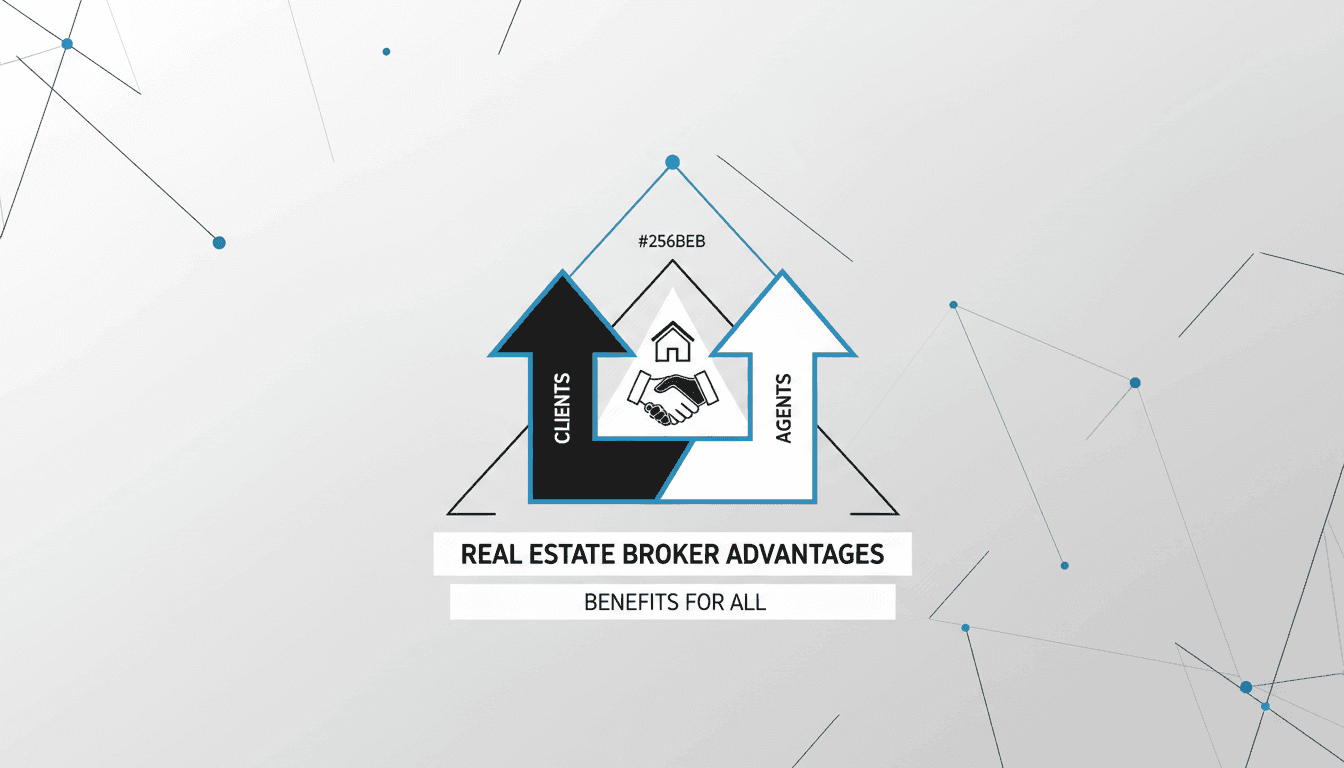
When people talk about “real estate broker advantages,” they usually mix two very different ideas:
- the advantages for clients of working with a real estate broker or agent, and
- the advantages for professionals of becoming a broker or choosing the right brokerage.
We’re going to tackle both, in a practical, no‑hype way. We’ll look at what brokers actually do in the real world—whether you’re buying a home, selling a condo, investing in Dubai real estate, or deciding if it’s time to upgrade from agent to broker.
What Is a Real Estate Broker (vs Agent vs Realtor)?
To understand real estate broker advantages, we need to be precise about the roles involved.
Real estate agent / salesperson
- Holds an entry‑level real estate license after a pre‑licensing course and exam.
- Usually called a salesperson, sales associate, or broker associate depending on the jurisdiction.
- Must work under a licensed broker; their commissions are legally paid through the brokerage.
Real estate broker
- Holds a higher‑level license with additional education and a tougher exam (more law, finance, valuation, property management).
- Often must have a minimum amount of experience as an agent before qualifying.
- Can work independently, open a brokerage, and supervise other agents.
- Legally responsible for compliance, contracts, and oversight of their agents.
Realtor®
- A member of the National Association of REALTORS® (NAR) in the US.
- Can be either an agent or a broker.
- Agrees to follow a specific Code of Ethics and usually gets MLS and association benefits.
This distinction matters because many of the client‑side advantages (accurate pricing, negotiation, compliance) come from the broker’s training and oversight, while many of the career advantages (control, income streams, ownership) are unique to brokers themselves.
Top Real Estate Broker Advantages for Buyers and Investors
1. Accurate Pricing and Fair Market Value
One of the biggest advantages of using a real estate broker is getting a clear, data‑driven answer to a simple but crucial question: “What is this property really worth?”
For buyers and investors, a broker helps to:
- Perform a comparative market analysis (CMA) using recent sales of similar properties, not random asking prices.
- Adjust for location, view, building quality, age, upgrades, and current competition.
- Compare off‑plan vs ready units in markets like the Dubai property market, where payment plans and developer incentives can be misleading if you don’t know how to read them.
- Evaluate expected rental yield, cash flow, and capital appreciation so you’re not just buying a property, you’re buying a sound investment.
This pricing expertise reduces the risk of overpaying—especially in booming, competitive markets like the UAE property market—while helping you grab genuine value when it appears.
2. Saving Time With Targeted Search and Transaction Management
Buying property in Dubai, Quebec, or any major city involves hundreds of small tasks: searching, calling, booking viewings, chasing documents, following up with banks and lawyers. One of the core real estate broker advantages is that they absorb most of this workload.
On the search side, a broker will:
- Clarify your criteria (budget, location, property type, ROI goals, lifestyle preferences).
- Filter the overwhelming number of options so you only see relevant listings instead of wasting weekends touring mismatches.
- Coordinate viewings around your schedule and group visits logically by area.
On the transaction side, they typically manage:
- Offer preparation, conditions, and counter‑offers.
- Communication with the listing broker or seller.
- Deadlines for deposits, inspections, and financing approvals.
- Coordination with mortgage brokers, the Dubai Land Department (DLD) or local land registry, and lawyers/notaries.
We’ve seen buyers try to “go direct” to save a fee, then burn months chasing listings that were already sold or badly priced. With a good real estate advisor keeping everything on track, you buy faster and with far less stress.
3. Market Insights and Local Intelligence
Real estate brokers live in the market every day. They aren’t just reading headlines; they’re seeing where deals are actually being done and at what prices.
Practical advantages of that market insight include:
- Knowing which neighborhoods are genuinely up‑and‑coming vs just hyped.
- Understanding developer track records in the UAE—who delivers on time, who has service charge issues, who has legal disputes.
- Spotting buildings or projects with chronic problems (maintenance, low occupancy, weak rental demand) before you buy.
- Helping you time the market: when to push hard on negotiation, and when demand is so strong that waiting could cost you.
For investors, this kind of on‑the‑ground intelligence is often the difference between a high‑performing portfolio and a collection of “nice‑looking” but underperforming properties.
4. Legal Protection, Compliance, and Reduced Risk
Whether you’re looking at ready properties in Dubai or a condo in Quebec, you’re operating inside a regulatory framework. Another major advantage of working with a real estate broker is that you’re not flying blind through that legal maze.
In Dubai and the wider UAE:
- RERA‑certified brokers are trained on DLD and RERA regulations and must follow strict compliance standards.
- They use approved contracts, ensure proper registration, and guide you through escrow accounts, title deed issuance, and transfer procedures.
- For off‑plan projects, they help verify project approvals, developer credibility, and escrow compliance so your money is protected.
In Quebec and other regulated markets:
- Brokers operate under the Real Estate Brokerage Act and are overseen by bodies like OACIQ.
- They’re backed by professional liability insurance funds such as FARCIQ, which provide a layer of recourse if something goes badly wrong.
Day‑to‑day, this translates into properly drafted offers, correct disclosures, valid conditions, and fewer nasty surprises before or after closing.
5. Negotiation Support and Emotional Buffer
Price and terms are where a real estate broker’s negotiation skills really show up as an advantage.
A skilled broker will:
- Help you define your strategy: is your priority best possible price, speed, or securing a rare property at fair value?
- Use hard data (recent sales, days on market, competition) to justify your offer to the other side.
- Structure contingencies (financing, inspection, legal review) to protect you without killing the deal.
- Handle back‑and‑forth counter‑offers while keeping emotions in check.
We’ve watched buyers fall in love with a property and want to “just pay asking to get it over with,” and sellers refuse excellent offers out of pride. Having a professional buffer in the middle often means calmer decisions and better financial outcomes.
6. Access to Networks and Professional Contacts
Real estate brokers don’t work alone. Another under‑appreciated broker advantage is the professional network that comes with them.
Through a broker, you can quickly access:
- Mortgage brokers and bank contacts who understand your profile (expat, investor, self‑employed, etc.).
- Real estate lawyers or notaries who specialize in property transactions.
- Inspectors and surveyors you can trust to be thorough and objective.
- Property managers if you’re buying for rental income.
- Contractors, designers, or staging consultants if you plan renovations.
Instead of Googling and hoping you pick the right people, you tap into a network that’s already been tested through previous transactions.
7. Peace of Mind and a Single Point of Contact
Finally, we shouldn’t underestimate the psychological benefit of working with a professional real estate broker. Real estate deals combine big money, tight deadlines, and high emotion. Having one trusted ally coordinating everything is, for many clients, the biggest advantage of all.
In practice, this means:
- One person who knows the full picture and keeps you updated.
- Fewer late‑night Google searches trying to decipher legal or tax jargon.
- Less fear of “missing something” in the fine print.
- Confidence that someone whose full‑time job is real estate is guiding your decisions.
Real Estate Broker Advantages for Sellers
1. Professional Pricing Strategy From Day One
For sellers, correct pricing is often the difference between a smooth sale and months of frustration.
With a broker, you get:
- A thorough market analysis that looks at real sold prices—not just wishful thinking from current listings.
- Strategic pricing based on your goals (quick sale, best possible price, or a balance of both).
- Advice on timing and positioning based on market trends—are you in a seller’s market, a buyer’s market, or a shifting one?
We see too many owners start high, then chase the market down with multiple price cuts, only to sell for less than they could have if they’d priced realistically from the beginning.
2. Powerful Marketing and Increased Visibility
Listing a property is more than putting it on one portal. One of the strongest advantages of working with a real estate broker is the marketing engine you plug into.
A good broker will typically provide:
- Professional photography and often video walkthroughs or virtual tours.
- Advice on decluttering and staging to show the property at its best.
- Distribution on major real estate portals and social media campaigns.
- Access to broker‑only systems like Centris.ca in Quebec, or MLS‑equivalent platforms elsewhere.
- Exposure to the broker’s own database of buyers and investors.
This increased visibility usually leads to more showings, more interest, and potentially multiple offers—giving you stronger leverage when it’s time to negotiate.
3. Managing Viewings, Offers, and Paperwork
On the sell side, another big broker advantage is having someone else manage the constant stream of activity.
Typically, the broker will:
- Pre‑qualify buyers to filter out time‑wasters.
- Coordinate all property visits and open houses to minimize disruption to your life.
- Receive and present offers in a clear, comparable format.
- Help you choose between different terms (price vs conditions vs closing date).
- Handle counter‑offers and negotiation details.
- Work with the buyer’s broker, lawyers, and lender to keep the deal on track.
The net effect is a smoother, more predictable selling experience where you focus on key decisions instead of logistics.
4. Legal Protection and Reduced Liability for Sellers
Sellers have legal obligations too, and this is an area where having a professional real estate broker is a significant advantage.
- Brokers help you meet disclosure requirements and avoid claims of misrepresentation.
- They use standard, legally vetted contracts and addendums instead of homemade versions.
- They coordinate inspections, appraisal issues, and title problems so you don’t accidentally breach a contract.
Especially in heavily regulated markets, this layer of protection is worth far more than the commission you’re paying.
How Real Estate Broker Advantages Vary by Market (Dubai, Quebec, etc.)
Dubai and the UAE: RERA‑Certified Brokers in a Booming Market
In the Dubai real estate market, using a licensed, RERA‑certified broker offers specific advantages:
- Compliance: Making sure every step respects DLD and RERA regulations, especially for foreign investors unfamiliar with the system.
- Project vetting: Checking that off‑plan projects are officially registered, escrow accounts are in place, and developers have a history of delivery.
- Fee transparency: Helping you understand typical Dubai real estate broker commissions (around 2% on sales, 5% on rentals) and who pays what.
- Access to inventory: Connecting buyers to both off‑plan and ready properties, sometimes including pre‑launch or broker‑exclusive releases.
Quebec and Other Regulated Provinces/States
In places like Quebec, the advantages of working with a real estate broker are closely tied to the regulatory framework:
- Mandatory licensing, education, and ongoing training.
- Oversight by bodies like OACIQ and recourse via FARCIQ.
- Standard forms and procedures that reduce room for error.
For both buyers and sellers, this translates into strong consumer protection and consistent professional standards.
Real Estate Broker Advantages for Agents and Professionals
So far, we’ve focused on the advantages to clients. Now let’s flip the lens. If you’re already an agent—or considering a real estate career—what are the advantages of becoming a broker or choosing the right brokerage?
1. More Control Over Your Business (Agent vs Broker)
As an agent, you’re effectively an independent salesperson inside someone else’s company. As a licensed broker, you can:
- Work independently or open your own brokerage.
- Set your own commission splits, caps, and fee structure.
- Define your niche: luxury, REO, investment properties, commercial real estate, relocation, military, or a local neighborhood specialty.
- Build and promote your own brand instead of someone else’s.
We see this as the jump from being a high‑earning salesperson to being a true business owner in real estate.
2. Multiple Income Streams (Beyond Your Own Deals)
One of the biggest real estate broker advantages from a career perspective is moving from a single income stream to multiple.
Instead of only:
- “Close a deal → get paid once → start over,”
you can add:
- Overrides or splits on production from agents under your brokerage.
- Revenue share models (in platforms like eXp or Real) where you earn a portion of company revenue from agents you’ve attracted, sometimes across multiple tiers.
- Stock or equity awards from cloud brokerages tied to your production, attraction, or contribution.
- Ancillary businesses: property management, coaching, investment syndications, and in some cases profit‑sharing from mortgage, title, or insurance partners.
We’ve seen brokers and team leaders build six‑figure incomes from these additional streams on top of their personal production when they deliberately structure for leverage.
3. Higher Earning Potential (With Higher Responsibility)
Becoming a broker doesn’t magically increase your income—it increases your ceiling.
- Top brokers often earn more from agent production, revenue share, and equity than from their own transactions.
- Commercial brokers with strong books can move into mid‑six‑figure or seven‑figure incomes in the right markets.
- Broker‑owners can build a saleable asset instead of a career that ends when they stop working.
In exchange, you take on greater liability, compliance obligations, and people management. That trade‑off is exactly why understanding the broker role clearly is so important before you make the jump.
4. Career Mobility and Exit Options
Brokerage experience opens doors that are harder to access if you stay at the basic agent level.
Common paths we see include:
- Moving into acquisitions, asset management, or capital markets for developers and investment firms.
- Starting or scaling an investment company using your market knowledge and deal flow.
- Opening boutique or franchise brokerages focused on a specific segment (luxury, affordable housing, mission‑based models, etc.).
- Transitioning into coaching, training, or leadership roles inside a large real estate brokerage company.
5. Leadership, Impact, and Community Role
At broker level, you’re not just doing deals—you’re shaping people and culture.
- You set training standards and ethics expectations for your team.
- You decide which community initiatives or nonprofits your brokerage supports.
- You create opportunities for newer agents to build careers and for clients to be served at a higher level.
We’ve seen broker‑owners explicitly design their brokerages to fund charitable work or support specific groups (for example, single parents, veterans, or local housing causes), turning their business into a platform for impact, not just income.
Modern Brokerage Models and What They Change
Not all brokerages look the same anymore. Choosing the right model can dramatically change the advantages you experience as an agent or broker.
1. Traditional Office‑Based Brokerages
Advantages:
- Physical office space and in‑person community.
- Local broker in the building and hands‑on oversight.
- Structured in‑office mentoring and training.
Trade‑offs:
- Often lower splits and more fees (desk fees, tech fees, franchise fees).
- Less flexibility to promote your personal brand heavily.
- Limited passive income or equity opportunities.
2. Cloud‑Based Brokerages (eXp, Real, and Similar)
Cloud brokerages compress many traditional real estate broker advantages into a virtual platform.
Typical benefits include:
- High agent splits with reasonable caps (e.g., 80/20 or 85/15 until a fixed cap).
- Company‑wide live and on‑demand training from top producers instead of only local voices.
- Stock purchase plans and free equity awards tied to production and cultural contribution.
- Revenue share models that reward you for attracting and supporting other agents.
- Integrated tech stacks for CRM, transaction management, marketing, and e‑signatures.
In practice, this gives individual agents access to some of the financial and strategic advantages that used to be reserved for full brokerage owners—without needing to rent an office or manage payroll.
3. Boutique and Mission‑Based Brokerages
Boutique shops and mission‑driven brokerages offer another flavor of advantages:
- Tighter culture and closer mentoring from the broker.
- Flexibility to design service models around a specific niche or social mission.
- Strong brand alignment for agents who care deeply about a particular cause or client type.
Here, the advantage is less about global scale and equity programs, and more about depth of support, autonomy, and values.
When Becoming a Broker Is Not an Advantage (Yet)
With all these upsides, it’s easy to romanticize broker status. We’ve seen people rush into a broker’s license or brokerage ownership before they’re ready and end up overwhelmed.
It may not make sense to become a broker—yet—if:
- You don’t want the stress of being legally responsible for other people’s mistakes.
- You dislike managing, recruiting, and sometimes firing people.
- Your own production and skills (contracts, pricing, negotiation, lead generation) are not yet solid.
- You haven’t built or don’t understand a realistic budget for startup and monthly overhead.
- Your real goal is to be a property investor, not to build a sales organization.
In those cases, the smarter move is often to join a strong, agent‑centric brokerage, build a highly profitable agent business, and leverage their systems, rather than trying to reinvent the wheel prematurely.
How to Choose a Brokerage That Maximizes Your Advantages
Whether you’re a new agent or an experienced broker considering a move, the brokerage you pick will shape your income, stress level, and long‑term options.
Key factors we always look at include:
- Onboarding and support: how smooth the setup is and how responsive the broker is when deals get messy.
- Training and coaching: is it just contract basics, or do they actually teach lead generation, pricing, and negotiation?
- Fee and split structure: how much you keep, which fees you pay (monthly, per transaction), and what you truly get in return.
- Technology and tools: CRM, marketing, transaction management, and how usable they are in practice.
- Culture and branding: how much freedom you have to build your brand, and whether the environment is agent‑centric.
- Speed of payment: how quickly you’re paid after closing and how transparent the accounting is.
In other words, the “broker advantages” you experience day‑to‑day as an agent depend heavily on the structure you plug into, not just the logo on your business card.
Bringing It All Together: Are Real Estate Brokers Worth It?
When we strip away the sales pitch and look at the day‑to‑day reality, the advantages of real estate brokers fall into two broad buckets.
For clients (buyers, sellers, and investors):
- Accurate pricing and informed negotiation.
- Time savings and hassle‑free transaction management.
- Legal protection and compliance with local regulations (DLD/RERA, OACIQ, etc.).
- Access to better marketing, visibility, and professional networks.
- Reduced risk and greater peace of mind in complex, high‑stakes decisions.
For professionals (agents and aspiring brokers):
- More control over business model, brand, and strategy.
- Multiple income streams beyond one‑off commissions.
- Higher earning potential and the possibility of building a saleable business.
- More career mobility into investing, leadership, or specialized roles.
- Greater capacity to lead, mentor, and make an impact.
Used wisely, these advantages can protect your interests as a client and transform your trajectory as a real estate professional. The key is choosing the right broker—or becoming the kind of broker—who truly delivers on them, rather than just talking about them.