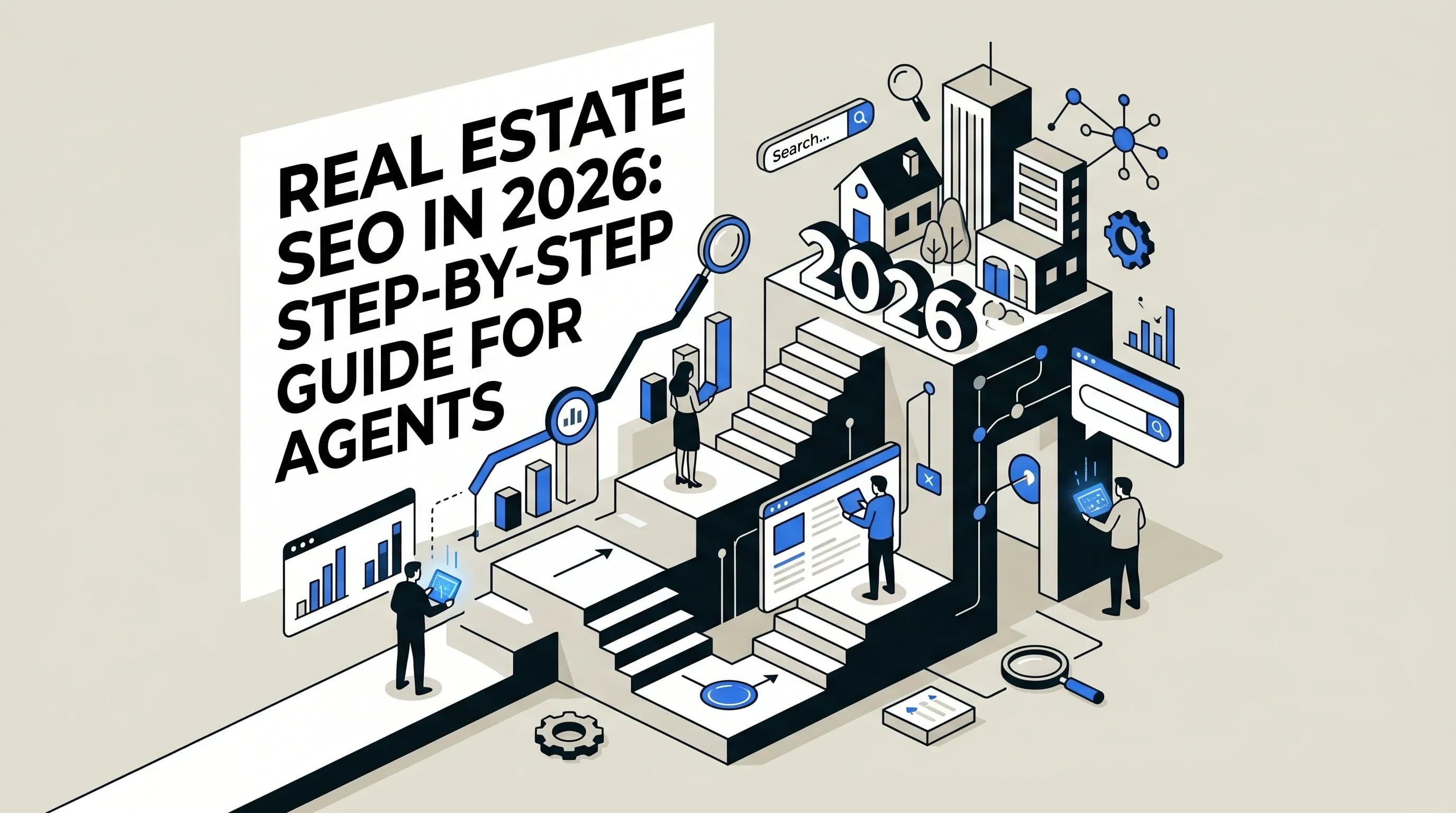
Real estate SEO in 2026 is not “write some blogs and hope for leads” anymore. Search has fragmented across Google, AI assistants, YouTube, Instagram, TikTok, and real estate portals—while AI has made it trivial to churn out generic content. That means generic is now basically invisible.
In this ultimate step‑by‑step guide, we’ll walk through how we, as real estate professionals, can turn SEO into a 24/7, AI‑ready lead‑generation system that actually produces clients, not just clicks. We’ll cover everything from Google Business Profile and website architecture to Answer Engine Optimization (AEO), YouTube, and social search so you can dominate your local market in 2026.
What Real Estate SEO Is (and Why 2026 Is Different)
Real estate SEO (or property SEO) is the practice of making sure our brand, services, and listings show up when people search online for:
- “homes for sale in [city]” or “condos for sale in [neighborhood]”
- “realtor near me” or “best real estate agent in [city]”
- “investment properties in [city]” or “off plan property in Dubai”
- “how to sell my house in [market]” or “[city] real estate market update”
Unlike paid ads, SEO is a compounding, evergreen asset. Every high‑quality page, review, backlink, and video we publish makes the next ranking win easier and reduces our long‑term cost per lead.
Why SEO matters more than ever in 2026
Across markets, a few truths hold:
- Most buyers and sellers start online—often before they even talk to a human.
- 90%+ of users never go past page one of Google.
- Competition and ad costs on portals and PPC keep rising, squeezing margins.
On top of that, two shifts are redefining visibility:
- AI‑powered search & zero‑click results – Google’s AI Overviews, Bing’s AI, ChatGPT, Perplexity, and voice assistants now answer questions directly, often without a click. They quote and recommend sources they trust.
- Social platforms as search engines – Instagram, TikTok, and YouTube are now where people search “best neighborhood in [city]” or “how to buy a house in [market] with 5% down.”
So modern real estate search engine optimization in 2026 is about becoming the best, most quotable answer across Google, Maps, YouTube, and AI assistants—not just ranking a few listing pages.
Get Your Strategy Right Before You Touch SEO
We see agents jump into SEO with a random mix of blogs, IDX feeds, and social posts. That’s how you end up busy but invisible. Instead, we start with a simple strategic frame that maps directly to our SEO roadmap.
Define your “why, work, wall, win”
Before we choose keywords or write content, we answer four questions:
- Why – What do we want SEO to do specifically?
- Generate 10 more seller listings per year in three core suburbs?
- Get 5 relocation buyers per month from YouTube and Google?
- Be the default luxury agent for one micro‑market?
- Work (Business As Usual) – What’s already working?
- Are we getting any leads from our current website or Google Business Profile?
- Do people already mention “We saw your living in [area] video”?
- Which content in the last 6–12 months got the most views, saves, or inquiries?
- Wall – What’s in our way?
- No time, no system, perfectionism, fear of video, or “I’m not techy.”
- External walls: low inventory, higher rates, tough competition.
- Win – Our 2026 SEO north star in one sentence. For example:
“In 2026, we will generate 10+ listings a year in [Area 1] and [Area 2] by dominating Google and YouTube for those markets, while overcoming our fear of video and inconsistency, so we build a brand that outlasts any one market cycle.”
This becomes our filter: if an SEO, content, or social idea doesn’t serve that win, we deprioritize it.
The 2026 Search Landscape: Google, AI & Social Search
To design a real estate SEO strategy that works now, we need to understand where people actually search and how algorithms choose “best answers.”
Google is still king—but AI is rewiring it
Google search volume is still rising, but AI Overviews are changing how clicks are distributed. For many “best areas to invest in [city]” or “how to sell my house in [city]” queries, Google now:
- Shows an AI‑generated summary at the top
- Pulls citations and snippets from a handful of trusted sites
- Pushes traditional blue links further down the page
That means our content must be:
- Structurally clear (H2/H3, bullet points, concise definitions)
- Fact‑based and localized (numbers, time frames, price ranges)
- Explicit about where we operate and who we serve
We’re not just trying to win positions 1–3; we’re trying to become the source AI uses and cites
AI assistants & Answer Engine Optimization (AEO)
ChatGPT, Gemini, Claude, Perplexity, and voice assistants learn from:
- Web content (blogs, guides, FAQs)
- YouTube transcripts
- Reddit and long‑form community answers
- Press, data roundups, and high‑authority niche sites
When someone asks “Who’s the best real estate agent in [city]?” or “Which agent specializes in [neighborhood] investment properties?”, these systems look for:
- Brands mentioned repeatedly across trusted sources
- Clear expertise in that geography and niche
- Structured, Q&A‑style content they can quote safely
That’s the heart of Answer Engine Optimization: we’re building a digital identity AI systems trust, not just chasing blue links.
Social platforms as discovery engines
Instagram, TikTok, and YouTube process billions of searches per day. People search with full sentences like:
- “How do I buy a house in Dallas with 5% down?”
- “Best neighborhoods in Dubai Marina for families”
- “Pros and cons of living in [suburb]”
We’ve seen over and over that a client’s journey looks like this:
- They see a YouTube video or Reel about “Living in [Area]”.
- They binge a few more videos and follow us on social.
- Weeks or months later, they Google our name or “best agent in [Area]”.
- Our optimized site and Google Business Profile convert them into a call or consultation.
So in 2026, SEO for real estate is inseparable from our YouTube and short‑form content.
The 6 Structural Pillars of Real Estate SEO
Everything that consistently works for property SEO in 2026 fits into six pillars:
- Google Business Profile & local signals
- Our real estate website (architecture, content, UX)
- Local SEO & citations
- Reviews & reputation
- Content marketing, video & Answer Engine Optimization (AEO)
- Backlinks & authority
We’ll turn each pillar into concrete, step‑by‑step actions you can follow.
Pillar 1 – Google Business Profile: Your #1 Local Asset
For local SEO for real estate agents, Google Business Profile (GBP) is often the fastest and highest‑intent channel. It powers the Google Map Pack, “realtor near me” searches, and a lot of AI and voice recommendations.
Step‑by‑step GBP optimization for real estate
- Claim & verify your profile at business.google.com.
- Use your real business name—don’t stuff it with keywords like “Best Real Estate Agent in [City]”. That can trigger suspensions.
- Choose the right categories:
- Primary: “Real Estate Agent” or “Real Estate Agency”
- Secondary (only if true): “Property Management Company”, “Commercial Real Estate Agency”, “Real Estate Consultant”, “Buyer’s Agent”, “Seller’s Agent”
- Fill out every field:
- Exact Name, Address, Phone (NAP)
- Service areas (neighborhoods, ZIP codes, districts you actually serve)
- Website URL pointing to your most relevant page
- Opening hours and special hours
- Business description (up to 750 characters) including city, services, and positioning (e.g., “We help relocation buyers and investors in [areas]”).
- Upload 20–50 high‑quality photos:
- Team and headshots
- Office exterior/interior
- Recent listings and sold properties
- Local landmarks and communities where you specialize
- Post weekly:
- New listings and open houses
- Recently sold properties
- Short market updates
- Buyer/seller tips for your city
- Set up a review generation system:
- Ask at closing with a QR code linking straight to your GBP review form.
- Follow up with a simple SMS/email request and direct link.
- Encourage story‑based reviews that naturally mention locations (“sold our home in [neighborhood] above asking”).
We’ve watched agents go from nearly invisible to being in the top 3 for “best real estate agent in [city]” simply by treating GBP like a core marketing asset rather than a set‑and‑forget listing.
Connect GBP and your website
Your GBP website URL should point to a page that reinforces your location and service:
- Title tag: “[City] Real Estate Agent – [Brand]”
- H1: “Real Estate Agent in [City] Helping You Buy & Sell Homes”
- Exact same NAP as GBP (and schema markup for
LocalBusiness or RealEstateAgent)
- Embedded Google Map of your office location
- Google reviews embedded or highlighted for social proof
Pillar 2 – Your Real Estate Website: From Brochure to 24/7 Demand Engine
Most agent sites are glorified brochures or IDX dumps. To rank and convert in 2026, our site has to be built around search intent and user journeys, not just pretty design.
Core page architecture every real estate website needs
We structure real estate website SEO around systems of pages rather than isolated content:
- Home page – A clear “sales letter” that explains who we are, where we work, and what to do next.
- Buy with us – Dedicated page for buyers (or several if we serve different segments like first‑time buyers vs investors).
- Sell with us – Dedicated seller pages, ideally one per core area (“Sell my house in [neighborhood]”).
- Community / neighborhood pages – One in‑depth area guide per priority community (“Living in [Area]”, “Homes for sale in [Area]”).
- Property‑type pages – “Apartments for sale in [city]”, “Villas for sale in [community]”, “Luxury condos downtown”.
- Investor & off‑plan pages – “Investment properties in [city]”, “Off plan apartments in Business Bay”, “Best areas to invest in Dubai”.
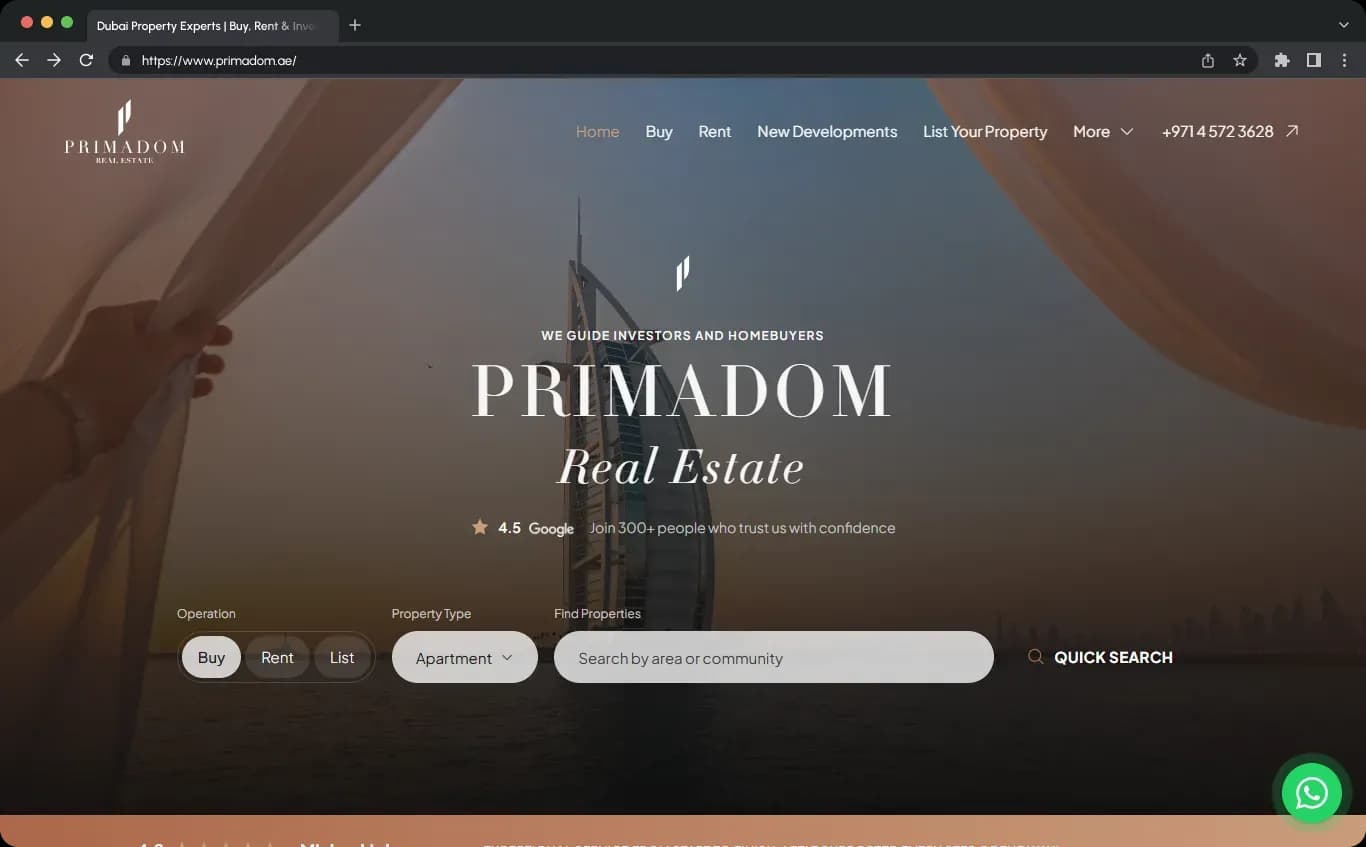
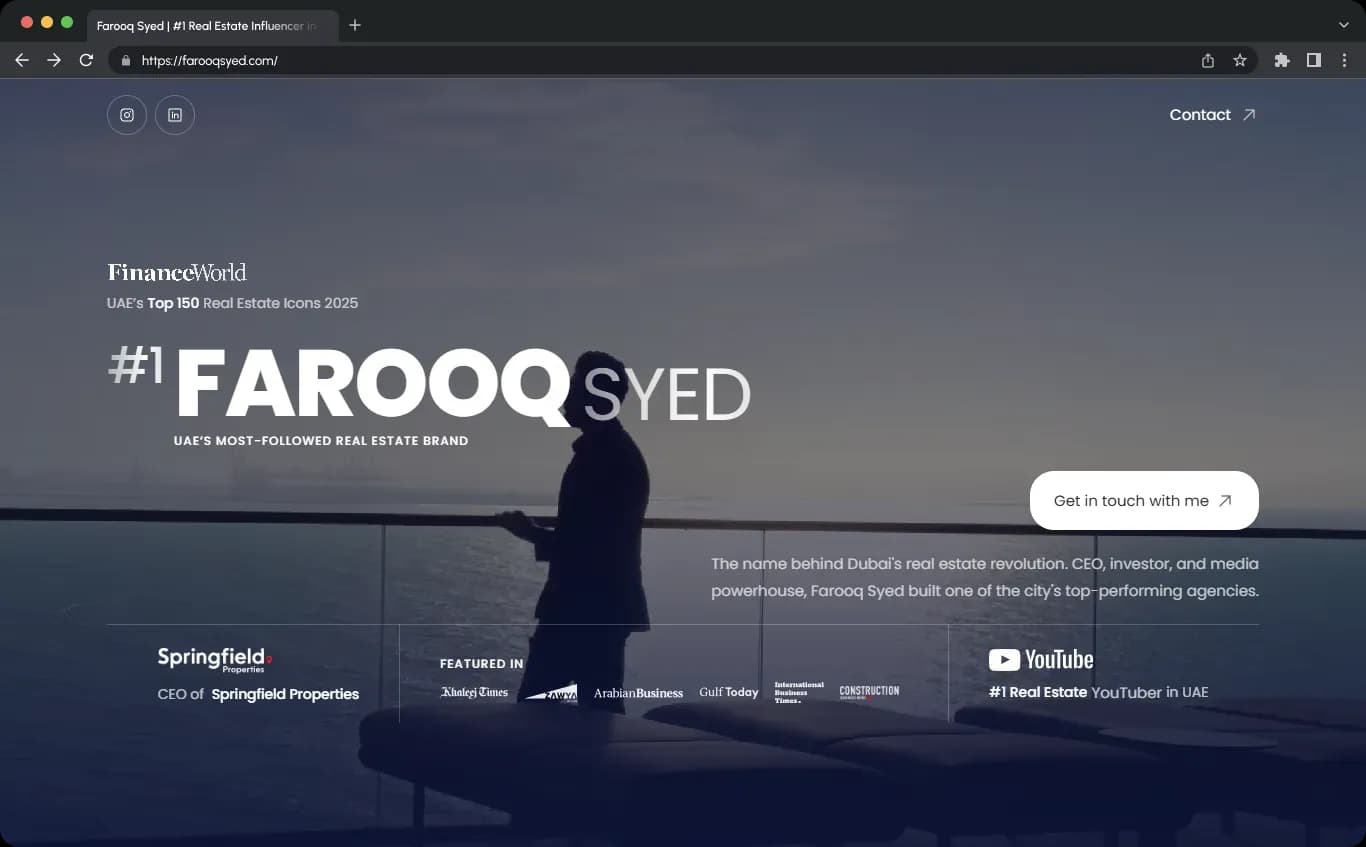
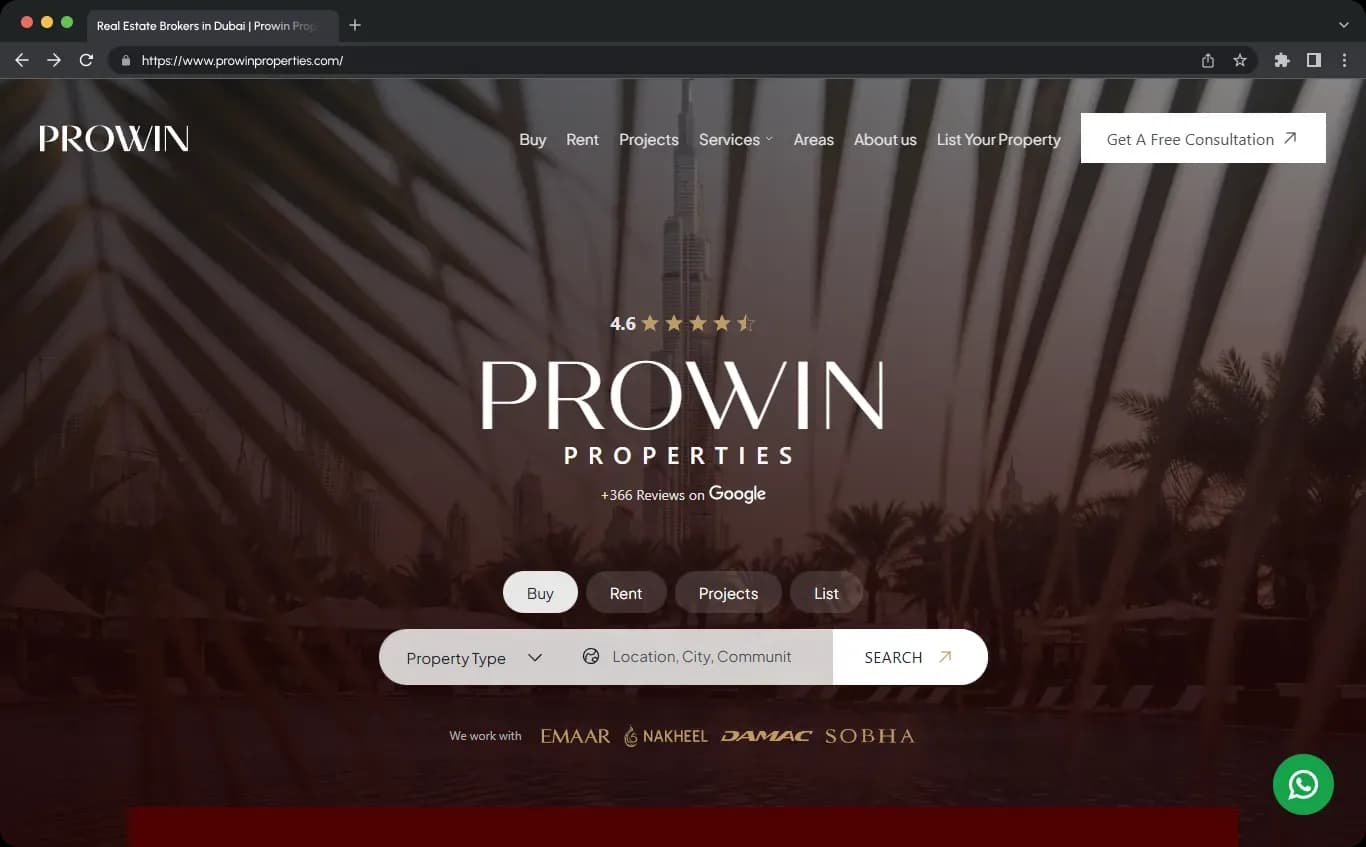
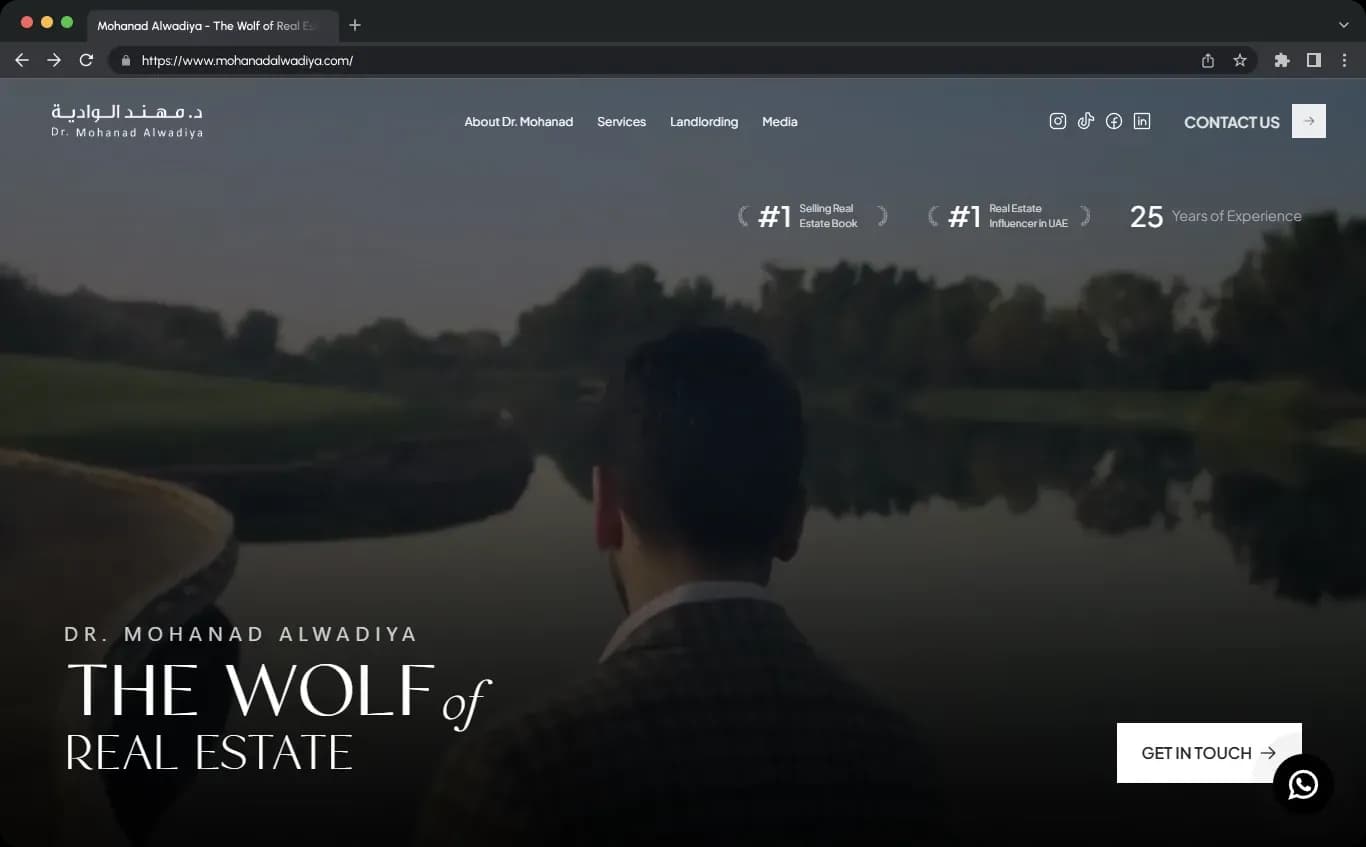
- Trust & proof pages – Testimonials, case studies, FAQs, “In the media”, clear “How we work” process pages.
- Content hub – Blog or resource center with market updates, guides, and comparisons.
Above the fold: design for clarity and conversion
The top of our homepage should do one thing brilliantly: tell the right visitor they’re in the right place, and what to do next. We’ve tested simple layouts that outperform fancy carousels and full‑screen videos.
Elements that consistently work:
- A clear, benefit‑driven headline:
- “Helping Families Buy & Sell Homes in [City’s Western Suburbs]”
- “Luxury Real Estate in [Area] – Local Experts Since 2012”
- Your face or team shot (people trust people, not logos).
- One primary CTA in a standout color:
- “Book a Strategy Call”
- “Get Your [City] Home Value”
- One secondary CTA for those not ready to talk:
- “Watch Our 3‑Minute [City] Market Update”
- “Download the 2026 [City] Moving Guide”
- Above‑the‑fold proof: logos of publications you’ve been featured in, awards, or review stars.
On‑page SEO for key real estate pages
For each important page (community, service, investor, seller), we:
- Choose one primary keyword/intent, like “homes for sale in [neighborhood]” or “sell my house in [city]”.
- Write a title tag that’s clear, not clever:
“3–4 Bed Homes for Sale in [Neighborhood] | [Brand] Real Estate”
- Use a matching H1 that mirrors the core idea.
- Structure the page with H2/H3 sections that match real user questions:
- “Is [Neighborhood] a good place to live?”
- “What types of homes are for sale in [Neighborhood]?”
- “[Neighborhood] real estate market update 2026”
- “Schools, commute & lifestyle in [Neighborhood]”
- Include internal links to:
- Related blog posts (“Pros and cons of living in [Area]”, “Best areas in [City] for families”).
- Service pages (“Buy with us in [City]”, “Sell your [Area] home”).
- Add original photos and ideally video (embedded YouTube neighborhood tour, for example).
- Offer CTAs that match their intent:
- For buyers: “See all homes for sale in [Area]”, “Book a tour”, “Get notified of new listings”.
- For sellers: “Get your [Area] home value”, “See our recent [Area] sales”.
“Living in / Moving to” pages that actually rank and convert
Generic “nice place to live” pages get ignored by both Google and humans. The pages that work feel like an honest, nuanced conversation with a local expert.
We structure these like this:
- Hook + overview:
“Thinking of moving to [Area]? Here’s what it’s really like in 2026 (the pros, the cons, and the surprises buyers don’t see on portals).”
- Map + orientation: where it sits relative to the city center, major highways, water, etc.
- Neighborhood breakdowns inside the area: key subdivisions or clusters and who they’re great for.
- Housing stock & pricing: typical home types, age, price ranges, HOA quirks, off‑market realities.
- Schools, commute, lifestyle: specifics, not brochure adjectives.
- Who it’s ideal for / not ideal for (without violating fair housing): commuters, remote workers, downsizers, etc.
- Real stories: examples of clients you’ve helped move in and what surprised them.
- Clear next steps: consult link, area guide download, or “see homes for sale in [Area]”.
We then optimize content with an NLP‑style tool (like Rankability, Clearscope, or Surfer) to make sure we’re covering the same semantic themes as the top‑ranking pages—while keeping our examples and voice personal and local.
“Sell my house in [Area]” pages for high‑value listings
Instead of sending sellers to a generic or third‑party valuation form, we build seller pages per core area that target phrases like “sell my house in [neighborhood]”, “[city] listing agent”, and “how to sell a house in [area]”.
These pages typically include:
- Area‑specific intro: what’s different about selling in 2026 vs three years ago.
- Short lead form above the fold with a clear promise (“Get your custom [Area] home value and strategy”).
- Proof: past sales in that area with photos, prices, and days on market.
- Our process tailored to that micro‑market: pricing strategy, staging norms, buyer expectations.
- FAQ section on selling in that area, written as real questions and concise answers.
- Testimonials from sellers in that exact community.
Pillar 3 – Local SEO, Citations & Hyperlocal Content
Real estate is hyper‑local. We can’t dominate “real estate” nationwide (and we don’t need to). We want to own our communities and segments.
NAP consistency & citations
We ensure our Name, Address, Phone (NAP) are identical across:
- Google Business Profile, Apple Maps, Bing Places
- Portals (Zillow, Realtor.com, Homes.com, Property Finder, Bayut, etc.)
- Facebook, Instagram, LinkedIn business pages
- Local chamber of commerce, business directories, and industry associations
- Our broker’s website and any personal microsites
Inconsistent NAP might sound trivial, but we’ve seen cases where cleaning up old or duplicate listings noticeably improved Map Pack rankings within a few weeks.
Hyperlocal content: community‑level SEO
Instead of chasing only “[city] homes for sale,” we target how real clients search:
- “[neighborhood] homes for sale”
- “family homes near [school name]”
- “[community] rental yield 2026”
- “best neighborhoods in [city] for young families”
- “off plan apartments in [specific area]”
We group our content by core markets—usually 3–4 areas that drive most of our deals. For each, we create a cluster of:
- “Living in / Moving to [Area]” guide
- “Best neighborhoods in [Area]”
- “Sell my house in [Area]”
- “[Area] real estate market update [quarter/year]”
- Optional: cost of living, pros & cons, new construction in that area
Pillar 4 – Reviews & Reputation as Ranking Fuel
Reviews are not just social proof; they’re also a local ranking factor and part of how AI systems gauge trust.
Build a review generation system
We don’t leave reviews to “whenever we remember.” We systemize them:
- Ask at closing (in person) with a QR code to the review link.
- Follow up by text and email within 24–48 hours.
- Make it clear how much it helps (“This is how people like you find us instead of portals”).
We encourage detailed, story‑driven reviews that naturally include:
- Location: city/neighborhood names
- Service type: selling, buying, investing, relocation
- Outcome: “sold in 5 days”, “negotiated repairs”, “closed under budget”, etc.
Then we respond to every review—good or bad—with specifics. Over time, building 50–200+ high‑quality Google reviews can dramatically shift our Map Pack visibility and conversion rates.
Pillar 5 – Content Marketing, Video & Answer Engine Optimization (AEO)
In the zero‑click, AI‑assisted era, our content needs to do two things:
- Help humans make decisions about buying, selling, or investing in our markets.
- Be structured so Google, YouTube, and AI assistants can easily understand, rank, and quote it.
Content with a commercial purpose
We don’t “blog for blogging’s sake.” Every major piece supports a commercial goal or “money page.” For example:
- Pillar page: “Home buying in [City]: The complete 2026 guide”
Supporting posts:
- “Closing costs in [City] explained (2026)”
- “First‑time buyer programs in [City]”
- “Best neighborhoods in [City] for families”
- Pillar page: “Investment properties in [City]: Where to buy in 2026”
Supporting posts:
- “Best areas to invest in [City] for rental yield”
- “Off plan property in [City] – pros, cons, and top projects”
Each supporting article links to the pillar, and the pillar links back—creating a topical cluster that search engines treat as authority.
Structuring for AEO & featured snippets
We make our content “answer‑engine friendly” by:
- Starting key sections with a direct, 2–3 sentence answer to a question like:
- “What are closing costs in [city]?”
- “How long does it take to sell a house in [area]?”
- Following the short answer with more detail, examples, and context.
- Using clear, descriptive H2/H3 headings and bullet lists.
- Adding FAQ blocks at the end of important pages with real question wording (we can mark them up with
FAQPage schema).
This structure helps us win featured snippets on Google and improves our chances of being cited in AI Overviews.
YouTube: the underrated real estate SEO channel
We treat YouTube as a core piece of real estate SEO, not an optional extra. Here’s how we approach it:
- For each core area we serve, we create:
- “10 things to know before moving to [Area] in 2026”
- “Pros and cons of living in [Area]”
- “Cost of living in [Area] [year]”
- Monthly or quarterly “[Area] real estate market update”
- We title videos in the exact language people search (full questions, not vague phrases).
- We add detailed descriptions with:
- Clickable timestamps labeled as questions (“02:15 – What do homes cost in [Area] in 2026?”).
- Links to our “living in [Area]” guide, home search, and consult booking page.
- We group videos into playlists like “Moving to [City]”, “[Area] neighborhood tours”, and “Market updates”.
The combination of localized, question‑driven titles and structured descriptions makes our YouTube channel very attractive training data for AI, and we see those videos driving both direct leads and branded Google searches for our names.
Short‑form video & social discovery
In 2026, raw and honest vertical video usually outperforms polished studio shoots. We build a simple weekly rhythm of:
- Quick tips (“Thinking of selling your [City] home in 2026? Watch this first.”)
- Local lifestyle clips (parks, cafés, events, school drop‑off routes).
- Behind‑the‑scenes (showings, inspections, staging, “day in the life”).
We use hooks that mirror real search queries, on‑screen captions that match those hooks, and CTAs that keep engagement inside the app (“Comment ‘guide’ and we’ll DM you our full [Area] relocation checklist”). These conversations often precede a Google search for our name, which is where our SEO foundation takes over.
Pillar 6 – Backlinks & Authority
Backlinks are still some of the strongest authority signals for real estate SEO. But we don’t chase spammy directories or bought links. Instead, we earn links that deserve to exist.
Link‑worthy real estate content ideas
- Data‑driven pages:
- “Best areas to invest in [city] for rental yield in 2026”
- “[City] real estate price trends over the last 5 years”
- “[Area] vacancy and rent growth statistics”
- Deep community guides:
- “Living in [Area]: complete neighborhood guide for 2026”
- “[Area] vs [Area]: which is better for families/investors?”
- Local PR & partnerships:
- Collaborating with schools, sports clubs, or charities and getting listed on their sites.
- Quoting in local news stories and market roundups as the area expert.
- Being included in curated “best agent in [city]” lists or local business features.
One or two high‑quality links from local press, authority blogs, or respected organizations can move the needle more than dozens of low‑value directory links.
Technical SEO Checklist for Real Estate Websites
Even the best content will struggle if our technical foundation is broken. We keep a simple, non‑developer checklist.
Mobile‑first & UX
- Confirm the mobile site shows the same content, CTAs, and internal links as desktop (no hidden content).
- Test key flows (search, filters, contact forms, home valuation forms) on several phones.
- Make phone numbers tap‑to‑call and forms finger‑friendly.
Site speed & Core Web Vitals
- Use Google PageSpeed Insights or Lighthouse to identify:
- Slow pages (especially community and service pages)
- Heavy images, sliders, videos, and scripts
- Compress and resize images (use WebP where possible).
- Lazy‑load below‑the‑fold images and map embeds.
- Limit heavy sliders and non‑essential animations, especially on mobile.
Indexing, sitemaps, and canonicals
- Generate and submit an XML sitemap in Google Search Console.
- Ensure all key pages are linked from somewhere logical (no orphan pages).
- Use
rel="canonical" on:
- Duplicate or parameter‑heavy listing URLs.
- Variations of the same location content.
Security & trust
- Serve the entire site over HTTPS with a valid SSL certificate.
- Redirect all HTTP URLs to HTTPS.
- Fix any mixed content warnings (insecure images or scripts).
Schema markup
- Use
LocalBusiness, RealEstateAgent, or RealEstateAgency schema for your “About” and contact pages.
- Add
BreadcrumbList schema for navigation.
- Add property schema (
Product/Offer or real‑estate‑specific types) to key listings to specify price, beds, baths, location, and status.
- Use
FAQPage schema on pages with clear question/answer sections.
Keyword Strategy: From Vanity Queries to Converting Searches
We don’t build a real estate SEO strategy around “real estate” or “[city] real estate” alone. Those are too broad, too competitive, and often low‑intent.
Organize your keyword universe by intent
- High‑intent transaction keywords:
- “homes for sale in [city]”
- “[neighborhood] homes for sale”
- “3 bedroom townhouse in [city]”
- “sell my house in [city]”
- Local & hyperlocal keywords:
- “family homes near [school]”
- “condos for sale near [landmark]”
- “Downtown [city] apartments for sale”
- Investor & commercial keywords:
- “investment properties in [city]”
- “commercial real estate SEO” (if you serve CRE firms)
- “best areas to invest in [city]”
- “off plan property in Dubai / Business Bay”
- Trust & process keywords:
- “best real estate agent near me”
- “how to buy a house in [city]”
- “how to sell my house fast in [city]”
- “[city] real estate market update [month/year]”
We use tools like Ahrefs, Semrush, or Ubersuggest plus Google autocomplete and “People also ask” to expand these lists. Then we map keywords to pages and clusters rather than trying to cram everything into one “SEO homepage.”
How Long Does Real Estate SEO Take in 2026?
We’ve seen the same pattern in different markets:
- GBP optimization: 2–4 weeks to see noticeable uplift in map views and calls.
- Citation cleanup: 4–8 weeks for directory changes to propagate.
- New content: 3–6 months to start ranking and producing consistent traffic.
- Competitive terms & authority building: 6–12+ months, especially for newer domains.
For brand‑new sites in competitive metros, we set expectations of 9–15 months to become truly competitive on high‑value keywords. The key is thinking in quarters, not weekends: SEO is building an asset, not flipping a switch.
Common Real Estate SEO Mistakes to Avoid
- Chasing only vanity keywords like “[city] real estate” and ignoring buyer/seller intent and community‑level searches.
- Using thin, generic location pages written by template providers with no local insight.
- Ignoring Google Business Profile or letting it sit empty and unreviewed.
- Random blogging without mapping content to commercial goals or clusters.
- Relying entirely on broker‑template websites with duplicated content.
- Buying cheap, spammy links instead of earning local authority mentions.
- Breaking mobile parity by hiding content, links, or schema on mobile.
We keep our stack lean but effective:
- Keyword & content research: Ahrefs, Semrush, Ubersuggest, Google Keyword Planner, “People also ask”
- On‑page optimization: Yoast or RankMath (WordPress), CMS SEO controls for titles, meta, and schema
- Technical checks: Google Search Console, PageSpeed Insights, Lighthouse, Screaming Frog
- Local SEO & citations: BrightLocal, Yext, or manual audits for multi‑location setups
- Analytics & tracking: Google Analytics 4 (GA4), CRM for tying leads to specific pages and content
- GBP activity & reviews: Tools that schedule posts, monitor reviews, and help with responses (or a simple recurring calendar system)
A Practical 90‑Day Real Estate SEO Roadmap for 2026
To make all of this actionable, here’s how we’d structure the first 90 days.
Days 1–15: Strategy & visibility basics
- Clarify our 2026 SEO “win” (who we want, where we want them, and how many).
- Claim and fully optimize our Google Business Profile.
- Audit NAP consistency on major portals, social profiles, and directories.
- Install and configure GA4 and Google Search Console.
- Fix critical mobile usability and basic speed issues on our main pages.
Days 16–45: Website architecture & core pages
- Simplify site navigation around:
- Home, Buy, Sell, Neighborhoods/Areas, About, Contact
- Build or upgrade:
- Buy with us page
- Sell with us page
- About/Team page (with strong proof and story)
- At least 2–3 priority community pages
- Add internal links, local schema, and clear CTAs to all key pages.
- Start a structured review request process with every closing.
Days 46–90: Content clusters, YouTube & early AEO
- Create 3–6 deep “Living in / Moving to [Area]” and “Sell my house in [Area]” pages for your core markets.
- Publish 2–4 strategic blog/guide posts that support those area pages (market update, pros/cons, cost of living).
- Launch or tighten a YouTube channel with:
- At least 2–4 videos: one “Pros and cons of living in [Area]”, one “[Area] market update”, and one neighborhood tour.
- Begin a consistent short‑form video rhythm (2–5 Reels/Shorts per week) using real client questions as topics.
- Kick off at least one link‑earning initiative: e.g., data‑driven “best areas to invest in [city]” guide pitched to local blogs or media.
- Monitor:
- Search Console: impressions, clicks, and positions for your core keywords
- GBP: views, calls, website clicks
- Forms, calls, and DMs tied to specific content
The Real Takeaway for Real Estate SEO in 2026
Modern real estate SEO is disciplined, multi‑channel, and human‑first:
- We build a fast, clear, mobile‑first website around real buyer and seller intent.
- We treat Google Business Profile and reviews as non‑negotiable infrastructure.
- We focus on hyperlocal content—community pages, “living in” guides, and “sell my house in [area]” pages—rather than trying to out‑Portal the portals.
- We marry SEO with YouTube, Reels, and TikTok so that discovery and intent work together.
- We structure content so both humans and AI systems can easily understand, trust, and recommend us.
If we execute this step‑by‑step and give it 6–12 months, our website stops being a static brochure and becomes what it should be in 2026: a 24/7, AI‑ready growth engine that steadily turns online searches into signed contracts.