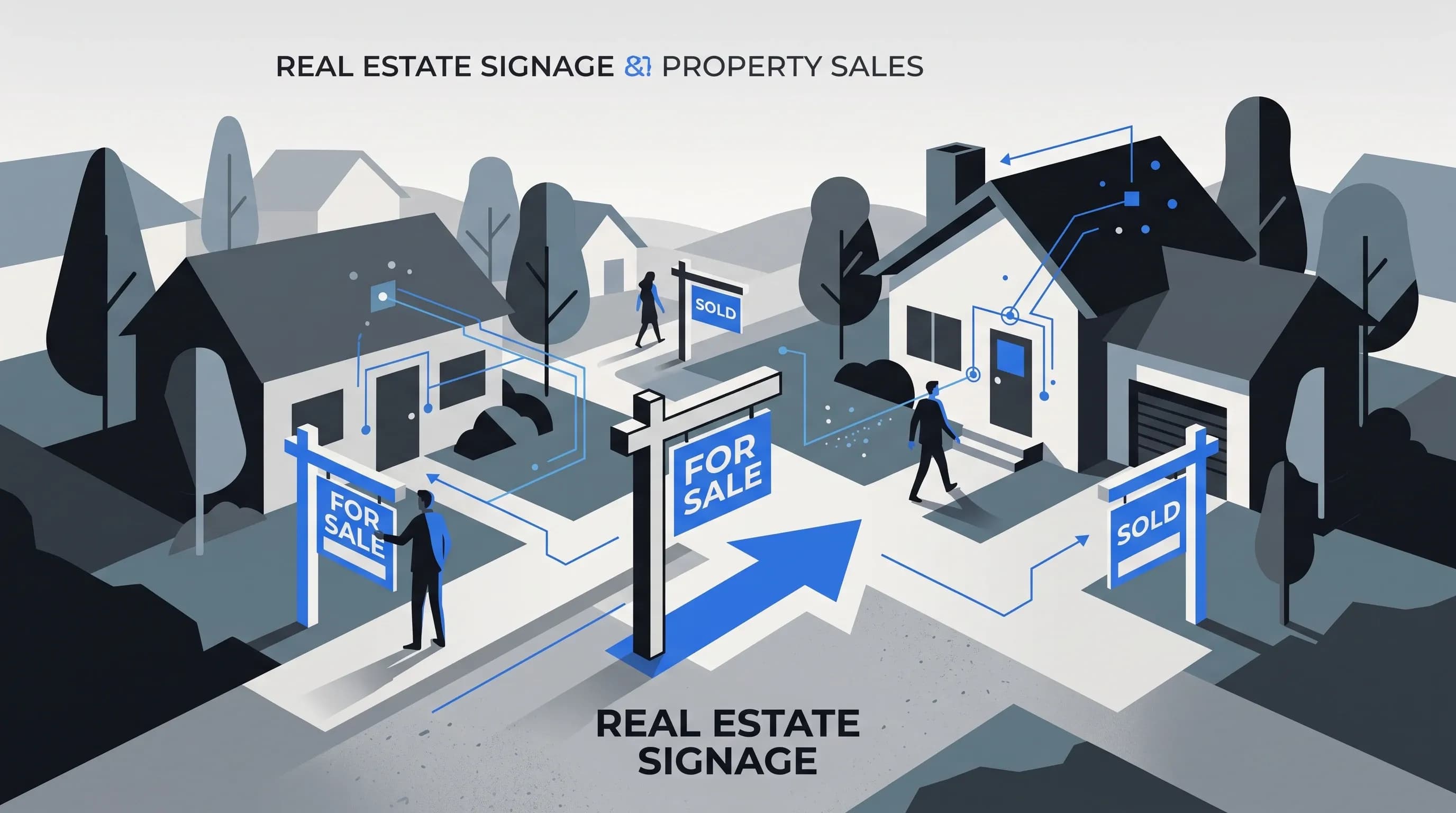
Real estate marketing has become increasingly digital. We use property portals, social media ads, email campaigns, virtual tours, search visibility, video walkthroughs, retargeting, and listing websites to reach buyers. All of that matters. But one of the most powerful marketing tools in real estate is still one of the simplest: the sign in the yard.
The power of real estate signage is not that it replaces online marketing. It is that it connects the physical world with the digital world. A well-designed real estate sign turns a home, apartment, land parcel, commercial building, or development site into a visible local marketing asset. It tells buyers there is an opportunity. It tells neighbors there is movement. It tells future sellers which agent is active nearby. It tells open house visitors where to go. And when it includes a phone number, text code, QR code, or clear call to action, it can turn street-level attention into measurable leads.
In other words, real estate signs are not just boards in the ground. They are silent salespeople, local billboards, branding tools, wayfinding assets, lead generators, and credibility builders. Used correctly, custom real estate signs can support a listing from “Coming Soon” to “For Sale,” from “Open House” to “Under Contract,” and finally from “For Sale” to “Sold.”
We can spend thousands of dollars on digital advertising, but real estate decisions are still deeply physical. Buyers do not just buy square footage, bedrooms, bathrooms, and listing photos. They buy streets, school districts, commute times, curb appeal, nearby parks, neighborhood energy, views, convenience, and lifestyle.
That is why real estate signage continues to work. When someone sees a property sign while driving through a neighborhood, the message is immediate and contextual. They are not looking at a random listing online. They are physically present in the market. They can see the street, the surrounding homes, the traffic flow, the landscaping, and the feel of the community.
A listing online may reach a large audience, but a real estate yard sign reaches people who are already there. It reaches the neighbor walking the dog. It reaches the buyer driving around after work. It reaches the investor scouting locations. It reaches the family member visiting nearby. It reaches the person who says, “I saw a house for sale down the street; you should check it out.”
This is the local advantage of property signs. They put marketing directly into the environment where property decisions happen. A strong sign can work 24 hours a day without a daily ad budget, and it keeps reinforcing the same message every time someone passes by.
A good real estate sign does not need to say much to be persuasive. It uses placement, color, layout, branding, and timing to answer the most important questions quickly:
The best real estate signage reduces friction. It does not force buyers to search, guess, or wait. It gives them the next step: call, text, scan, visit, attend, or follow the arrow.
We like to think of a real estate sign as a business card with curb appeal. It sits directly in front of the product and represents the property, the agent, the brokerage, and the quality of the campaign. If the sign is faded, cluttered, leaning, or hard to read, it sends the wrong message. If it is clean, bold, professional, and easy to act on, it builds trust before the agent says a word.
Visibility can make or break a property marketing campaign. A listing can have professional photography, strong copy, virtual tours, and broad online exposure, but street-level visibility still matters. A front yard sign turns the property itself into an advertising platform.
Real estate signs are especially valuable because they reach relevant local traffic, including active buyers, renters, neighbors, relocation prospects, investors, and people who may not be searching online yet but become curious when they see the sign.
Real estate signage can generate direct leads when it includes clear contact information and a strong call to action. People still make “sign calls.” They still text. They still scan QR codes. They still pull over, take a photo, visit a property website, or tell someone else about the listing.
Common lead-driving elements include:
Modern buyer behavior matters here. Many people would rather text than call, especially early in the process. A sign that says “Text for photos,” “Text for price,” or “Text HOME to 555-555-5555” can feel more approachable than “Call for more information.” Calls are not dead, but signage should match how people prefer to communicate today.
Every real estate sign is also a branding opportunity. When people repeatedly see the same agent name, agency logo, color scheme, typography, and sign layout across for sale signs, open house signs, directional signs, riders, and sold signs, they start to associate that brand with activity in the neighborhood.
This is especially important for real estate agents building authority in a farming area. A sign does not only advertise the listing; it advertises the listing agent. Neighbors notice who listed the home, whether the open house is busy, when the rider changes to “Under Contract,” and how quickly the sold sign appears.
Open house directional signs are small tools with a big impact. They guide buyers from main roads, intersections, neighborhood entrances, and confusing turns to the property. They confirm, “Yes, you are going the right way.”
For open homes, inspections, auctions, rural properties, new construction communities, large subdivisions, and properties set back from the road, directional signage is not decoration. It is often necessary. GPS is helpful, but it is not perfect. A well-placed arrow sign can be the difference between a buyer arriving calmly and giving up before they find the home.
Sold signs are powerful because they communicate results. A sold rider or sold board tells the neighborhood that the property is no longer available, that the agent achieved a result, and that market activity is happening nearby.
For future sellers, this matters. A homeowner may see a sold sign down the street and start wondering what their own property could be worth. That neighborhood effect can turn one listing into future listing opportunities.
Compared with many advertising channels, real estate signs can be highly cost-effective. Once produced and installed, they keep working without daily media spend. Digital campaigns stop when the budget stops. A physical sign continues to create impressions as long as it is visible and compliant.
Signage costs vary depending on material, size, quantity, hardware, and installation. Corrugated plastic signs are usually cheaper, while aluminum composite panels, metal signs, premium post-and-panel systems, and custom frames cost more but often look more professional and last longer. For agents, the larger point is simple: signage is not just an expense; it is an investment in visibility.
The strongest property marketing campaigns use signage as a system, not as a single board. Different signs serve different purposes at different moments in the listing journey.
For sale signs are the classic real estate signage format. They announce that a property is available and typically include the agent name, brokerage branding, contact details, and sometimes a QR code, short URL, property features, auction date, or “scan for photos” message.
The job of a for sale sign is simple: make the listing visible and make inquiries easy. It should not become a tiny brochure. If the main message gets buried under too many details, the sign loses impact.
For rent signs and for lease signs help property managers, landlords, and commercial agents attract tenants. They can include rental price, inspection times, property manager contact details, application instructions, and QR codes linking to the rental listing.
Rental markets can move quickly, so these signs need to be current. Outdated inspection times or unavailable rental listings create frustration and weaken trust.
Coming soon signs can build anticipation before a property fully launches, where permitted by MLS rules, brokerage policies, and local regulations. They create early buzz among neighbors, buyers who already love the area, and agents with clients searching nearby.
Used correctly, a coming soon sign signals opportunity. It lets the local market know that something is about to happen. That sense of early access can generate inquiries before the listing reaches every major portal.
Open house signs create urgency and invitation. They tell passersby that they can view the property at a specific time, often without an appointment. A strong open house sign should be bold, simple, and easy to read from a distance.
Open house signage works best when it feels like an event. A single sign may be ignored, but a coordinated route of open house arrow signs, A-frame signs, feather flags, balloons where allowed, and a clean yard sign can create momentum and curiosity.
Directional signs, wayfinding signs, real estate arrow signs, and roadside direction signs help prospects navigate to a property. They are essential when the home is on a quiet street, GPS is unreliable, parking is unclear, the route has several turns, or the property is located in a rural area, subdivision, complex, or new development.
The best directional signs keep the message minimal: brand, arrow, and purpose. “Open House,” “Auction Today,” or “Model Home” with a bold arrow is often enough.
Sold signs, sold boards, sold stickers, and sold riders are more than status updates. They are proof of performance. They reduce unnecessary inquiries and show the local market that the agent is getting results.
We should not underestimate how closely neighbors watch these updates. The transition from “For Sale” to “Under Contract” to “Sold” can influence future sellers who are quietly evaluating agents.
Sign riders are smaller panels attached to a main sign. They allow agents to update the message without replacing the entire board. Common riders include:
Riders are useful, but they should not create clutter. If the text is too small to read from the road, it may not be helping. Every sign element should have a purpose.
A-frame signs, sandwich boards, feather flags, banners, and temporary event signage are especially useful for open houses, model homes, apartment leasing, new construction, auctions, and high-foot-traffic areas. Movement can attract attention, which is why flags and balloons often work well when allowed.
However, agents should always check city ordinances, HOA rules, brokerage policies, and safety requirements before using flags, balloons, illuminated signs, or unusual sign shapes.
Agency window signs and real estate office displays help showcase property listings to pedestrians and walk-in visitors. Traditional printed cards still work, but digital window displays can rotate listings, videos, rental advertisements, auction schedules, inspection times, and brand messages.
One of the most useful rules in real estate sign design is this: if the sign cannot be understood from about 30 feet away in less than three seconds, it is too busy.
Most people do not study real estate signs while standing still. They see them while driving, walking, turning, parking, or passing through a neighborhood. They may be looking through rain, shadows, traffic, trees, parked cars, or other signs. That means the sign has to communicate quickly.
A strong real estate sign usually follows a clean hierarchy:
Everything else should support the message, not bury it. If we want to include more details, we can use QR codes, property landing pages, flyers, digital displays, brochures, or riders. The main sign should remain simple, visible, and actionable.
High-contrast design improves readability from a distance. Dark text on a light background or light text on a dark background is usually easier to process quickly. Accent colors like red, blue, yellow, or orange can help highlight urgent messages such as “Open House,” “Sold,” or “Price Reduced.”
The color scheme should also match the agent or agency brand. Consistency across yard signs, directional signs, open house banners, digital ads, business cards, and listing presentations builds recognition.
Real estate sign design is not the place for delicate scripts, thin typefaces, or overly decorative fonts. We need bold, clean, legible lettering that works from the road.
Good sign typography usually includes large headline text, simple sans-serif fonts, generous spacing, and clear contrast. Short words like “SOLD” or “OPEN” can work well in all caps, but long blocks of all-caps text are harder to read.
Clutter is one of the biggest enemies of effective property signs. Too many logos, slogans, phone numbers, social handles, credentials, photos, and design elements can make the sign look busy and reduce response.
The main sign should answer: what is happening, who represents it, and what should the viewer do next?
Brokerage compliance matters, but within the rules, the agent’s name, team identity, and personal brand should be easy to see. In many markets, several agents from the same brokerage compete in the same neighborhoods. If every sign looks identical except for a tiny name panel, it becomes harder to stand out.
We want the sign to look like the rest of the marketing system: website, social media graphics, mailers, listing presentation, business cards, email signature, and digital ads. Repetition builds familiarity, and familiarity often leads to trust.
QR codes can turn yard signs into digital flyers. Instead of relying on a flyer box that runs out, gets wet, or provides no tracking, a QR code can send people to a property landing page, photo gallery, virtual tour, floor plan, showing request form, open house registration page, or agent website.
But a QR code should not appear without context. Give people a reason to scan:
A QR code with a compelling promise is much stronger than a random code placed in the corner.
Unique phone numbers, smart numbers, or text codes can help agents measure sign performance. If every sign uses the same office number, it is difficult to know which campaign, neighborhood, or sign design generated the lead.
With tracking, we can answer better questions: Which neighborhoods produce the most sign calls? Which designs get the best response? Do open house signs generate more texts? Are QR code riders being scanned? Which listings are creating buyer leads?
A sign should fit the listing. Luxury homes, commercial properties, new developments, and premium land listings deserve signage that feels elevated. Cheap-looking signage can weaken the first impression before a buyer reaches the front door.
Luxury real estate signs often benefit from minimalist layouts, premium materials, refined colors, metal frames, clean typography, coordinated riders, and polished finishes. The sign itself should contribute to the curb appeal of the marketing campaign.
A well-designed sign can fail if it is poorly placed. Strategic sign placement and professional installation are essential for visibility, safety, compliance, and lead generation.
The primary for sale sign or for rent sign should usually be placed on the property frontage where it can be seen clearly from the road. Avoid shrubs, parked cars, fences, shadows, low branches, and visual clutter.
The sign should confirm the correct property and make the listing easy to identify. This is especially important for rural real estate, vacant land, large lots, new construction, and homes set back from the road.
Directional signs should be placed before turns, not after them. If a driver needs to turn left at the next intersection, the arrow sign should give them enough time to see it, understand it, and react safely.
High-impact locations include:
More signs are not always better. Too many signs in one area can create clutter and reduce impact. The goal is to guide and reinforce, not overwhelm.
Signs should never block driver visibility, pedestrian paths, bike lanes, sidewalks, driveways, fire hydrants, or traffic signs. Poor placement can create hazards and complaints, and it can damage the agent’s reputation.
Signs that lean, fall, flap, fade, or blow away create a careless impression. Professional sign installation helps keep outdoor signage upright, visible, and compliant throughout the campaign.
The right material depends on budget, campaign length, weather exposure, local rules, property type, and brand positioning. Real estate sign printing should produce sharp colors, clean lettering, durable finishes, and a professional appearance.
| Material or Format | Best For | Key Advantages | Considerations |
|---|---|---|---|
| Corrugated plastic / corflute signs | Temporary yard signs, open house signs, directional signs | Affordable, lightweight, easy to transport | May not look as premium or last as long in harsh weather |
| Aluminum composite panels | Professional for sale signs, commercial real estate signs, longer campaigns | Durable, polished, weather-resistant | Higher cost than basic plastic signs |
| PVC signs | Indoor displays, short-term outdoor use, office signage | Smooth finish, clean appearance | May not be ideal for heavy outdoor exposure |
| Vinyl banners and mesh banners | Developments, fences, commercial sites, large frontage | Large format, high visibility, flexible installation | Needs proper mounting to avoid sagging or wind damage |
| Metal frames and post-and-panel signs | Luxury homes, recurring use, premium branding | Strong curb appeal, reusable hardware, professional look | Higher upfront investment |
| Digital displays | Agency windows, sales suites, new developments, leasing offices | Dynamic content, videos, remote updates, multiple listings | Requires power, software, hardware, and content management |
Cheaper signs can be useful for short campaigns, but low-quality signs can cost more over time if they fade quickly, bend, crack, or make a listing look less professional. For agents building a long-term brand, durable real estate sign packages and reusable frames can create better value.
Traditional signs and digital real estate signs are not enemies. They do different jobs and work best together.
Traditional signs are ideal for property frontage, yard signs, open house routes, directional arrows, riders, lawn signs, A-frame signs, and sold boards. They are simple, durable, affordable, and highly local.
Digital signage is powerful for agency windows, office reception areas, shopping-center kiosks, apartment leasing offices, development sales suites, and commercial property marketing. Digital displays can showcase property videos, listing photos, floor plans, pricing updates, available units, rental advertisements, open house times, and auction schedules.
Digital signage is especially useful for new construction and development projects. A construction site can be visually unfinished, making it hard for buyers to imagine the final product. Digital screens, outdoor digital totems, touchscreens, video displays, and sales suite monitors can show renderings, interiors, amenities, construction progress, and the finished vision.
The strongest strategy is integrated: physical signs create local attention, while QR codes, text codes, property landing pages, virtual tours, and digital signage convert that attention into engagement.
Real estate signs do more than share information. They signal movement.
When a sign goes up, people notice. Neighbors ask questions. Buyers who love the area pay attention. Investors start evaluating. Other agents may alert their clients. Sometimes the sign alone creates a sense of opportunity before the full marketing campaign even launches.
That matters because real estate is emotional and competitive. A coming soon sign, auction sign, or freshly installed for sale sign can trigger fear of missing out. It tells the market, “Something is happening here.” For the right buyer at the right time, that signal can push action.
One of the most underrated benefits of real estate signage is its ability to market to future sellers. Neighbors are always part of the audience.
They notice:
A homeowner may not be ready to sell today, but a nearby listing can start the conversation. “What is their home listed for?” “How fast will it sell?” “What could we get for ours?” “Should we call that agent?”
This is why brand visibility on property signs matters. If the neighbors cannot read the agent name, team name, or contact information, a major branding opportunity is lost.
Real estate signage is subject to local rules, and those rules can vary by city, council, county, state, homeowners’ association, MLS, brokerage, and property type. Before installing signs, agents should understand what is allowed.
Regulations may control:
Compliance is part of professionalism. A sign should attract buyers, not complaints, fines, forced removal, or reputational damage.
Offline marketing deserves the same discipline as online marketing. We can track signage performance using several practical methods:
Tracking helps agents understand which signs generate calls, texts, scans, showings, open house attendance, buyer leads, and future seller conversations. When signage performance is measured, it becomes easier to improve design, placement, messaging, and budget decisions.
A real estate sign should include the property status or purpose, agent name, brokerage information required by local rules, contact method, and a clear call to action. Depending on the sign size and campaign, it may also include a QR code, text code, website URL, open house time, auction date, or rider.
Yes, real estate signs can help sell properties by increasing local visibility, generating inquiries, guiding buyers to showings or open houses, building urgency, and reinforcing the agent’s brand in the neighborhood. They work best when combined with online listings, photography, video, landing pages, social media, email marketing, and follow-up systems.
The most common types include for sale signs, for rent signs, open house signs, directional signs, sold signs, coming soon signs, under contract riders, price reduced riders, A-frame signs, feather flags, banners, window displays, and digital real estate signs.
Open house signs should be placed along the route buyers will take to the property, especially at neighborhood entrances, busy intersections, major turns, and parking or entrance points. They should be visible before drivers need to make a decision, and they must comply with local and HOA rules.
The best size depends on local regulations, property type, viewing distance, and sign purpose. Yard signs and post-and-panel signs need to be large enough to read from the road, while riders and QR codes need to remain legible at realistic viewing distances. The main rule is readability: if people cannot understand the sign quickly, it is too small or too cluttered.
Real estate signs are usually a cost-effective marketing tool because they create continuous local visibility without daily ad spend. Reusable frames, durable materials, and consistent branding can increase long-term value.
Sometimes. Permit requirements depend on the city, council, county, HOA, property type, sign size, placement, lighting, and duration. Agents should always check local signage rules before installing real estate signs, directional signs, banners, flags, or digital displays.
For short-term or temporary signage, corrugated plastic or corflute can be affordable and practical. For longer campaigns or more premium presentation, aluminum composite panels, metal frames, and post-and-panel signs often provide better durability and appearance. The best material depends on weather, budget, brand standards, and campaign length.
Yes. QR codes can be very effective when they link to useful resources such as property photos, virtual tours, floor plans, pricing details, open house registration, or showing requests. The sign should tell people why to scan, such as “Scan for Photos” or “Scan for Virtual Tour.”
Traditional real estate signs are physical printed signs such as yard signs, lawn signs, riders, directional arrows, A-frames, banners, and sold boards. Digital real estate signage uses screens or digital displays to show rotating listings, videos, pricing updates, open house schedules, and property media. Traditional signs are strongest at the property and along routes; digital signs are especially useful in office windows, sales suites, leasing centers, and development marketing.
The real power of real estate signage is presence. A sign plants the marketing campaign in the real world. It says, “We are here.” It tells buyers there is an opportunity, tells neighbors there is movement, tells future sellers who is active in the market, and tells open house visitors where to go.
In a digital-first world, that physical presence still matters because real estate is local, visual, emotional, and neighborhood-driven. People still drive streets. They still notice signs. They still call, text, scan, ask neighbors, and act when they see an opportunity.
The modern real estate sign has evolved. It is no longer just a piece of plastic, aluminum, or metal in the ground. It can be a branding asset, a lead capture tool, a digital gateway, a neighborhood advertisement, a wayfinding system, and a psychological trigger. When we combine strong design, strategic placement, quality sign printing, compliance, tracking, QR codes, digital integration, and consistent branding, real estate signage becomes one of the most practical and powerful tools in property marketing.
That is the power of real estate signage: simple, visible, local marketing that helps move attention into action and listings from “For Sale” to “Sold.”

Hey, in Propphy we're determined to make a business grow. My only question is, will it be yours?
It's totally free, with no commitments
Hey, in Propphy we're determined to make a business grow. My only question is, will it be yours?
It's totally free, with no commitments