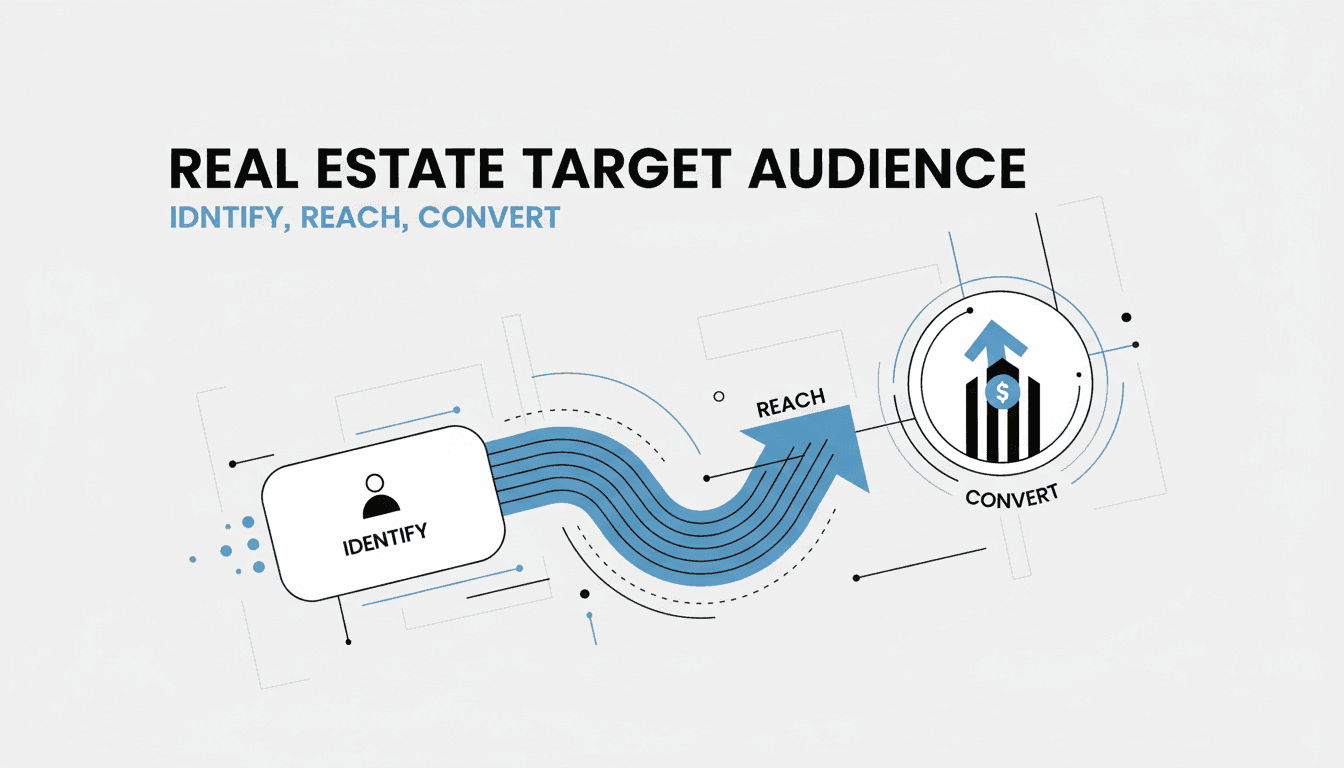
Casting a wide net rarely brings the best buyers and sellers. When we stopped marketing to “everyone” and sharpened our focus, our pipeline became predictable, our marketing spend dropped, and our conversations got easier. In this complete guide, we demystify the real estate target audience—what it is, why it matters, and exactly how we define, reach, and convert the right clients with persona-driven messaging, hyperlocal positioning, smart channels, and airtight measurement.
Target Market vs. Target Audience (and Why It Matters)
Target market is the broad group we serve (for example, first-time buyers in Northeast Austin or luxury sellers in Beverly Hills). Target audience is a specific persona inside that market (for example, dual-income millennials with 10% down, renting in 78704, aiming to buy within six months). Clarity at the persona level allows us to craft a buyer persona (customer avatar) that aligns our messaging strategy, content, and channel choices with how that person thinks and decides.
Why Defining Your Real Estate Target Audience Wins
- Higher ROI: Focused campaigns reduce wasted spend and lift conversion.
- Clearer messaging: We speak to concrete goals, fears, and decision styles.
- Faster trust: People engage when they feel understood.
- Stronger brand: A consistent niche (who + where) becomes memorable and referable.
- Better operations: Website UX, social content, and follow-up sequences align to one ICP (ideal client profile).
Generalists chase everything; specialists get chosen. We’ve seen a simple time split work best: 60% on one primary niche, 40% testing secondary opportunities.
A Hybrid Focus: Customer + Location
The magic happens when we combine a customer focus with a location focus. Instead of “we target first-time buyers in our city,” we get specific:
“We help first-time buyers in Villanova’s Amaranta and La Rosa clusters who want low-maintenance homes with a dedicated office and fast access to transit.”
That level of hyperlocal marketing sharpens our SEO (community and sub-community pages), improves direct mail performance, and makes our social content feel “for them.”
How We Identify Our Ideal Audience: Step-by-Step
1) Audit the last 12–24 months
- Pull data from our CRM and a simple spreadsheet: client type (first-time, upgrader, luxury, investor), transaction value, property type, neighborhood, lead source.
- Find clusters with the highest conversion rate or lowest time-to-close. We tag these in our CRM for ongoing analysis.
2) Scan the market for gaps and trends
- Who’s moving in/out? Remote workers seeking a home office? Empty nesters downsizing?
- Where are the product gaps (e.g., mid-tier condos with parking) that our listings or network can serve?
3) Build buyer and seller personas (ICP)
- Demographics: Age, income, household, stage of life, location.
- Psychographics: Values, lifestyle, aspirations, risk tolerance.
- Goals and barriers: Financing, timing, fear of overpaying, sell-and-buy logistics.
- Decision style: Emotional, data-driven, status-oriented, convenience-first.
- Channels: Instagram, YouTube, Facebook, LinkedIn, email, direct mail.
- Content triggers: What topics and proof build confidence.
We start with reality (past wins), not wishful thinking, and map our strengths to audience types—teaching-first for first-timers, numbers-first for investors, timing finesse for move-up families.
4) Decide your side and scope
- Buyer’s agent, seller’s agent, or both—where will you be strongest?
- Craft a one-line positioning: “We help [who] in [where] achieve [outcome] without [friction].”
5) Map your message to their mindset
- First-timers: Reassuring, step-by-step, no jargon.
- Luxury: Expert, concise, outcomes-led.
- Investors: Strategic, concise, metrics-forward.
- Upgraders/downsizers: Practical, convenience- and lifestyle-led.
6) Choose the right channels and formats
- Match persona media habits to channels: Reels/TikTok for first-timers and young pros; LinkedIn/email for investors and commercial; Facebook/direct mail for families and downsizers.
- We mix short-form video, long-form guides, neighborhood tours, and webinars.
7) Instrument everything for measurement
- Google Analytics for traffic and conversion tracking; UTM parameters on every link.
- CRM lead tagging by persona, channel, and campaign; lead scoring and pipeline stages.
- Track conversion rate, CPL, CAC, time-to-close, revenue, LTV by audience segment.
8) Review and refine monthly
- We keep a simple dashboard: traffic by source, lead volume by segment, appointments, signed contracts, and conversion rate by persona.
- We calendar a 60–90 minute “market and marketing review” monthly to prune underperformers and double down on winners.
Eight Core Real Estate Audience Segments and How We Market to Each
1) First-Time Homebuyers
- Mindset: Excited but overwhelmed; crave clarity and confidence.
- Messaging: “We’ll make the process clear and predictable.” No jargon, step-by-step.
- Channels: Instagram Reels, TikTok, YouTube Shorts, search; live Q&A webinars.
- Content: First-time buyer checklist; “5 programs that reduce your cash to close”; financing explainers; neighborhood guides.
- Experience: Fast replies, calculators, 360 tours. We run a “First 90 Days to Your First Home” mini-series and invite our lender to Q&A sessions.
2) Young Professionals (Renters to Owners)
- Mindset: Time-poor; style- and convenience-oriented.
- Messaging: “Effortless living close to everything.” Design-led, benefit-focused.
- Channels: Instagram, TikTok, YouTube, Google Search; creator partnerships.
- Content: Short tours, rooftop/gym features, “day-in-the-life” neighborhood clips, smart-home tech spotlights.
3) Move-Up Buyers (Upgraders)
- Mindset: Family-first; need more space; juggling sell-and-buy timing.
- Messaging: “More space with minimal disruption.” Transparent timeline plans.
- Channels: Facebook, YouTube, email, Google Search; weekend open houses with family-friendly touches.
- Content: “How to buy before you sell,” school spotlights, storage/layout checklists. We share local list-to-sold ratios and contingent transaction playbooks.
4) Luxury Buyers and Sellers
- Mindset: Exclusivity, privacy, impeccable service; expect data and discretion.
- Messaging: “Quietly delivering the outcomes top clients expect.”
- Channels: Private email, curated Instagram, cinematic YouTube tours, high-end print, invite-only events.
- Content: Market records, sold portfolio, off-market opportunities, global reach. We keep follow-up concierge-level and time-respectful.
5) Real Estate Investors
- Mindset: Analytical; focus on cap rate, cash flow, value-add, tax strategy.
- Messaging: “Deal flow and underwriting you can trust.”
- Channels: Email deal briefs, LinkedIn, investor webinars, search.
- Content: “7%+ cap opportunities this week,” submarket rent growth, 1031/DSCR options. We share rent rolls, pro formas, and exit scenarios and send BRRR analyzer templates.
6) Vacation/Second-Home Buyers
- Mindset: Lifestyle-first, with an eye on rental income.
- Messaging: “A getaway that can pay its way.”
- Channels: YouTube and Instagram tours/drone; destination guides; email series.
- Content: Seasonal occupancy data, STR rules, property management options.
7) Commercial Property Owners/Tenants
- Mindset: Business outcomes—NOI, traffic, logistics, workforce access.
- Messaging: “Real estate that advances your business plan.”
- Channels: LinkedIn, targeted email, industry events, trade pubs.
- Content: Case studies, zoning/TI packages, demographic heat maps, comps.
8) Empty Nesters/Downsizers
- Mindset: Low-maintenance living; convenience, privacy; keep ties to neighborhood.
- Messaging: “Right-size your life without giving up what you love.”
- Channels: Direct mail, Facebook, SEO; longer-form guides.
- Content: Floorplan flexibility, HOA comparisons, moving/declutter guides. We mail a monthly neighborhood digest and offer simplified move plans.
How We Read the Market Like a News Anchor
Being the obvious choice comes from market mastery. Each month we study:
- Buyer demand by price bracket, showings-to-offer, and showings-per-listing (we reference MLS tools and ShowingTime where available).
- New/pending/closed listings, days on market, list-to-sold price ratios, inventory and months of supply (absorption rate).
- Neighborhood-level trends using InfoSparks/FastStats, plus zip-level reads via tools like Altos when needed.
We then communicate like local real estate news anchors: a monthly live update simulcast to social, a database email with charts and a short video, weekly Stories with quick market notes, and a one-page printed “Real Estate Digest” we deliver to our farm and top 100. Evidence beats opinions—every time.
Map Your Message to Decision Styles
- First-timers: Calm guidance, early answers to financing and timeline fears.
- Luxury: Outcomes, credibility, discretion; say more with fewer words.
- Investors: Metrics first—rent comps, cap rates, upside/risks, next diligence steps.
- Upgraders: Safety, schools, routines; bridge and buy-before-you-sell options.
- Downsizers: Ease, familiarity, comfort, privacy; emphasize simplified moves.
Choose Channels That Match Your Audience
- Instagram/TikTok/Reels: First-timers, young professionals, design-forward buyers.
- YouTube: Tours, neighborhood deep dives, investor breakdowns.
- Facebook: Families and downsizers; events and community updates.
- LinkedIn: Investors and commercial audiences; B2B credibility.
- Email: Works across segments when sequenced by persona and intent.
- Direct mail/print: Downsizers and luxury; pair with hyperlocal landing pages.
- In-person: First-time buyer workshops; investor meetups; private luxury events.
Our distribution rhythm is steady: weekly short-form tips or shows, a monthly market email, a printed digest to our farm and top 100, quarterly client events, and ongoing 1:1 check-ins with our sphere.
Position Your Brand and Plan Your Content
Website and Brand Audit
- Above the fold: speak to your primary persona within five seconds with a clear value proposition and proof (testimonials, case studies).
- Ensure mobile performance, fast load times, clear lead capture, and hyperlocal neighborhood pages aligned to your niche.
- Maintain consistent tone, visuals, and offers across site, social, email, and print.
Content Strategy by Persona
- First-time buyers: Step-by-step guides, financing FAQs, “what to expect” timelines.
- Upgraders: “Buy before you sell,” school spotlights, storage/space planning.
- Luxury: High-production visuals, design stories, discreet success highlights.
- Investors: Deal sheets, submarket trend snapshots, underwriting walkthroughs.
- Downsizers: Lifestyle features, HOA/maintenance comparisons, moving services.
Our Paid Media Plan: Broad to Find, Tight to Win
We respect housing ad rules (Special Ad Category) and still drive results by pairing discovery with retargeting.
Discovery (Awareness) Audiences
- Geo: City plus 15–20 miles around priority neighborhoods; manual placements on Facebook/Instagram feeds and Marketplace.
- Creative: Square 1:1 images or short videos for max screen real estate; vertical video for Reels.
- Budget: $5–15/day per campaign to test hooks and messages.
- Targeting ideas: Real property, property management, real estate investing, mortgage topics, local home improvement, interior design (always comply with platform policies and fair housing law).
Exclusions That Save Spend
- Exclude obvious competitors (job titles/employers) to avoid wasting impressions on agents.
Your Always-On Retargeting Engine ($5–10/day)
- Build custom audiences: Website visitors; Instagram/Facebook engagers; lead-form openers/submitters; customer lists; YouTube viewers.
- Campaigns we keep running:
- Lead magnet retarget: “Most popular homes under $X in [City]—updated daily.”
- Just-listed → just-sold: “Sold in X days at Y% of ask—want our Seller Playbook?”
- Landlord niche: “Own a rental in [ZIP]? Values are high—get a no-obligation price analysis.”
- Setup tips: “Learn More” CTA, end dates on campaigns, manual placements, respect Special Ad Category rules. We often draft first-pass ad copy with AI and then localize it to our voice.
Bring Data Into Every Client Conversation
- Buyer demand by price bracket: A small pricing shift can unlock materially more demand; we show price-band heat to sellers.
- Showings-to-offer norms: “Expect 12–18 showings in two weeks in your micro-market.”
- List-to-sold ratios: We position accordingly—underprice to spark bids in low inventory; price at market with standout presentation as supply normalizes.
- Inventory and absorption: Strategy shifts as months of supply change.
Measurement, Analytics, and CRM Tracking
What We Capture
- Lead source and campaign; persona tags (FTB, Luxury, Investor, etc.).
- Engagement: email opens/clicks, pages viewed, video watch time, social interactions.
- Pipeline: booking rate, offer rate, conversion rate, average days-to-close.
- Unit economics: CPL, CAC, revenue per client, LTV, referral rate—broken out by audience segment.
Tools and Cadence
- Google Analytics with conversion tracking and attribution; UTM rigor across campaigns.
- CRM with lead tagging, lead scoring, and stage-based automation; dashboards by persona.
- Monthly review: cut underperformers, scale winners 20–30%, test one new message or channel per segment.
Hyperlocal Targeting Playbook
- Create community and sub-community pages with maps, school ratings, commute times, and lifestyle content.
- Publish neighborhood “price reports” and “most popular homes under $X” searches, then retarget visitors.
- Host micro-events (first-time buyer workshops in the local library; investor coffee meetups); capture attendees to your email list and retargeting audiences.
- Mail a monthly neighborhood digest; hand-deliver in your farm to stand out and spark referrals.
A Fast-Start 30-Day Plan
Week 1
- Audit 12–24 months of clients; pick one primary and one secondary audience.
- Write your one-line positioning and a detailed buyer persona.
- Install site pixel(s), verify domains; set up UTM templates.
Week 2
- Update homepage hero, lead magnets, and social bios to match the persona.
- Record a 20-minute market update and 3 short tips; publish to YouTube and social.
- Launch two small discovery ad sets and one $5/day always-on retargeting ad.
Week 3
- Build a cornerstone guide (“First-Time Buyer Playbook in [Neighborhood]” or “Investor’s 90-Day Deal Flow Plan”).
- Launch a persona-specific 4–6 email drip with a clear “book a consult” CTA.
- Publish a filtered “popular homes under $X” page for lead capture.
Week 4
- Run a targeted push: Reels for first-timers; LinkedIn messages for investors; direct mail for downsizers.
- Review KPIs; pause one loser, scale one winner by 20–30%.
- Book 5 database check-in calls using your market update as the reason to reconnect.
Real Estate Buyer Persona Template (Copy and Reuse)
- Who they are: Age range, household, income, location.
- Stage: First-time, upgrader, luxury, investor, vacation, commercial, downsizer.
- Goals: What “success” looks like in their words.
- Constraints: Money, timing, knowledge gaps, logistics.
- Decision style: Emotional, status-driven, analytical, convenience-first.
- Channels: Where they consume info and how they prefer to communicate.
- Content triggers: Topics and formats that earn attention.
- Proof points: Reviews, data, portfolio, neighborhood credibility.
- Offer: The low-friction next step you’ll promote.
Common Pitfalls (and What We Do Instead)
- Being everything to everyone → Pick lanes. Speak directly.
- Arguing opinions → Bring charts: price-band demand, DOM, absorption.
- Skipping retargeting → $5/day keeps you omnipresent to warm audiences.
- Ignoring Special Ad Category rules → Comply to protect your ad account.
- Overstuffing interests → Test small groups of 4–6 related interests per ad set.
- Inconsistent cadence → Become your market’s news anchor with a reliable rhythm.
FAQ: Target Audience in Real Estate
How many personas should we target?
Start with one primary and one secondary. Master them before expanding; our 60:40 time split keeps focus without missing opportunities.
How often should we update personas?
Quarterly light refresh; deeper revisions annually or when a market shift changes motivations (rates, inventory, employer moves).
Is niche risky in a changing market?
Niche is protection, not risk. You can pivot faster when you know exactly who you serve and how to reach them.
What tools do we need?
A fast site with clear landing pages, a CRM with lead tagging/automation, Google Analytics for conversion tracking, and a simple dashboard by persona. For market insight, MLS tools (InfoSparks/FastStats), ShowingTime metrics, and zip-level trend utilities are powerful.
Can we target protected classes?
No. Target by legal, non-discriminatory criteria—needs, budget, life stage, geography, and property type—and follow fair housing and platform rules.
Ethical and Legal Note
Keep your marketing inclusive and compliant. Focus on needs, budgets, property types, and locations—never on protected classes. Understand and honor Special Ad Category requirements for housing on ad platforms.
The Closing Thought
Your target audience isn’t a spreadsheet—it’s your people. Define them clearly, validate with market data, tailor your message and offers, and stay consistently in front of them with helpful proof. Within a few cycles of measuring and refining, you’ll feel the shift: less chasing, more choosing, and a brand that compounds in value.