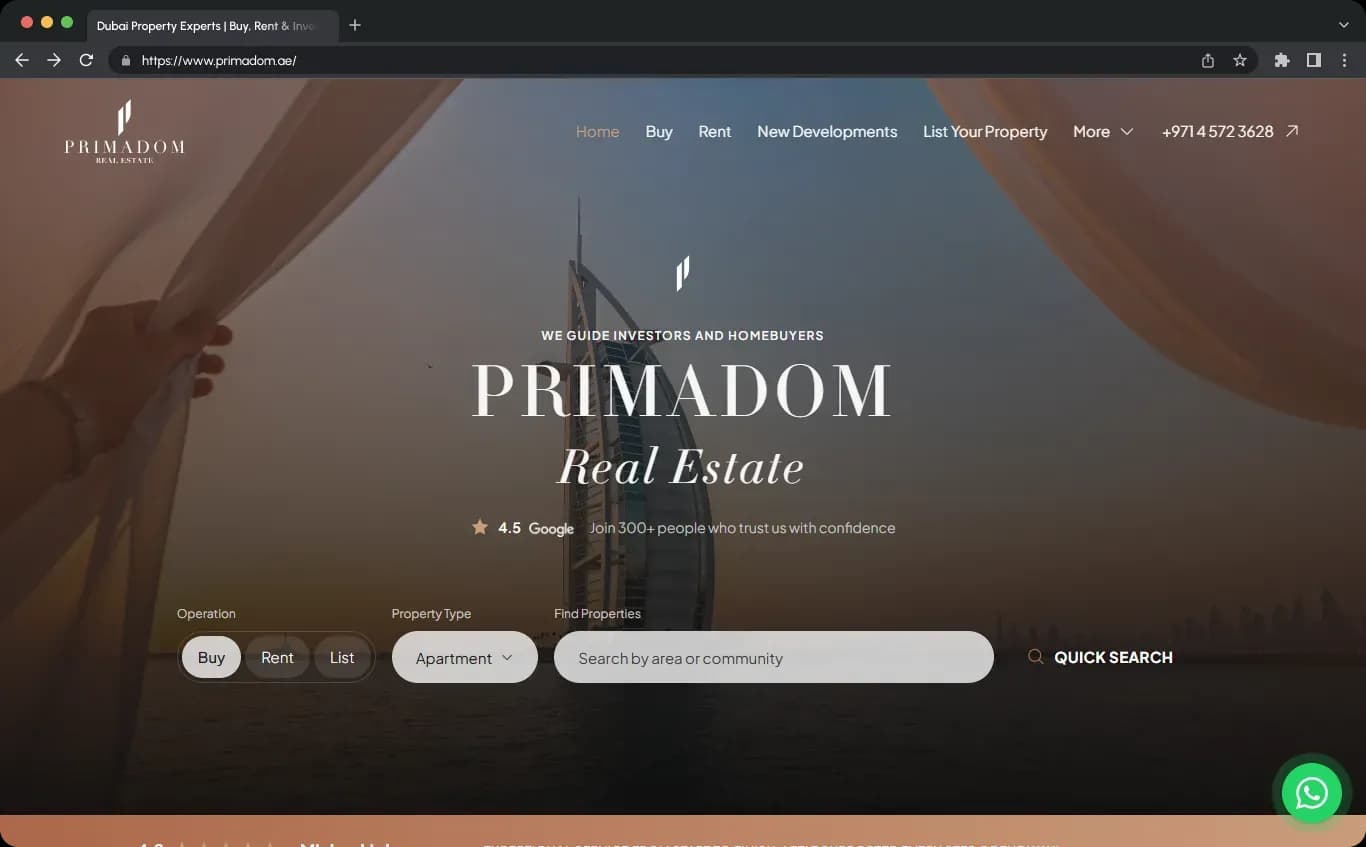
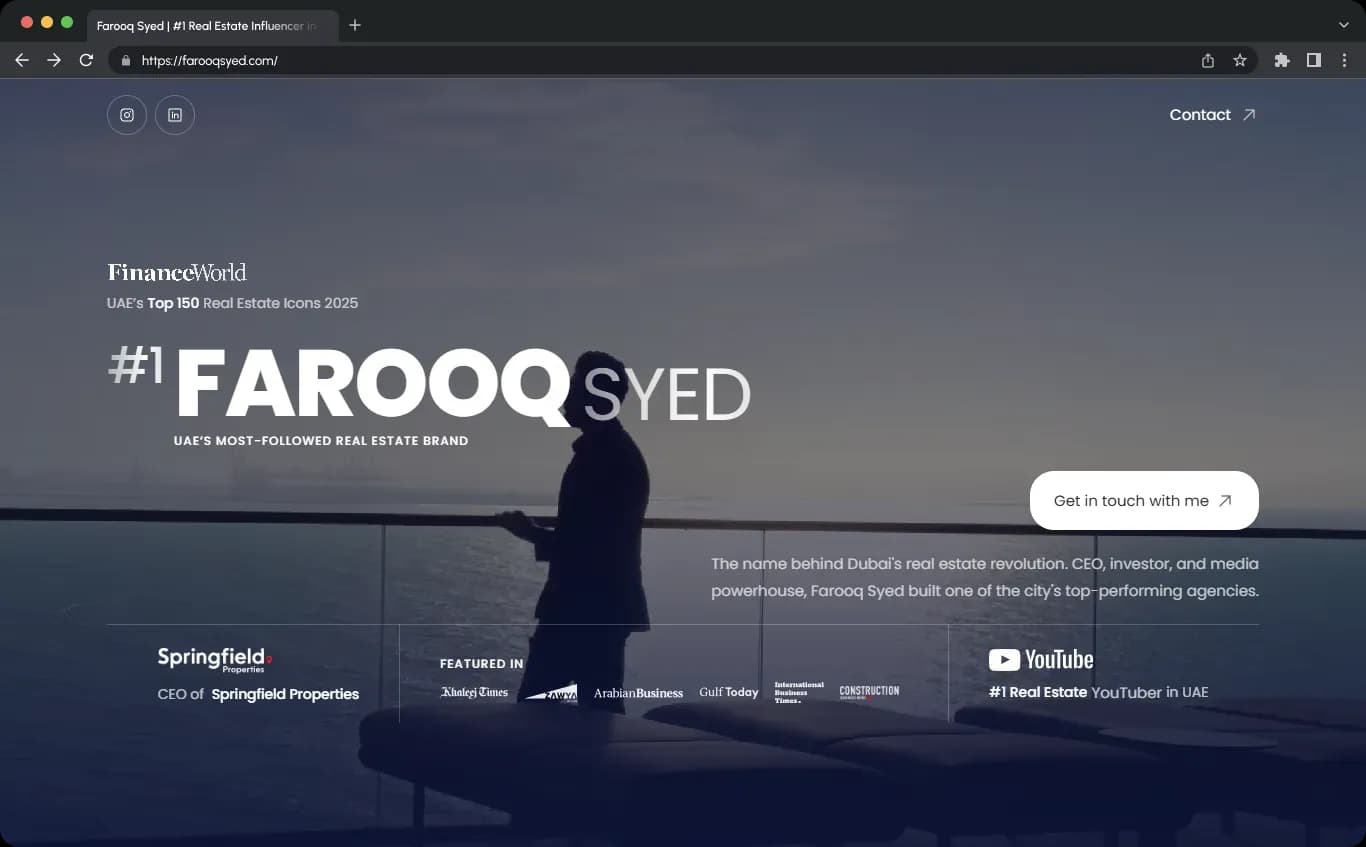
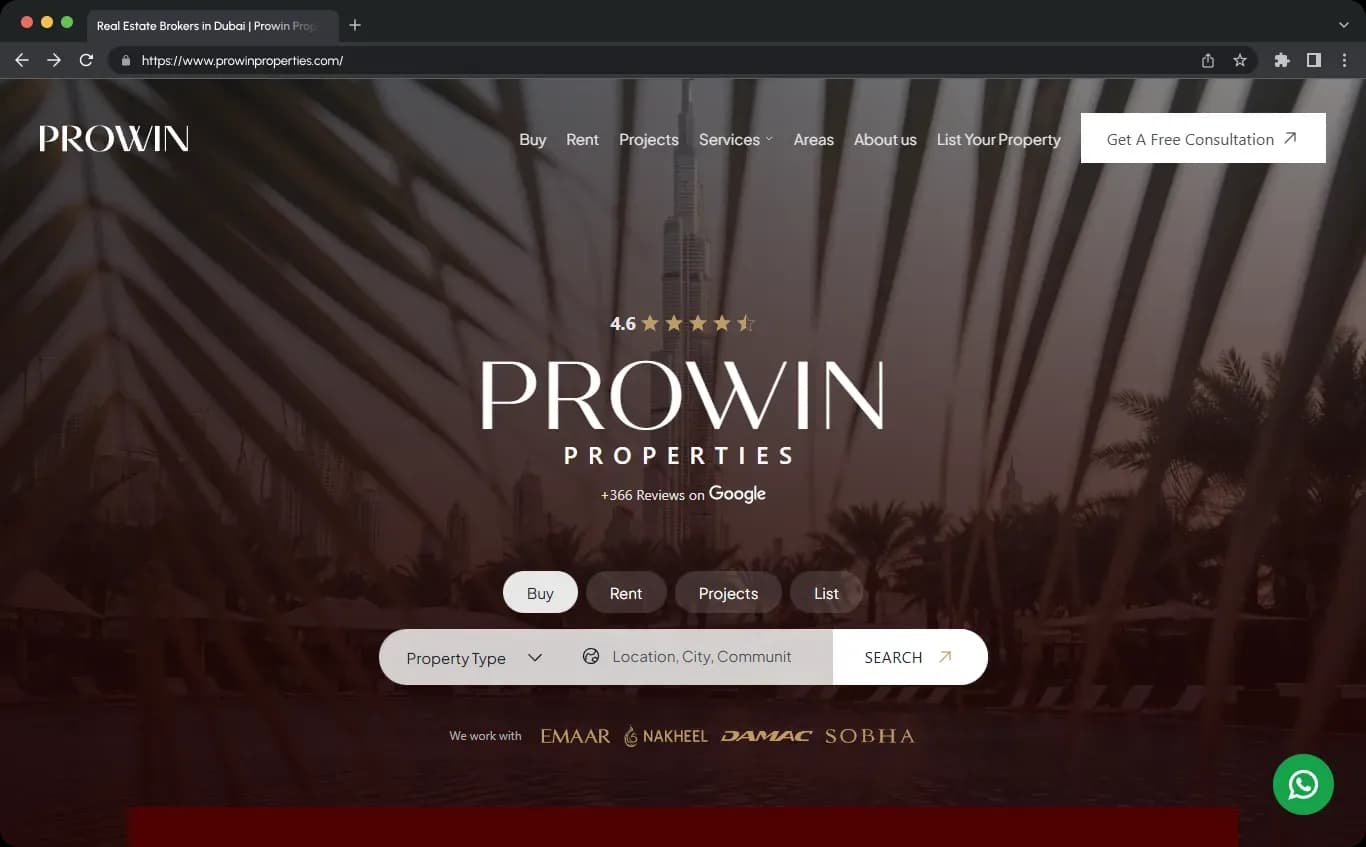
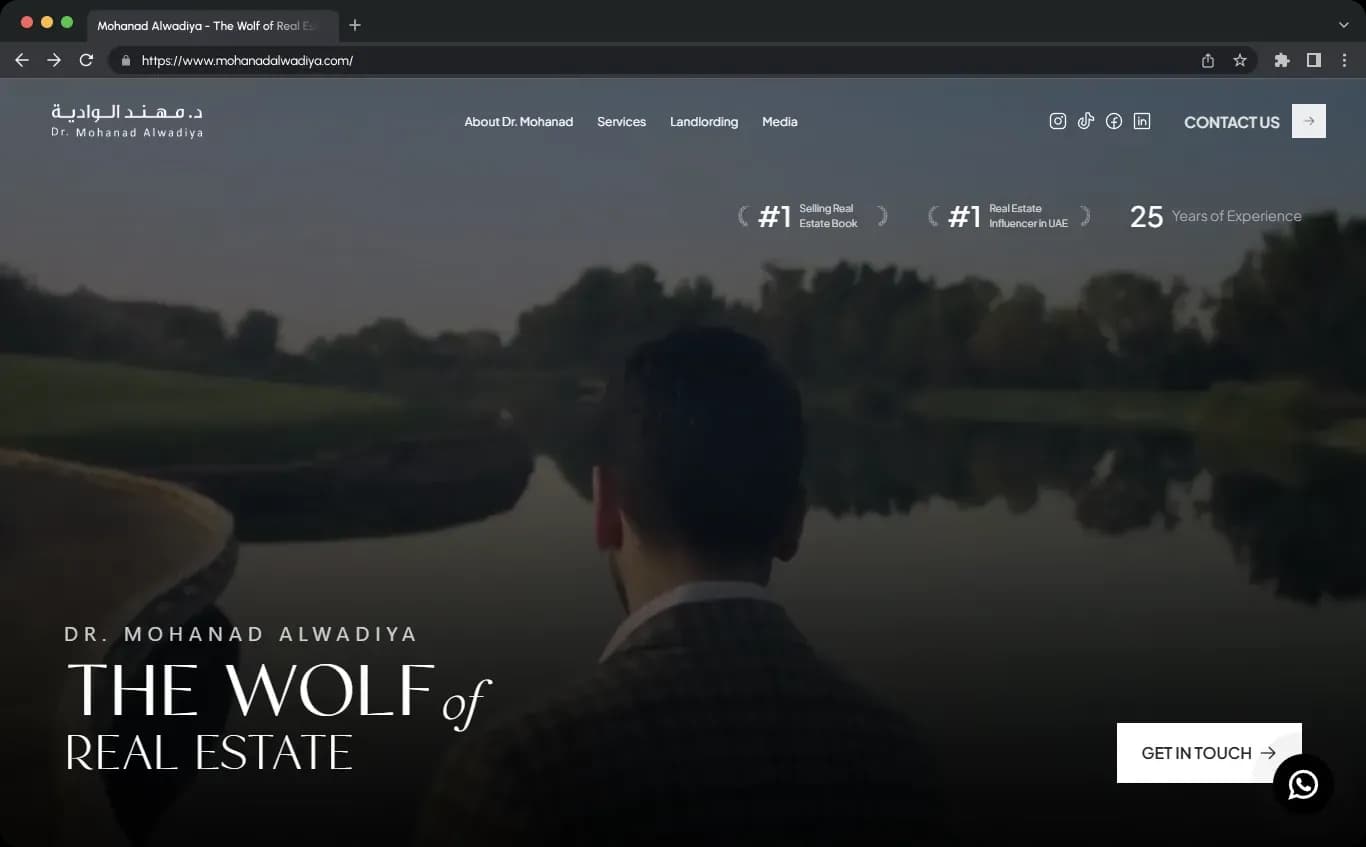
When we talk about real estate website design best practices, we’re really talking about one thing: building a platform that reliably turns traffic into leads and closings. Not a pretty brochure, not a vanity site your broker owns—but a fast, mobile-first, conversion-focused real estate website you control.
In this guide we’ll walk through the UI/UX best practices, IDX/MLS integration, content strategy, and lead generation tactics that consistently produce results for real estate agents, teams, brokerages, and commercial firms.
Why Real Estate Website Design Matters More Than Ever
Your real estate website is now your primary storefront:
- A 24/7 property showroom with up-to-the-minute listings
- A lead-generation and qualification engine
- A trust and credibility signal for buyers, sellers, and investors
Most property searches start on smartphones, and if your page takes more than three seconds to load, you risk losing over half your mobile visitors. We’ve seen it repeatedly: the difference between a “nice-looking” site and a conversion-focused site shows up in call volume, form fills, and booked appointments—not just compliments.
Every real estate web design choice should do at least one of three things:
- Help users find relevant properties or information quickly
- Build trust and authority in your local market
- Capture, qualify, or nurture a lead
If a design element doesn’t support one of these goals, it’s usually clutter.
Before we even touch UI/UX best practices, we need to talk about ownership. Too many real estate professionals build their entire digital presence on a broker-provided subpage or a closed IDX platform they don’t control. The moment they change brokerages or providers, they lose everything—content, backlinks, SEO authority, and often the domain.
Our best-practice baseline looks like this:
- Register your own domain (e.g., yournamehomes.com or livingin[city].com).
- Use a platform you control:
- WordPress with a real estate theme or custom design
- Webflow, Wix, or Squarespace with your own account
- Real estate website platforms where you can export your content and point your own domain
Owning your real estate website and domain means your SEO, content, and brand equity move with you if you rebrand, start a team, or open your own brokerage.
Core Principles of Effective Real Estate Website Design
Across luxury real estate websites, commercial property websites, and high-performing agent sites, we see the same core principles:
- User-first UI/UX with intuitive navigation, simple menus, and logical layout.
- Mobile-first responsive design with blazing-fast load times and optimized Core Web Vitals.
- IDX/MLS integration and powerful property search that feels as smooth as big portals but more local.
- Immersive visuals (pro photography, video walkthroughs, 3D virtual tours, Matterport, drone footage).
- Clean, minimalist aesthetics with ample white space, modern typography, and restrained color palettes.
- AI chatbots and personalization for 24/7 responses and tailored property recommendations.
- Hyper-local neighborhood pages that build local SEO authority.
- Conversion-focused design with strategic CTAs, smart lead capture forms, and CRM integration.
- Strong branding and social proof via agent bios, testimonials, reviews, and performance data.
- Security, accessibility, and compliance (SSL, ADA alignment, privacy policies).
- Analytics, A/B testing, and continuous improvement instead of “set and forget.”
Design Mobile-First
Most agents design their realtor website on a big desktop monitor; most users experience it on a phone. We flip that approach and start with mobile wireframes. Best practices:
- Design from the smallest screen up: phone → tablet → desktop.
- Use large tap targets for buttons and filters.
- Make navigation collapsible but clear (“Buy,” “Sell,” “Rent,” “Communities,” “Market Insights,” “About,” “Contact”).
- Keep essential actions (Search, Call, Message) in a sticky mobile bar where possible.
- Avoid pinch-and-zoom; ensure font sizes and spacing are optimized for small screens.
Speed, Core Web Vitals, and Bounce Rates
A modern real estate web design must be performance-optimized:
- Target under 3 seconds load time on 4G for key pages.
- Aim for Core Web Vitals scores above 90 in PageSpeed Insights.
- Compress and properly size all listing images and hero photos.
- Use lazy loading for image galleries, video walkthroughs, and virtual tours.
- Minimize heavy scripts (unnecessary sliders, widgets, and tracking tags).
- Use caching and a CDN for faster global delivery.
We routinely run new designs through Google PageSpeed Insights and GTmetrix as part of a website speed audit. When we shave seconds off load time, we typically see lower bounce rates and more completed lead forms—especially on mobile.
IDX/MLS Integration & Intuitive Property Search
Property discovery is the core job of almost every real estate website. Whether you’re using a full IDX solution, a hybrid approach, or custom listing management, the user experience has to be frictionless.
Choosing the Right Listing Stack
In practice, we see three main approaches to property listing website design:
- Full IDX integration for complete MLS data, saved searches, and listing alerts.
- Hybrid sites with IDX for full search plus custom “hero” listing pages for your own inventory.
- DIY listing systems in WordPress or Wix where you manually manage featured properties and link out to broker or MLS search pages for full inventory.
From a UX standpoint, full IDX or hybrid offers the best user-centric design. From an SEO standpoint, the real leverage comes from unique neighborhood pages and custom content, not from raw MLS data that appears on thousands of sites.
Search Bar and Filters: Make It Actually Usable
Best practices for intuitive property search:
- Place a prominent search bar above the fold with:
- Location (city, neighborhood, ZIP)
- Min/Max price sliders
- Beds and baths
- Property type (condo, house, townhouse, etc.)
- Offer simple tabs like “For Sale / For Rent / Sold” for quick switching.
- Keep advanced filters (HOA fees, year built, lot size, school district) behind an “Advanced” toggle.
- Use a half-map layout (list on one side, map on the other) on desktop for a modern, app-like UX.
- Show clear filter “chips” so users can see and remove filters easily.
Property Results and Detail Pages
For a high-converting real estate website layout, property pages should act like landing pages:
- Large, responsive photo gallery (swipeable on mobile).
- Key facts at a glance: price, beds, baths, square footage, neighborhood, status.
- Two clear CTAs above the fold:
- “Schedule a Tour” (with in-person or virtual options)
- “Request More Info” (simple inquiry form)
- Sections for:
- Highlights and narrative description
- Features (amenities, finishes, systems)
- Floor plans and documents (feature sheets, disclosures)
- Embedded map with nearby amenities
- Agent bio box and contact details
- Related or similar properties
- Optional but powerful:
- Mortgage calculator module
- 3D virtual tours (Matterport) and video walkthroughs
Visuals That Sell: Photography, Video, and Virtual Tours
In property website design, visuals are non-negotiable. High-end imagery and immersive media signal quality before any copy is read.
High-Quality Imagery
- Invest in professional real estate photography for every listing you control.
- Use high-resolution photos that are properly compressed for fast loading.
- Lead with hero images that capture the property’s strongest angle: views, kitchen, great room, or façade.
- Avoid generic stock photos on key pages (home, about, communities). Authentic visuals build trust.
Video Walkthroughs and 3D Virtual Tours
- Add high-definition video walkthroughs to showcase flow and proportions.
- Use 3D virtual tours (e.g., Matterport) to let buyers self-tour 24/7.
- Leverage drone footage for estates, acreage, waterfront, or commercial properties.
- Integrate media into the gallery in a clean, minimal way—no auto-play audio, no intrusive pop-ups.
We consistently see that listings with strong visuals and virtual tours keep users engaged longer and generate more inquiries and showing requests.
Clean, Minimalist Aesthetics for Modern Real Estate Web Design
Minimalist design doesn’t mean boring; it means focused. A clutter-free layout is one of the hallmarks of a premium luxury real estate website.
Layout, White Space, and Hierarchy
- Use generous white space to separate content sections.
- Establish a clear hierarchy:
- H1: primary page title
- H2: major sections
- Short paragraphs and bullet lists for scan-ability
- Limit each section to one primary action (e.g., “Search Homes,” “Get a Home Valuation”).
- Avoid cluttered sidebars, multiple carousels, or competing CTAs.
Typography and Color Palettes
- Use one or two fonts across the site:
- A clean sans-serif for body text
- Optionally a refined serif or display font for headings
- Adopt a restrained color palette:
- 1 primary brand color for CTAs
- Neutral backgrounds (white, off-white, charcoal)
- 1–2 accent tones where needed
- Reserve bold colors for buttons and links to reinforce clickability.
AI, Personalization, and 24/7 Service
Modern real estate websites are evolving into 24/7 sales engines, not static brochures. AI chatbots and personalization features can dramatically improve conversion rates when implemented thoughtfully.
AI Chatbots and Live Chat
- Use an AI chatbot to:
- Answer basic questions about listings and neighborhoods
- Book showings and consults into your calendar
- Capture contact details and intent (“Buying in 3–6 months,” “Need to sell first,” etc.)
- Keep the chatbot unobtrusive—a small icon in the lower corner, not a full-screen modal.
- Route complex inquiries to a human follow-up via your CRM or email.
Personalized Property Experience
- Show recently viewed homes and similar listings on every property detail page.
- Offer saved searches with email alerts for new listings matching a user’s criteria.
- Use behavioral data (search patterns, geography) to tailor recommendations and CTAs.
Combining AI-driven chat with personalization features makes your real estate site feel more like a helpful assistant and less like a static catalog.
Hyper-Local Neighborhood Pages and Market Authority
Portals can’t replicate your on-the-ground expertise. Neighborhood and community pages are where you win the local SEO and authority game.
Designing High-Performing Neighborhood Pages
Create a dedicated page for each key city, neighborhood, or community you serve. Include:
- Overview of the area’s vibe (urban, family-friendly, waterfront, golf, historic, etc.).
- Typical property types and price ranges.
- Local amenities: parks, schools, shopping, dining (described neutrally for fair-housing compliance).
- Market stats: median price, days on market, inventory trends.
- Original photos and (ideally) short video or drone tours.
- An embedded pre-filtered property search or curated listing grid.
From a keyword standpoint, these pages should target terms like:
- “homes for sale in [neighborhood]”
- “luxury homes in [city]”
- “[city] waterfront homes”
- “living in [city]” or “moving to [city]”
Neighborhood Grids and Navigation
On your main “Communities” or “Neighborhoods” page, use a grid of tiles that each link to a neighborhood page or filtered MLS search. Each tile should have:
- A representative image
- The neighborhood name
- A short descriptor (“Lakefront living,” “Historic bungalows,” “New construction hub”)
This layout not only improves UX, it also funnels users into hyper-local pages optimized for local SEO dominance.
Lead Generation, CTAs, and Conversion-Focused Real Estate Web Design
A visually stunning site that doesn’t generate leads is a liability, not an asset. We design every page of a real estate website around clear, compelling paths to conversion.
Strategic Calls-to-Action (CTAs)
Top-performing CTAs on real estate sites typically include:
- “Search Homes in [City]”
- “Get Your Free Home Valuation”
- “See Coming Soon & Off-Market Listings”
- “Download Our [City] Relocation Guide”
- “Schedule a Consultation” or “Book a 15-Minute Call”
Best practices:
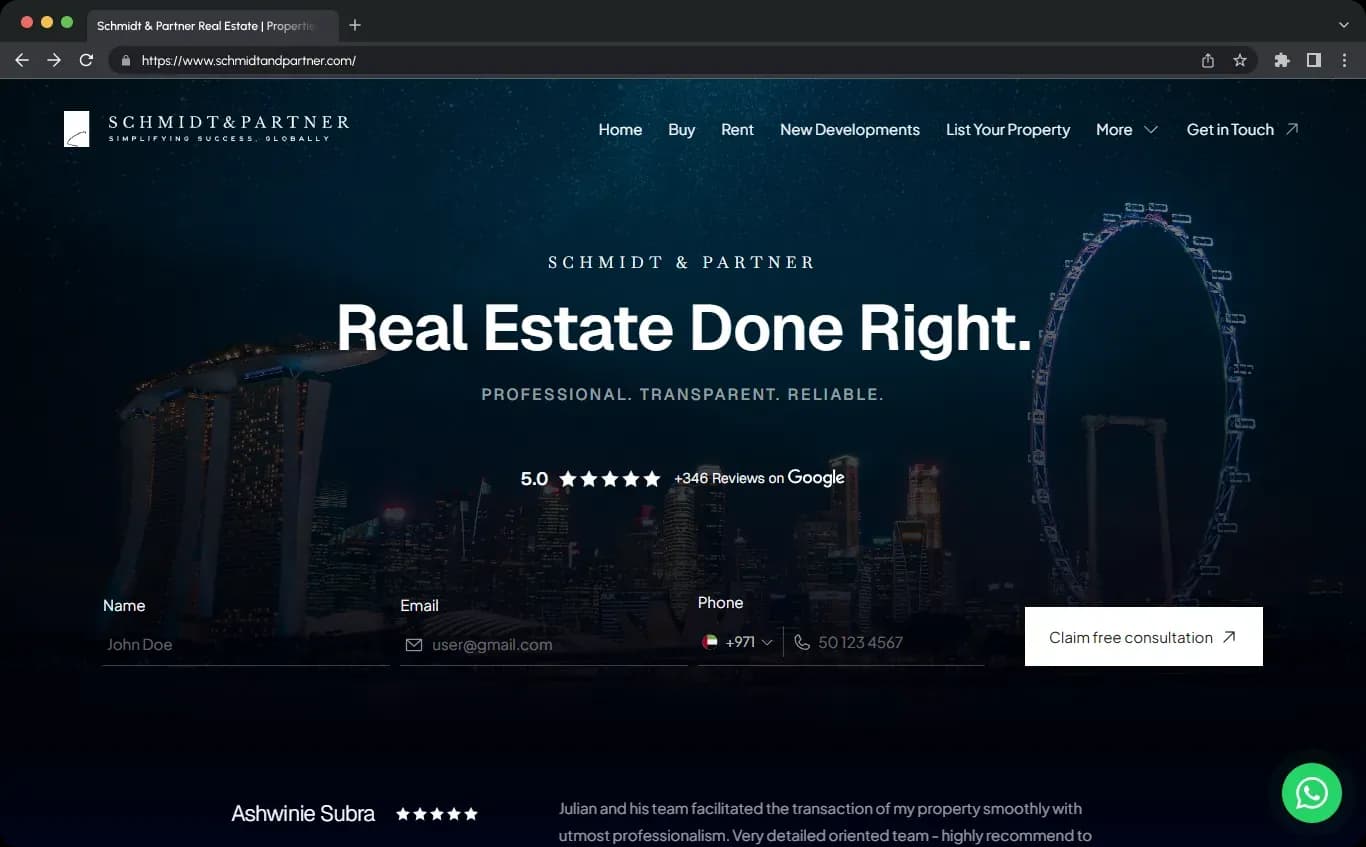
- Put one primary CTA in the hero section of the homepage.
- Repeat relevant CTAs throughout long-form pages (Buy, Sell, Communities, Blog posts).
- Use sticky CTAs on mobile (Call / Text / Message / Search) to make taking action effortless.
Lead Capture Forms and Funnels
- Keep general inquiry forms short: name, email, phone, message.
- Use multi-step forms for valuations or in-depth consultations to improve completion rates.
- Always show a confirmation message and set expectations for response time.
- Follow form submissions with an immediate email that delivers any promised resource (guide, report) and introduces next steps.
CRM Integration and Automation
To turn a real estate website into a 24/7 sales engine, integrate it with your CRM:
- Connect every form, chatbot, and IDX registration to your CRM or marketing automation platform.
- Automatically tag leads by source and intent (buyer, seller, investor, relocation, commercial).
- Trigger tailored nurture sequences: listing alerts, market updates, seller education, or investment insights.
Real Estate Website SEO and Content Strategy
Modern real estate website design best practices are inseparable from SEO. Your structure, internal linking, and content strategy heavily influence your ability to rank in local searches.
On-Page SEO Fundamentals
- Use descriptive, location-focused title tags and meta descriptions.
- Structure each page with a single H1 and logical H2/H3 headings.
- Write unique, descriptive image alt text (especially for MLS photos and area images).
- Keep URLs clean and keyword-rich (e.g.,
/homes-for-sale/[city]/[neighborhood]/). - Interlink related pages (e.g., “Living in [City]” → each neighborhood page → relevant listings → contact page).
Content That Attracts High-Intent Leads
We focus content efforts on topics that map to real buying and selling decisions, not just generic lifestyle listicles. Effective topics include:
- “Living in [City]: Pros, Cons, and Best Neighborhoods”
- “Best Neighborhoods in [Area] for [Families / Investors / Downsizers]”
- “[City] Waterfront Real Estate: What Buyers Need to Know”
- “How to Sell Your Home in [City] in [Year]”
- “[City] Housing Market Update: [Quarter/Year]”
Each piece should provide real nuance: what buyers love and hate, what’s competitive, common inspection issues, HOA quirks, and neighborhood “feel”—the sort of insights that don’t show up in listing remarks.
Converting Visitors from Content
- Add in-article CTAs (“Get a list of upcoming listings,” “Ask us which areas fit your budget and lifestyle”).
- Offer downloadable checklists, relocation guides, or market reports as lead magnets.
- Use sidebar and footer CTAs sparingly but consistently.
Commercial Real Estate Website Design Best Practices
Commercial real estate website design shares many of the same principles as residential, but the emphasis shifts toward data and documentation.
Property Detail Depth
- Use tabbed layouts for:
- Overview
- Financials (NOI, cap rate, rent roll summaries)
- Zoning & allowed uses
- Documents (OM, floor plans, surveys, leases)
- Location (maps, demographics, traffic counts)
- Use tables for specs: square footages, clear heights, loading, parking, power, year built/renovated.
- Include downloadable PDFs behind light lead capture where appropriate.
Investor-Focused Content and Trust Signals
- Publish market and sector reports (office, industrial, retail, multifamily) with charts and commentary.
- Highlight case studies with purchase price, repositioning strategy, and exit metrics when possible.
- Show credentials: designations (CCIM, SIOR), notable clients, and transaction volumes.
Branding, Agent Profiles, and Social Proof
Real estate is a trust-heavy business. Your site needs to put a human face to your brand and prove you deliver.
Agent and Team Pages
- Dedicated profiles for each agent with:
- Professional photos
- Concise bios highlighting specialties and service areas
- Languages spoken and certifications
- Contact options (call, email, social, appointment link)
- Team page explaining your process, values, and differentiation.
Testimonials, Reviews, and Case Studies
- Feature testimonials on the homepage, Buy/Sell landing pages, and agent profiles.
- Include client names and locations; use headshots or property photos where permitted.
- Showcase “Recently Sold” galleries with prices (or ranges), days on market, and neighborhoods.
- Embed or link to Google, Zillow, and other review platforms for social proof.
Security, Accessibility, and Compliance
Security and accessibility are core web design best practices—not afterthoughts. They affect trust, search visibility, and in some jurisdictions, legal risk.
Security and Data Protection
- Use HTTPS with an SSL certificate across the entire site.
- Keep your CMS, themes, and plugins updated.
- Implement regular backups and basic security scanning.
- Use spam protection (reCAPTCHA) on inquiry and registration forms.
Accessible Design and ADA Alignment
- Ensure proper heading hierarchy and semantic HTML.
- Use adequate color contrast ratios for text and buttons.
- Make sure the site is fully navigable via keyboard.
- Provide alt text for images, especially key property and neighborhood photos.
- Add captions or transcripts for important videos.
Tools like WAVE, Axe, and Lighthouse can help you audit accessibility and fix common issues.
Privacy, Cookies, and Legal Pages
- Include a clear privacy policy and, where required, cookie consent notices.
- Disclose how you handle user data, remarketing, and tracking.
Maintenance, Analytics, and Continuous Improvement
The best real estate websites aren’t one-time projects; they’re ongoing campaigns. We treat every site as a living asset that needs regular maintenance and optimization.
Keeping Content and Listings Fresh
- Ensure sold and expired listings are not misrepresented as active.
- Update market data and statistics on neighborhood and market pages regularly.
- Add new testimonials, case studies, and success stories as they happen.
- Publish or update at least one substantive article or guide each month.
Analytics and User Behavior Tracking
- Use Google Analytics to track:
- Traffic sources and top landing pages
- Conversions (forms, calls, valuation requests, appointments)
- Device breakdown and behavior
- Use heatmaps and session recordings (Hotjar, Microsoft Clarity) to see where users click, scroll, or drop off.
- Identify high-exit and low-conversion pages, then update design, copy, or CTAs accordingly.
A/B Testing for Continuous Optimization
- Test alternative headlines on your homepage hero.
- Compare short vs multi-step forms on valuation or consultation pages.
- Try different CTA text and button styles (“Get Your Valuation” vs “Find Out What Your Home Is Worth”).
- Iterate on listing page layouts to maximize tour requests and inquiries.
Common Real Estate Website Design Mistakes to Avoid
- Relying entirely on a broker’s website and not building your own brand asset.
- Cluttered, confusing homepages with no clear hierarchy or primary CTA.
- Ignoring mobile-first design and shipping desktop-centric layouts that break on phones.
- Slow sites weighed down by uncompressed images, bloated scripts, and heavy sliders.
- Weak or missing CTAs that force users to hunt for a contact page.
- No full MLS coverage—showing only your own listings and driving users to portals for the rest.
- Thin, generic neighborhood content that doesn’t answer real buyer and seller questions.
- Poor security or accessibility, which erodes trust and limits reach.
Step-by-Step Roadmap to Implement These Best Practices
If you’re planning a new real estate site or a redesign, this is the sequence we recommend:
- Audit your current site
- Run speed tests (PageSpeed Insights, GTmetrix).
- Walk through key user journeys as if you were a buyer or seller.
- Review analytics for top pages, high-bounce pages, and conversion paths.
- Clarify goals and positioning
- Define your core markets (geography, price band, property type).
- Decide whether you’re buyer-heavy, seller-heavy, investor-focused, or balanced.
- Set primary conversion goals (valuations, consults, listing inquiries, showing requests).
- Choose your tech stack and IDX approach
- Decide on WordPress, Webflow, Wix, or a real estate platform you control.
- Choose full IDX, hybrid, or curated listings based on budget and strategy.
- Select CRM, chatbot, and analytics tools for lead tracking and automation.
- Plan your information architecture
- Homepage, Search/Listings, Individual Listings, Buy, Sell, About, Contact.
- Neighborhood/Community pages for each target area.
- Blog/Resources for market updates and guides.
- Agent or team pages if applicable.
- Design mobile-first layouts and UI
- Wireframe on mobile first, then tablet, then desktop.
- Define typography, color palette, and UI components (buttons, cards, forms).
- Map CTAs and lead capture on each key page.
- Develop, integrate, and optimize
- Implement the design on your chosen platform.
- Integrate IDX/MLS search, CRM, chatbots, and analytics.
- Compress images, configure caching, and tune for Core Web Vitals.
- Populate with high-quality content
- Write localized copy for communities, guides, and market pages.
- Add professional imagery, video, and virtual tours where available.
- Upload testimonials, bios, and proof-of-performance stats.
- Quality assurance and soft launch
- Test on multiple devices and browsers.
- Verify all forms, CTAs, and lead routing.
- Check accessibility basics and fix critical issues.
- Monitor, refine, and scale
- Review analytics regularly and adjust content and UX.
- Run targeted A/B tests on high-traffic pages.
- Expand neighborhood coverage and content depth as your footprint grows.
Quick FAQ: Real Estate Website Design Best Practices
How do we design a real estate website that actually converts?
Focus on mobile-first UX, fast load times, clear navigation, powerful property search, strategic CTAs, short lead-capture forms, and integrated CRM follow-up. Treat listing pages and community pages as landing pages with a specific conversion goal.
Do we really need full IDX to compete?
Full IDX provides a strong user experience for buyers, but it’s not the sole route to success. A hybrid approach—IDX for search plus custom listing and neighborhood pages for SEO and branding—often delivers the best balance of usability, cost, and differentiation.
What are the must-have pages on a modern real estate website?
At minimum: Homepage, Search/Listings, Individual Listings, Communities/Neighborhoods, Buy, Sell, About/Team, Blog/Resources, and Contact. Each should be designed with clear UX and conversion paths.
How often should we update our real estate website?
Listings and market data should be updated continuously. We recommend adding or updating substantial content (guides, neighborhood pages, market updates) at least monthly and reviewing analytics for UX and conversion tweaks every quarter.
Wrapping Up: What “Best Practices” Really Mean
Real estate website design best practices in 2026 are about performance, clarity, and ownership:
- Own your platform and domain so your work compounds over time.
- Design mobile-first, speed-optimized, and user-centric UI/UX.
- Provide powerful, intuitive property search with IDX/MLS where it makes strategic sense.
- Use immersive visuals and clean, minimalist aesthetics to signal quality.
- Leverage AI, personalization, and automation to turn your site into a 24/7 sales engine.
- Invest in hyper-local content, SEO, and neighborhood pages to dominate local searches.
- Prioritize lead generation with smart CTAs, forms, and CRM integration.
- Keep security, accessibility, and ongoing optimization at the core of your digital strategy.
When we build or redesign a real estate website around these principles, we’re not chasing trends. We’re building a durable, SEO-optimized, conversion-focused asset that supports your business now and scales with you as you grow.