We’re at the point where virtual staging in real estate isn’t a shiny extra anymore—it’s one of the fastest, cheapest ways to boost perceived value, shorten days on market, and make your listings look like they’re marketed by a top producer, even on a starter budget.
In this complete guide, we’ll walk through what virtual staging is, how it boosts sales and business growth, the best tools and workflows (including AI options like ChatGPT and Photoshop), and how to plug it into a scalable real estate marketing system.
What Is Virtual Staging in Real Estate?
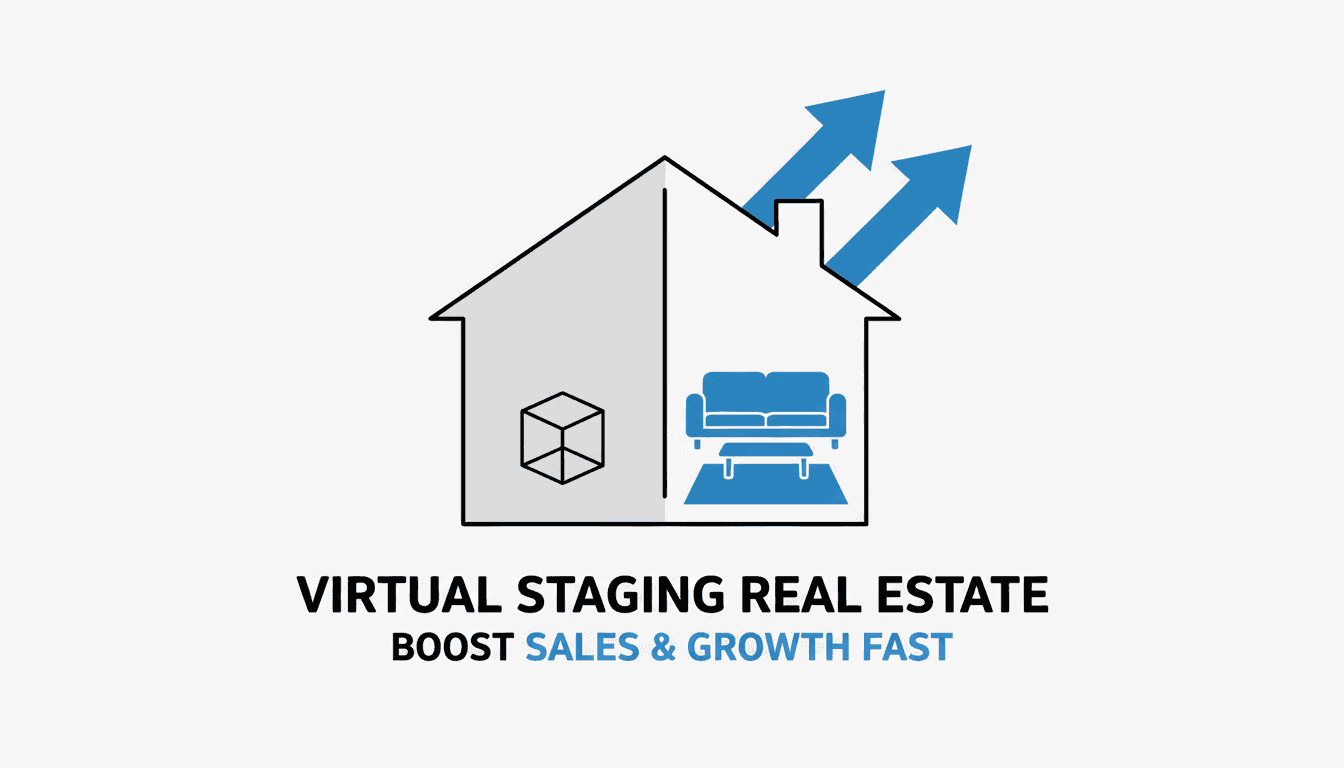
Virtual staging is the process of digitally furnishing and decorating property photos using software or AI instead of physically bringing in furniture, art, rugs, and decor.
We start with high‑quality photos of an empty or sparsely furnished room. A virtual staging platform, designer, or AI model overlays photorealistic 3D furniture and decor that matches the room’s dimensions and style.
In plain terms: traditional staging uses trucks, movers, and sofas; virtual home staging does the same job with pixels.
Crucially, we only change cosmetic elements like furniture and decor—we never alter the architecture, room dimensions, or major fixtures when we intend to use the images in actual property marketing.
Why Virtual Staging Works (and Why It Sells Homes Faster)
Buyers don’t fall in love with drywall; they fall in love with possibility. That’s where virtual property staging shines.
Empty rooms vs staged rooms
- Empty rooms look smaller, feel cold and forgettable, and make it hard for buyers to understand how to use the space.
- Staged rooms photograph dramatically better, create that “this feels like home” reaction, and make it easy to imagine furniture layout and lifestyle.
Traditional staging delivers that with real furniture. Virtual staging delivers it:
- For roughly $3–$29 per image instead of thousands per month
- In minutes or hours instead of days or weeks
- With multiple decor styles (modern, rustic, luxury, kid‑friendly, etc.) from the same base photo
How virtual staging boosts engagement and offers
- More than 90% of buyers start their search online. Your listing photos are the “book cover” that sells the story.
- Staging (physical or virtual) helps buyers visualize the property; surveys routinely show around 77% of buyer’s agents say staging makes it easier for buyers to picture themselves in the home.
- Virtually staged listings often see significantly more views and inquiries and move off the market 33–73% faster than similar non‑staged homes.
- Agents and investors consistently report fewer “I just can’t picture it” objections, stronger offers, and less pressure to discount.
Even if we treat the exact “7–10% price uplift” stats with caution, there’s no question: well‑staged listings—virtual or traditional—sell faster and better than empty, dark, or cluttered ones.
Virtual Staging vs Traditional Staging
Virtual staging doesn’t replace traditional staging in every case, but in many markets it’s the most cost‑effective way to accelerate property sales and boost ROI.
| Factor | Virtual Staging | Traditional Staging |
| Typical cost per listing | ~$30–$300 total (5–10 images at $3–$29 each) | $2,000–$6,000+ per month in many markets |
| Timeline | 12–48 hours turnaround | 1–3 weeks (consult, delivery, setup) |
| Logistics | Upload photos to a platform; no access needed after photography | Trucks, movers, furniture rental, access coordination |
| Flexibility | Change styles or layouts in a few clicks; create multiple versions | Every change requires physically moving furniture |
| Scalability | Easily scales to dozens or hundreds of listings | Hard and expensive to scale beyond a small portfolio |
| Risk | No damage risk; minimal sunk costs | Potential for damage, storage fees, extended rental if listing lingers |
In practice, we see the best ROI from real estate virtual staging when:
- The home is vacant or nearly vacant
- The price point doesn’t justify full physical staging
- The seller is budget‑sensitive but wants a “model home” look
- The buyer pool is heavily online or international, relying on virtual tours
- You’re marketing speculative inventory, investment properties, or builder stock
How Virtual Staging Boosts Sales and Business Growth
Virtual staging does more than prettify photos—it grows your business on several levels.
1. Shorter days on market and fewer price cuts
Every extra week on the market chips away at perceived value. By turning empty rooms into magazine‑worthy spaces quickly, we:
- Generate more showings immediately after going live
- Increase the odds of multiple offers in the first 2–3 weeks
- Reduce the need for later price reductions to re‑ignite interest
This is especially powerful for vacation and investment markets where buyers may decide largely from online media and virtual walkthroughs.
2. Higher perceived value and better offers
Virtually staged photos:
- Highlight strengths: natural light, space, layout, views, outdoor living
- Downplay cosmetic weaknesses: dated finishes, awkward nooks
- Present a move‑in‑ready, designer feel that justifies stronger offers
We’re essentially selling a lifestyle, not just square footage. When buyers emotionally “move in” while scrolling, they’re far less focused on small flaws and far more willing to pay near—or above—asking, especially in competitive markets.
3. A killer listing‑presentation differentiator
When we can walk into a listing appointment and say:
“We’ll virtually stage your vacant rooms in multiple styles so buyers can instantly picture how they’ll live here. You’ll get designer‑level photos in 24–48 hours at a fraction of traditional staging cost.”
…we immediately look like a modern, marketing‑savvy agent or brokerage. Sellers hear: more value, more professionalism, less hassle.
4. High‑performing marketing assets across every channel
Virtually staged photos don’t just sit on the MLS—they become reusable content that powers growth:
- MLS & portals: attract more clicks and saves
- Website & landing pages: higher on‑page engagement and lead conversions
- Social media: before‑and‑after carousels, Reels, TikToks, targeted ads
- Email marketing: “See the transformation” campaigns that revive cold leads
- Print: brochures, postcards, and just‑listed mailers that stand out
Because we’re already investing in the images, our job is to squeeze as much marketing mileage out of them as possible.
5. Portfolio and team‑level scale
For teams, brokerages, developers, and real estate photographers, virtual staging can be turned into a system:
- Standardized “house styles” that match your brand
- Automated workflows that trigger staging when photos are uploaded
- Internal portals where agents submit rooms for staging in a couple of clicks
This turns virtual staging from an occasional trick into a core growth engine across your entire portfolio.
Costs, ROI, and Budgeting for Virtual Home Staging
Let’s break down what virtual staging typically costs and what kind of ROI we can realistically expect.
Typical pricing ranges
- Low‑cost / budget services: around $3–$19 per image (often volume‑based or AI‑driven)
- Mid‑range services: around $20–$24 per image
- Premium / custom design: $25–$50+ per image for luxury, highly curated results
Most listings do well with 5–10 virtually staged images:
- Main living room / great room
- Kitchen / eat‑in area
- Primary bedroom
- 1–2 secondary bedrooms
- Dining area (especially in open‑concept layouts)
- Any flex room or ambiguous space
- Key outdoor space (patio, balcony, deck) when lifestyle is a big selling point
That puts most listings in the $100–$300 total range—often less than 10% of what a month of traditional staging would cost.
ROI vs traditional staging
- Virtual staging is frequently 90–97% cheaper than physical staging.
- Turnaround time is days faster, which can mean hitting the market earlier and riding peak interest.
- The money saved can be redirected into photography, video, 3D tours, and paid ads—stacking your marketing impact.
When we line up cost vs impact, virtual staging is one of the highest‑ROI line items in a modern real estate marketing budget.
There are three main paths to virtually stage real estate right now:
- DIY virtual staging with general AI tools (ChatGPT, Photoshop AI)
- Dedicated virtual staging platforms designed specifically for real estate
- A hybrid workflow using both: platforms for most rooms, AI tools for tricky cases
These are purpose‑built for virtual home staging and usually give the best speed‑to‑quality ratio.
- Styldod – Affordable virtual staging services with fast turnaround. Great for budget‑conscious agents who still want professional design.
- PhotoUp – Combines virtual staging with real estate photo editing and virtual tours. Helpful if you want a one‑stop shop for media.
- Stuccco – More premium, design‑driven virtual staging for high‑end and luxury listings.
- BoxBrownie – Offers virtual staging, virtual renovations, furniture removal, twilight conversions, and more. Ideal when you need multiple editing services.
- AI‑first staging platforms (e.g., Decor8‑style tools, Virtual Staging AI, HomeDesigns.ai) – Use AI to automatically identify room types, remove old furniture, and drop in new decor in seconds, often with APIs and no‑code integrations.
How to choose the right virtual staging provider
We look at:
- Budget per listing and average commission
- Volume of listings we handle monthly
- Needed turnaround time (24 vs 72 hours)
- Level of design customization (template‑based vs bespoke)
- Need for extras like furniture removal, virtual renovations, or 3D tours
- Integration options (API, SDK, WordPress/Wix plugins, no‑code tools)
For high‑volume or portfolio work, we lean toward AI platforms that support automation and consistent brand styles; for a one‑off luxury listing, a premium service with human designers might make sense.
If we’re comfortable with AI tools, we can do a surprising amount of virtual interior staging ourselves—especially for social media and early‑stage marketing concepts.
ChatGPT virtual staging workflow (step‑by‑step)
- Start with clean, high‑resolution photos. Shoot in good daylight, use straightforward angles, and declutter as much as possible. Empty or almost empty rooms work best.
- Prime ChatGPT to think like a real estate marketer. We feed it details about our target buyers, price ranges, and markets so its staging style supports our business goals.
- Use a structured prompt. For example:
“You are a helpful virtual staging assistant. Please virtually stage this [ROOM TYPE] with [STYLE] furniture and decor so it feels warm, modern, and attractive to potential buyers.
Requirements:
- Add appropriate room furniture only (e.g., sofa, coffee table, rug, side tables, art, plants, lamps).
- Do not change the existing architecture, windows, doors, flooring, wall colors, cabinetry, appliances, or room dimensions.
- Do not add, remove, or move any permanent fixtures.
- Keep the style [modern / rustic / Scandinavian / luxury / family‑friendly] and use [neutral colors + specified accents].
- Make the space feel bright and inviting in listing photos.”
- Avoid over‑editing the same image. If we keep layering change on change (“now remove the mirror,” “now add red accents”), the image tends to look less photorealistic. Better to restart from the original empty photo for each variation and include all requirements at once.
- Control where AI can place furniture. On mobile we can draw over empty floor space; on web we ask ChatGPT to highlight the empty area and then tell it: “Only place furniture where it’s annotated as empty floor space. Do not change anything else in the photo.”
- Inspect carefully before use. We zoom in to confirm windows, walls, and fixtures haven’t changed, furniture isn’t blocking doors, and nothing looks impossibly warped or misleading.
We then run those outputs through our usual compliance checks before using them in real listing marketing.
Photoshop AI (Generative Fill) for real estate photos
Photoshop is ideal when we need precision edits:
- Add specific furniture by selecting a region and prompting “queen bed with neutral bedding” or “L‑shaped light gray sectional sofa.”
- Remove distractions like an old ceiling fan, visual clutter, or small eyesores using “delete” in the generative fill box.
- Add minimal decor such as wall art, plants, or a rug to rooms that already have some furniture.
Again, we’re strict about not altering architecture or hiding material defects when the images are used for MLS or advertising.
How to Virtually Stage a House Step‑by‑Step
Whether we use DIY tools or a virtual staging company, the workflow is similar.
Step 1: Capture high‑quality listing photos
- Shoot in daylight with even lighting; avoid blown‑out windows and deep shadows.
- Use wide‑angle shots that show depth, windows, doors, and room flow.
- Declutter aggressively; remove personal items and excess furniture.
- Shoot at high resolution so the staged furniture looks crisp.
If the home is occupied and cluttered, we either declutter physically or use a service that includes digital furniture removal before staging.
We decide based on:
- Budget per listing
- How many listings we handle
- Needed design quality (template vs bespoke)
- Turnaround time expectations
- Need for automation (APIs, bulk uploads, no‑code portals)
Then we upload selected photos and provide clear notes: room type, target buyer, preferred style, and any features to highlight.
Step 3: Match design to your target buyer and market
Virtual home staging is most powerful when it’s audience‑specific:
- First‑time buyers / entry‑level homes – Simple, modern furniture, neutral colors, functional layouts.
- Luxury listings – Higher‑end pieces, layered textures, statement art, more curated styling.
- Family‑oriented suburbs – Warm, inviting decor, kids’ rooms, comfortable dining and living areas.
- Urban professionals / remote workers – Sleek furniture, dedicated home office or Zoom‑ready corners.
- Investors / vacation homes – Clean, durable furnishings that suggest “turnkey rental” or a relaxed getaway.
We also adapt style to local expectations: coastal, farmhouse, industrial loft, Mediterranean, etc.
Step 4: Highlight key selling features and solve layout problems
We use virtual staging to deliberately:
- Draw the eye to views, fireplaces, built‑ins, and architectural details.
- Clarify ambiguous spaces: loft → office, basement → media room, nook → reading corner.
- Prove small or oddly shaped rooms can hold a real bed, sofa, or table comfortably.
The goal is to remove mental friction: buyers shouldn’t have to wonder, “Where would the couch even go?”—we show them.
Step 5: Review, refine, and approve
When we receive staged images or generate them via AI, we check:
- Is furniture correctly scaled and grounded (no floating shadows)?
- Do lighting and shadows match the original photo?
- Is the style consistent throughout the home?
- Have we altered anything structural (we shouldn’t have)?
If something looks off or misleading, we revise or request edits before the images go anywhere near the MLS.
Marketing Your Virtually Staged Listings for Maximum Impact
Great images are only half the battle; distribution is what boosts sales and growth.
1. Always disclose and stay ethical
- Label photos as “virtually staged” in MLS captions and remarks.
- Some MLSs require a watermark; others prohibit virtually staged photos entirely. We always verify local rules and broker policies.
- We never add or remove structural elements or hide major defects (cracks, water damage, etc.). Only furniture and decor are fair game.
Clear disclosure protects our license and builds long‑term trust.
2. Write listing copy that matches the visuals
We tie the staging into our listing description so photos and text tell a single story:
- “As shown in the virtually staged photos, the living room easily fits a full sectional, chairs, and media console—perfect for movie nights.”
- “We’ve virtually staged the bonus room as both a home office and a playroom so you can see just how flexible this space is.”
This approach does two things at once: sets expectations honestly and nudges buyers to imagine how they’ll actually use the home.
- Post before/after carousels (empty vs virtually staged) on Instagram, Facebook, LinkedIn.
- Create short videos or Reels sliding between “before” and “after” while explaining virtual staging.
- Run polls: “Office or nursery—how would you use this room?” to drive engagement.
- Use targeted ads that match visuals to the audience (family‑oriented staging for family‑targeted ads, sleek office staging for professional campaigns).
We’re not just marketing a property; we’re also positioning ourselves as forward‑thinking, tech‑savvy agents.
4. Reuse staged images in every channel
- Website: feature property pages and SEO‑optimized landing pages.
- Email: “See how we transformed this space” campaigns that reactivate older leads.
- Print: high‑impact postcards and brochures showing transformations.
- Retargeting ads: show staged images to people who’ve already viewed the listing once.
The more touchpoints, the more opportunities for engagement and showings.
Scaling Virtual Staging Across a Growing Real Estate Business
Once virtual staging proves its value on a few listings, the next step is to make it systematic.
1. Automate with APIs and workflows
Many AI virtual staging platforms offer APIs and SDKs. We can:
- Connect our internal media or listing management system directly to a staging service.
- Trigger virtual staging automatically when a new set of photos is uploaded.
- Return staged images straight into our MLS feed or website backend.
This reduces manual back‑and‑forth email, supports bulk staging for developers or asset managers, and keeps our brand style consistent.
2. Use no‑code tools and plugins
For teams without developers, no‑code is enough to scale virtual property staging:
- WordPress plugins: embed a staging request form or mini portal.
- Wix apps: let agents or clients upload rooms to be virtually staged.
- Bubble and other no‑code builders: create internal dashboards to manage staging workflows and approvals.
We effectively bring virtual staging “in‑house” as a service without building a full software team.
Where Virtual Staging Works Best
Almost any listing benefits from better visuals, but some scenarios are especially suited to digital staging:
- Vacant homes and new construction – Empty rooms look smaller; staging shows scale and layout.
- Older or cosmetically dated homes – Modern virtual furniture can visually “update” them without renovations.
- Small or awkward spaces – We show how to fit essential furniture in a way that feels comfortable.
- Remote and international buyer markets – Sight‑unseen or digitally driven purchases rely heavily on photorealistic visuals and virtual tours.
- Investment properties and vacation rentals – Staged photos help pre‑lease units and market them as turnkey.
Smart Virtual Staging Strategy: What to Stage, How to Style It
Priority rooms to virtually stage
- Main living room / great room – Show seating layout, conversation zones, and traffic flow.
- Primary bedroom – Make it obvious a queen or king fits comfortably.
- Dining area – Especially in open‑concept spaces where buyers wonder “Where does the table go?”
- Ambiguous spaces – Loft, den, bonus room, finished basement, awkward nooks.
- Outdoor living spaces – Patios, decks, balconies with seating or dining setups.
Styles that actually sell (vs just look cool)
- Neutral bases: whites, beiges, light greys.
- Simple, contemporary furniture with clean lines.
- Light to medium woods; minimal heavy, dark pieces.
- Pops of color through pillows, art, and rugs—not through major surfaces.
We’re aiming for “model home” appeal that fits many tastes, not highly polarizing style statements.
Combine virtual staging with real‑world prep
Virtual staging isn’t a magic wand. We still need to:
- Deep clean, especially kitchens and baths.
- Neutralize strong odors.
- Fix obvious maintenance issues.
- Freshen curb appeal (landscaping, hardware, lighting).
When condition, pricing, and virtual staging all align, that’s when we see the biggest jump in engagement and offers.
Implementation Checklist: From Idea to System
To make virtual staging a repeatable part of our real estate marketing strategy, we use a simple checklist.
- At the listing appointment
- Explain what virtual staging is and how it boosts exposure and perceived value.
- Show real before/after examples (tablet or printed portfolio).
- Include virtual staging in our written marketing plan and fee structure.
- Before photography
- Walk the property with a staging eye: declutter, depersonalize, minor repairs.
- Decide which rooms and angles will be virtually staged.
- Brief the photographer on the shots we need for staging.
- After photography
- Select 5–10 hero images for virtual staging.
- Upload to your chosen platform or run through your AI workflow.
- Provide clear notes on buyer persona and interior style.
- Compliance and quality check
- Verify no structural changes or hidden defects.
- Ensure all required “virtually staged” labeling is in place.
- Save originals alongside staged versions for your records.
- Marketing rollout
- Update MLS, portals, and your website with staged images (keeping at least one un‑staged photo where appropriate).
- Launch social media posts, email campaigns, and any paid ads featuring the transformations.
- Leverage before/after assets in listing presentations for future sellers.
- Measure and optimize
- Track views, saves, inquiries, showings, days on market, and sale‑to‑list ratios.
- Compare virtually staged vs non‑staged listings over time.
- Refine which rooms you stage and which styles perform best for your audience.
Key Takeaways: Using Virtual Staging to Boost Sales and Growth
- Virtual staging is now a core, high‑ROI component of modern real estate marketing, not a novelty.
- It helps listings stand out online, drives more engagement, and often leads to faster sales and stronger offers.
- It’s dramatically cheaper and faster than traditional staging, making it accessible for nearly any budget.
- With AI tools and dedicated platforms, we can scale virtual property staging across portfolios, teams, and markets.
- Used ethically and transparently—with proper disclosure and no structural misrepresentation—it builds trust while giving us a powerful competitive edge.
When we integrate virtual staging into a clear workflow—backed by smart tools, compliant practices, and strong marketing—it becomes more than pretty pictures. It becomes a lever for predictable sales growth and a stronger, more modern brand in today’s digital‑first real estate market.